 By st20113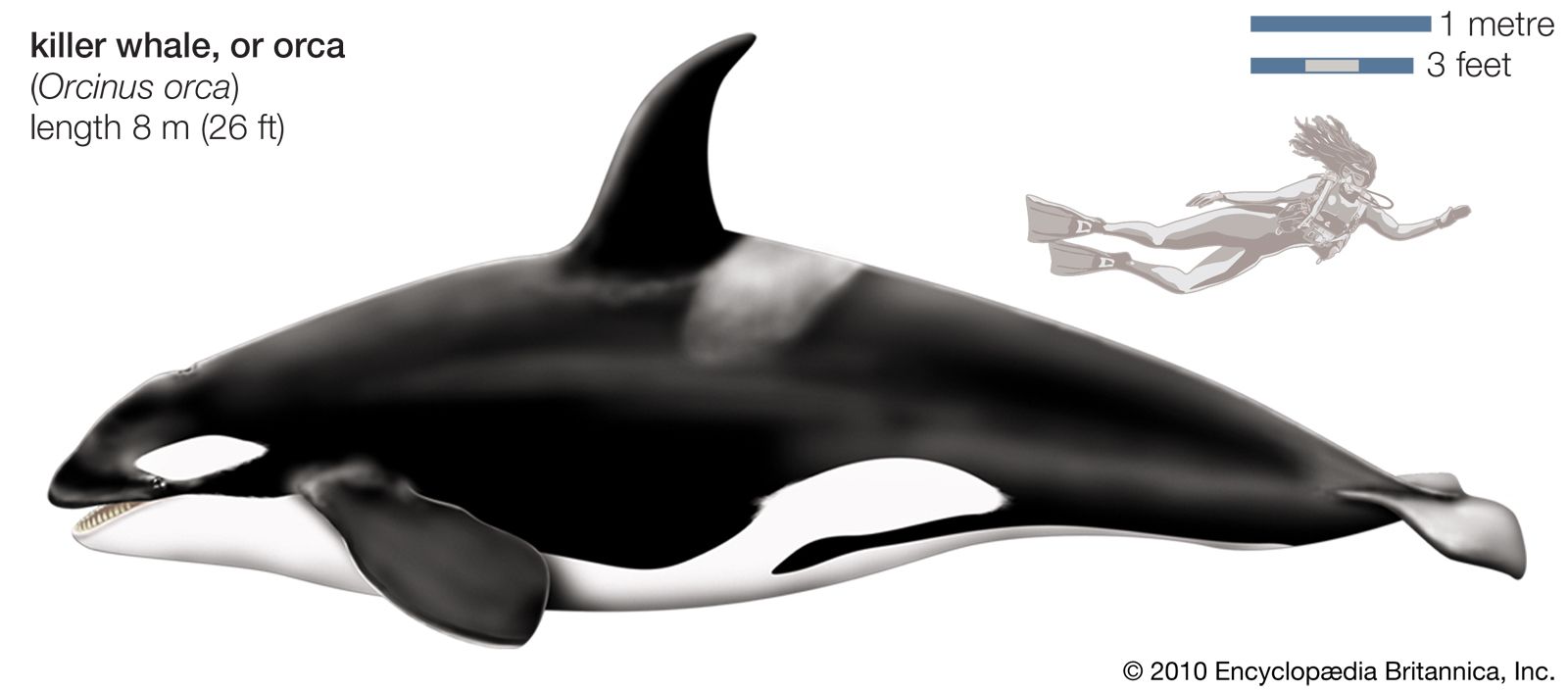
The orca (Orcinus orca), also known as the killer whale, is a toothed whale and the largest member of the oceanic dolphin family. Found in every ocean, from polar ice caps to tropical seas, orcas are highly social apex predators with some of the most complex social structures outside of humans. Alongside the blue whale and humpback whale, the orca ranks among the ocean’s most remarkable mammals and a top predator in the marine ecosystem.
Physical Characteristics
Orcas are powerfully built with a black dorsal surface, white chest and sides, and a distinctive white patch behind each eye. Males grow up to 9 meters and weigh up to 6 tonnes, while females are smaller. Their tall, curved dorsal fin can reach 1.8 meters in males. They have 40-56 interlocking teeth designed for gripping and tearing prey rather than chewing.
Social Structure and Culture
Orcas live in matrilineal pods consisting of a mother, her offspring, and extended family. Pods stay together for life, and offspring rarely leave their mothers. Different ecotypes-resident, transient, and offshore-have distinct dialects, hunting techniques, and prey preferences that are passed down through generations, representing true animal culture.
Hunting and Diet
Orcas are versatile hunters whose diet varies by ecotype: residents eat fish (especially salmon), transients hunt marine mammals (seals, dolphins, whales), and offshores target sharks and fish. They use sophisticated cooperative hunting: wave washing seals off ice floes, beachings to catch sea lions, and coordinated herding of fish into tight balls.
Communication
Each pod has a unique dialect of clicks, whistles, and pulsed calls. Calves learn their pod’s dialect through vocal learning-one of only a few species besides humans and songbirds with demonstrated cultural vocal transmission.
Conservation Status
Orcas as a species are not listed as endangered, but specific populations-particularly those exposed to PCB pollution or experiencing salmon declines-are threatened. Ship noise, chemical pollution, and prey depletion are the main concerns.