 By st20113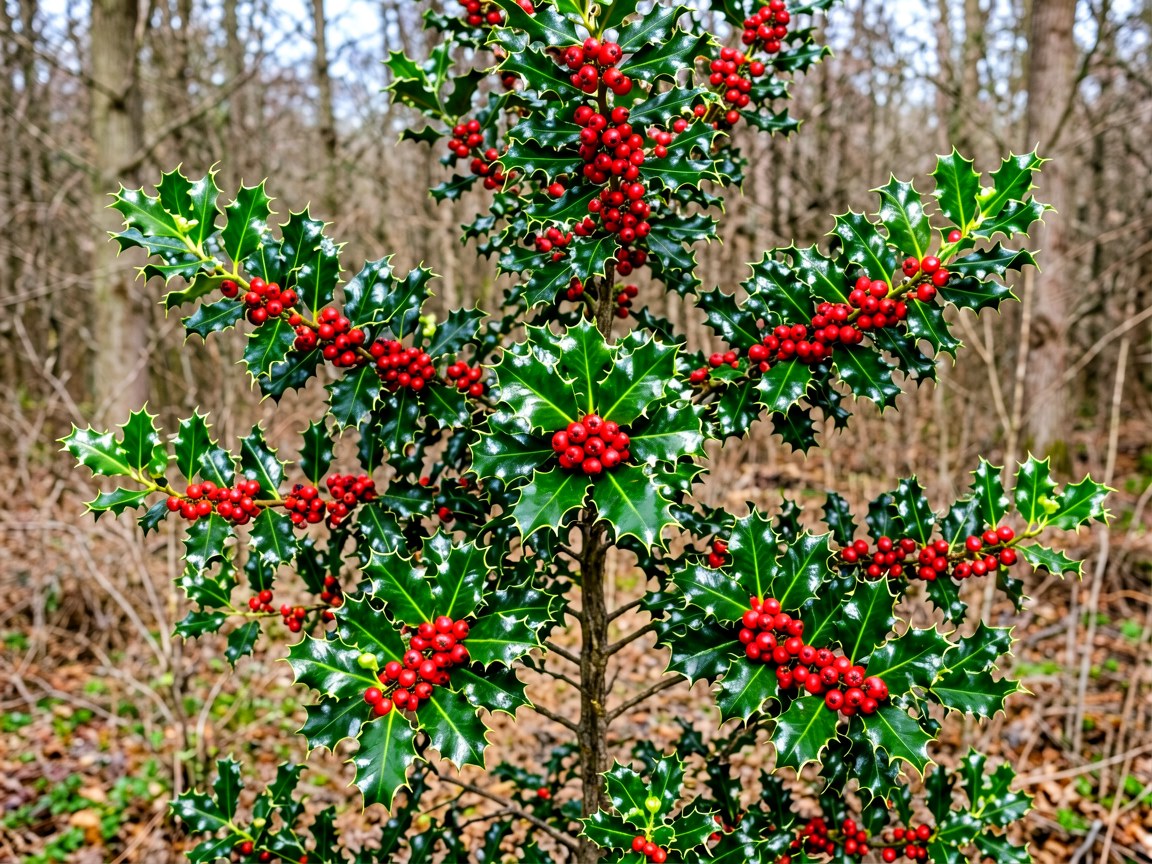
Ilex aquifolium | Holly
Introduction
Holly (Ilex aquifolium) is an evergreen tree or shrub instantly recognised by its glossy, spiny dark green leaves and bright red winter berries. Native to western and southern Europe, it has been carried into gardens far beyond its natural range and remains one of the most enduring symbols of midwinter. Its dense, prickly foliage provides year-round shelter for birds, while its flowers support bees and its berries feed thrushes and waxwings through the coldest months.
Taxonomy
Ilex aquifolium is the type species of the family Aquifoliaceae, within the order Aquifoliales. It is one of several hundred holly species worldwide, but the only one native to Europe. The genus name Ilex was the classical Latin name for the holm oak, transferred to this plant by early botanists. Like all green plants, it depends on Photosynthesis to build the sugars that sustain its slow, steady evergreen growth.
Physical Characteristics
Holly typically grows 5–15 meters tall, occasionally reaching 25 meters, with a dense, conical crown. Its bark is smooth and grey. The leaves are stiff, leathery, and dark glossy green above and paler beneath, with a characteristic undulating, spiny margin—though leaves on the upper branches of mature trees are often almost spineless. Small white four-petaled flowers open in late spring, and the familiar glossy red berries, technically drupes, ripen in autumn and persist through winter.
Habitat
This species grows naturally as an understory shrub or small tree in oak and beech woodland, and in hedgerows, scrub, and on heathland edges. It prefers moist, well-drained, slightly acidic soils and tolerates deep shade, which is why it thrives beneath a closed canopy. Its evergreen habit and salt tolerance have made it a favorite for gardens, screens, and coastal planting, and it has naturalized in parts of North America and Australia.
Diet
Holly is a photosynthetic plant, manufacturing its own food from sunlight, water, and carbon dioxide, and taking up minerals from the soil. It supports nothing on other organisms for nutrition. Its ecological contribution runs the other way: the flowers provide nectar for bees and other insects in late spring, while the berries are a vital winter food for thrushes, blackbirds, waxwings, and small mammals when other food is scarce.
Reproduction
Holly is usually dioecious, meaning male and female flowers grow on separate plants, so both sexes must be present for berries to form. The small, scented white flowers are insect-pollinated, mainly by bees. Only the female trees produce the red berries, which persist on the branches through winter. Holly also spreads by seed carried in bird droppings, and gardeners routinely propagate named varieties by cuttings to guarantee berry-bearing females.
Conservation
Holly is widespread and not threatened, and it is protected in some areas against indiscriminate cutting for winter decoration, which can strip branches from wild trees. Its value lies in the year-round shelter and food it offers wildlife and in the stability of the evergreen understory in native woodland. Cutting the foliage for decoration is sustainable only where it is done as part of careful coppicing or from managed, planted stock.
Fun Facts
- Only female holly trees bear berries, and they need a male tree nearby for pollination.
- Young, low leaves are fiercely spiny to deter browsing animals, while high leaves on mature trees are often smooth-edged.
- Holly and ivy have been paired in European midwinter decoration since Roman times.
- Its dense, evergreen, prickly growth makes it an almost ideal nesting shelter for birds.
- The pale, close-grained wood is prized by turners and was traditionally used for inlay and chess pieces.