 By st20113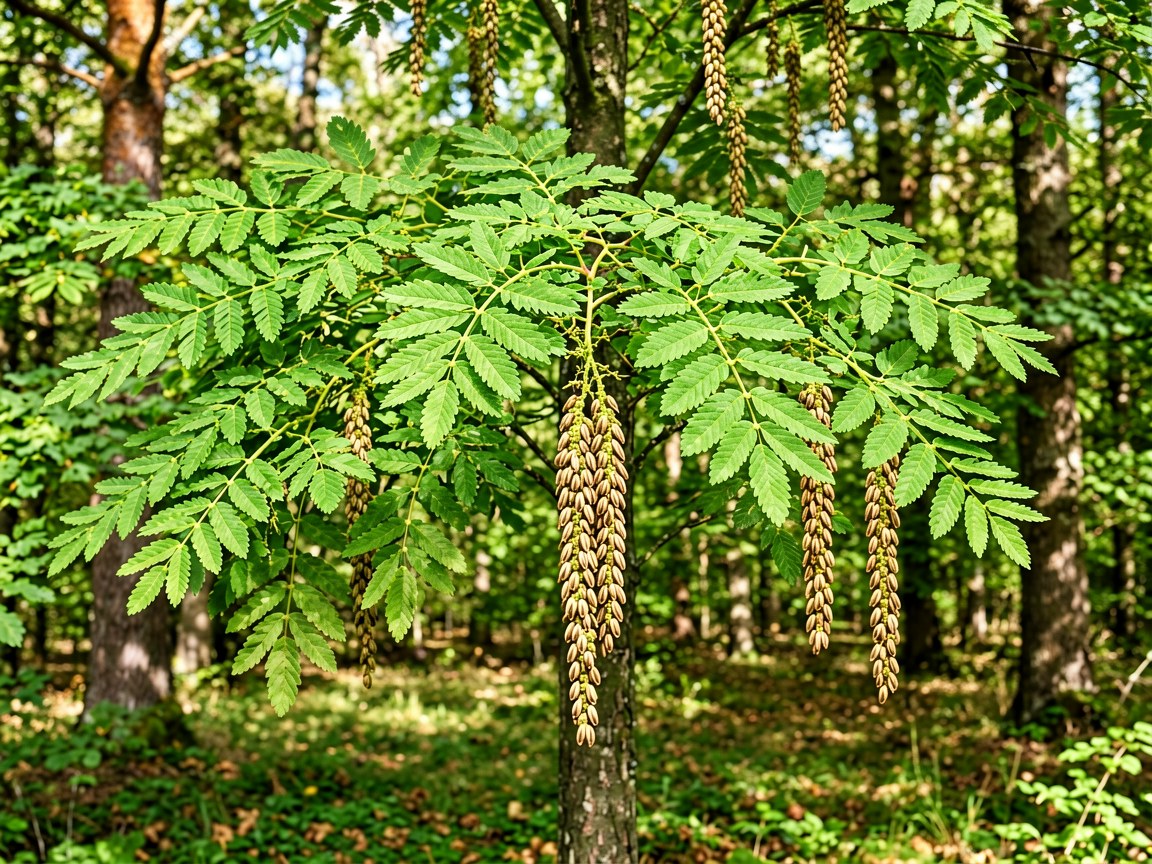
Fraxinus excelsior | Ash
Introduction
The ash (Fraxinus excelsior) is a tall, elegant deciduous tree native to Europe, familiar for its feathery pinnate leaves, distinctive black winter buds, and hanging clusters of winged seeds known as “keys.” It grows in woodlands, hedgerows, and on limestone hillsides, and for centuries its tough, shock-resistant timber was the material of choice for axe handles, tool shafts, and sports equipment. Today the species faces a serious threat from a fungal disease that is reshaping European landscapes.
Taxonomy
Fraxinus excelsior belongs to the family Oleaceae—the olive family—within the order Lamiales, a group that also includes lilac, jasmine, and the olive itself. It is the most widespread of the European ashes, of which there are only a handful of species. Like every other green plant, it builds its tissues through Photosynthesis, capturing sunlight in the chlorophyll of its compound leaves.
Physical Characteristics
A mature ash reaches 20–35 meters, with a tall, straight trunk and a narrow, open crown that lets light reach the woodland floor. Its bark is pale grey and smooth when young, becoming deeply fissured into a diamond pattern with age. The leaves are compound and opposite, 20–30 cm long, made up of 7–13 lance-shaped, toothed leaflets. The most reliable winter feature is its jet-black, sooty buds, which contrast sharply with the pale twigs. Small purple flowers appear before the leaves, and the female flowers develop into dangling clusters of single-winged seeds.
Habitat
Ash thrives on fertile, moist but well-drained soils and is particularly characteristic of limestone and chalk country, where it forms distinctive ash-maple woodland. It grows in mixed deciduous woods, hedgerows, and field boundaries, and tolerates exposure and cold well. Seedlings are shade-tolerant enough to establish in woodland, though the tree grows fastest in the open. It is widely planted as a street and park tree.
Diet
As a photosynthetic tree, the ash makes its own food from carbon dioxide, water, and sunlight, drawing mineral nutrients from the soil through an extensive root system that often associates with mycorrhizal fungi. It requires nothing from other living organisms. Its seeds, however, feed birds and small mammals, and its light, open canopy supports a rich ground flora of wildflowers beneath it.
Reproduction
Ash trees are unusual in that individual trees may be male, female, or hermaphrodite, and the same tree can change from year to year. The small, petal-less flowers open in spring before the leaves and are wind-pollinated. The fertilized female flowers develop into clusters of winged seeds, or samaras, that hang on the tree through autumn and are carried away by the wind in winter gales. Ash also regenerates vigorously from stumps after cutting.
Conservation
The ash is under serious threat from ash dieback, a disease caused by the invasive fungus Hymenoscyphus fraxineus, which causes leaf loss, crown dieback, and often death, particularly in young trees. The disease has spread across Europe since the 1990s and has killed a large proportion of ash in affected areas. Conservation efforts focus on identifying and breeding the small minority of trees showing natural resistance, and on managing the loss of the many species that depend on ash woodland.
Fun Facts
- Its winged seeds are called “keys” and hang in bunches through winter before spinning away in the wind.
- Ash wood is so tough and shock-resistant that it was the traditional choice for axe handles and hockey sticks.
- In Norse mythology the world tree Yggdrasil was an ash, connecting the heavens, earth, and underworld.
- The black, sooty winter buds are the easiest way to identify an ash in bare winter woodland.
- A small percentage of ash trees show natural resistance to dieback, and these are now being bred to save the species.