 By st20113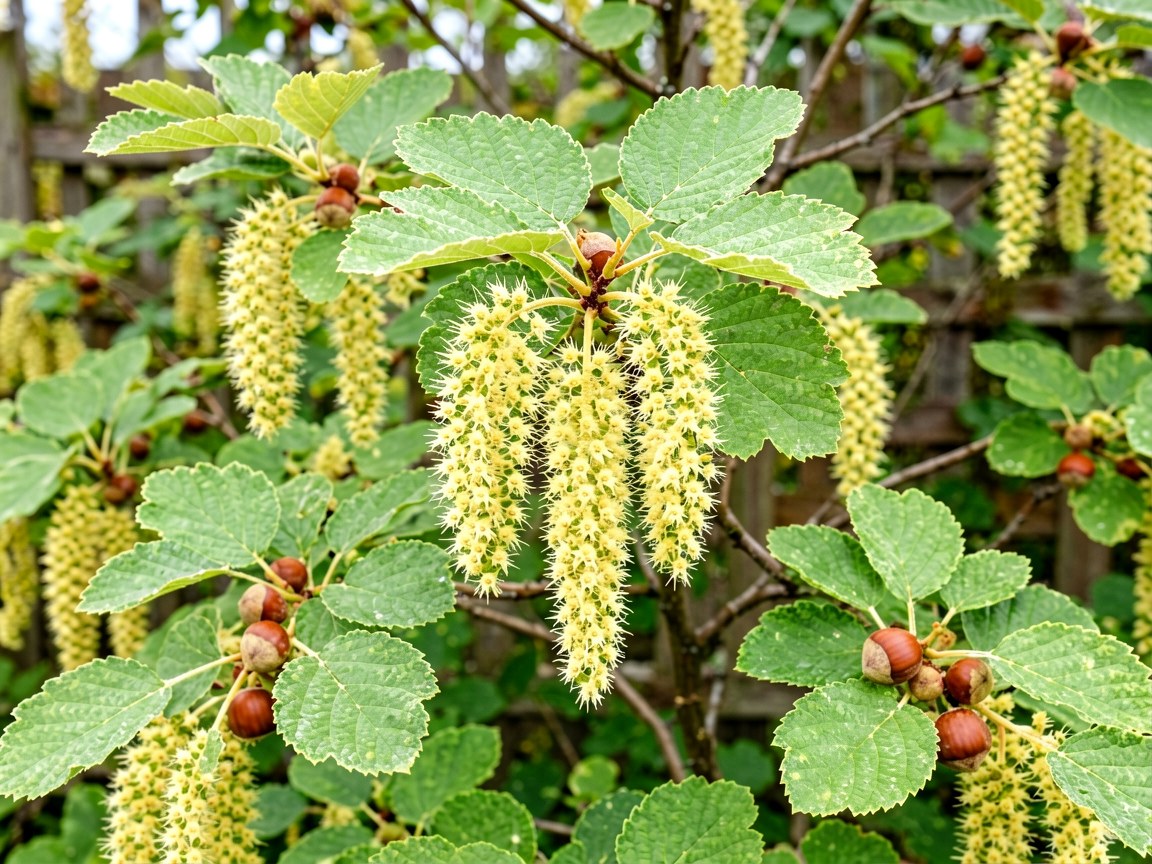
Corylus avellana | Hazel
Introduction
Hazel (Corylus avellana) is a deciduous shrub or small tree whose catkins and edible nuts have been woven into European life since the Stone Age. Found across woodlands, hedgerows, and scrub from the Atlantic fringe to the Caucasus, it is valued for coppicing, for its nutritious nuts, and as one of the earliest sources of pollen for bees at the very end of winter. Its flexible stems have long been cut annually to make hurdles, poles, and woven fences.
Taxonomy
Corylus avellana sits in the family Betulaceae—the birch family—within the order Fagales, alongside alders, hornbeams, and oaks. It is the most widespread of several hazel species in Eurasia. Like every other green plant it is fundamentally a solar-powered organism, building its tissues through Photosynthesis using the chlorophyll in its leaves.
Physical Characteristics
Hazel usually grows as a multi-stemmed shrub 3–8 meters tall, though single-stemmed small trees occur. Its bark is smooth and grey-brown, and its leaves are rounded, soft, and doubly toothed with a short pointed tip. In late winter it produces dangling pale-yellow male catkins—the familiar “lambstails”—while tiny crimson female flowers appear on the same branches. The fruit is a rounded hazelnut partly wrapped in a ragged leafy husk.
Habitat
Hazel thrives on a wide range of soils but favors moist, fertile, slightly calcareous ground in woodland edges, hedgerows, and scrub. It tolerates shade well and is a classic understory shrub of oak and ash woods, where it is frequently managed by coppicing—cutting stems to the base on a rotation to encourage straight, useful rods. It also colonizes neglected land and stabilizes banks and verges.
Diet
Hazel is a photosynthetic plant, manufacturing sugars from sunlight, water, and carbon dioxide and drawing minerals from the soil. It asks nothing of other living things for its nutrition. Its nuts, however, are a vital wild food: squirrels, mice, jays, and dormice cache and eat them, while its catkins provide an early nectar and pollen source for bees when little else is flowering.
Reproduction
Hazel is wind-pollinated. The long male catkins release clouds of pollen in late winter before the leaves appear, and the wind carries it to the minute red-tipped female flowers. Fertilized flowers develop into the familiar nuts by autumn. Hazel also spreads readily by suckering from the base, and coppiced stools can live for many decades, sending up fresh shoots each spring.
Conservation
Hazel is common and not threatened, but the traditional management of coppice woodland that keeps it productive has declined, and with it the open, flowery habitats many species need. Conserving coppiced and hedgerow hazel supports dormice, butterflies, and a wealth of fungi. It is also planted for riparian restoration because its roots bind soil and slow runoff.
Fun Facts
- Hazel catkins produce pollen as early as January, making it one of the first bee foods of the year.
- “Hazel” rods were once the standard material for water divining and for woven wattle-and-daub walls.
- A single hazelnut can contain more protein and fat per gram than many cultivated nuts, a favorite of dormice fattening up for hibernation.
- Coppiced hazel stools are known that are several hundred years old, though the stems are cut every few years.
- In folklore, hazel was the wood of choice for wands and for protecting against witchcraft across much of Europe.