 By st20113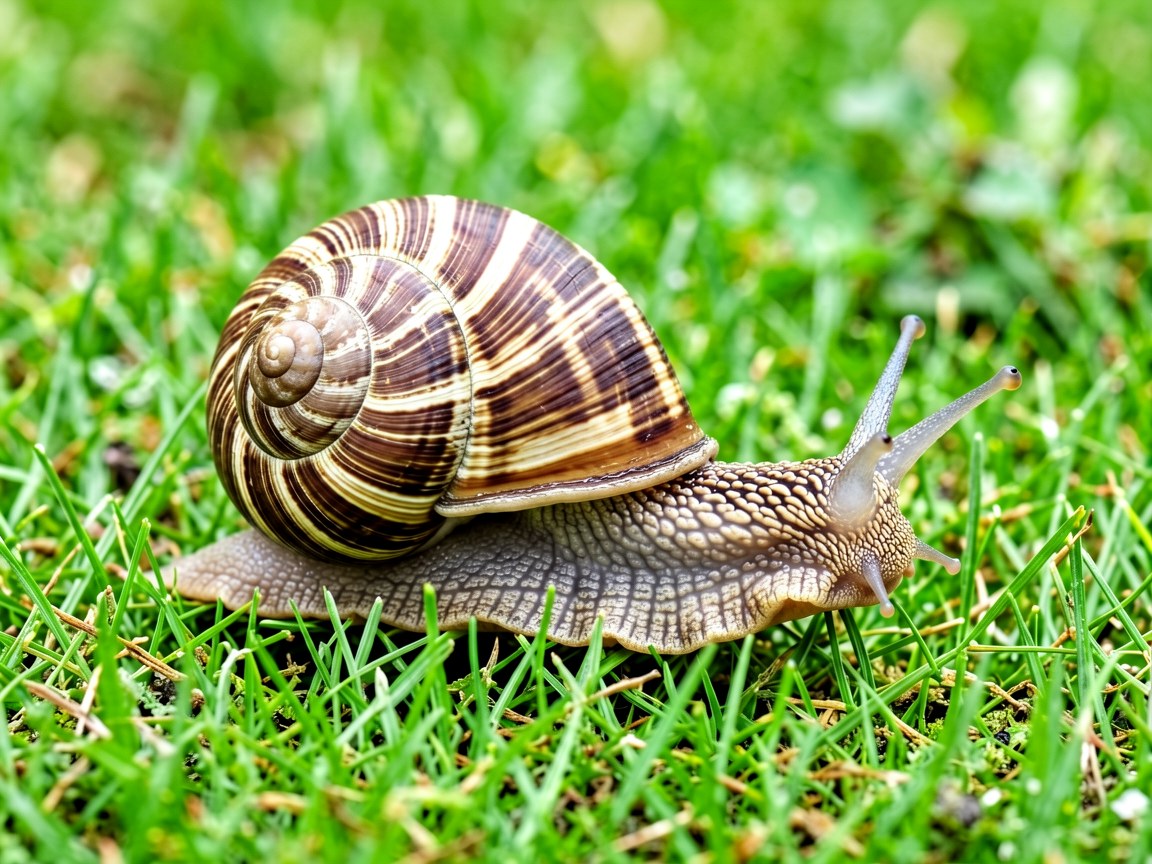
Helix pomatia | Roman Snail
Introduction
The Roman Snail (Helix pomatia), also called the edible snail or “escargot snail,” is the largest land snail of central and western Europe—a rounded, pale-brown mollusc that has been farmed and eaten since Roman times. Reaching 4–5 cm across its shell, it is the species behind the classic dish of escargot de Bourgogne, but in the wild it is a quiet grazer of gardens, vineyards, and calcareous scrub.
Slow, shelled, and reliant on moisture, the Roman snail is a survivor of drought and cold through remarkable dormancy tricks, and a useful example of how a mollusc conquered the land. It is also a creature of legal protection in parts of its range, where over-collecting once threatened local populations.
Taxonomy
Helix pomatia was described by Linnaeus in 1758; the genus name Helix is the Greek for spiral, and pomatia refers to a rounded, apple-like form. It belongs to the family Helicidae, within the class Gastropoda—the snails and slugs—and the phylum Mollusca, the molluscs.
Like the common octopus, described in our article on Octopus vulgaris (Common Octopus), the Roman snail is a mollusc, but where the octopus is a soft-bodied cephalopod master of the sea, the Roman snail is a gastropod that sealed itself inside a permanent chalky shell to conquer dry land. The two show the range of the molluscan body plan, from ocean hunter to garden grazer.
Physical Characteristics
The Roman snail carries a globular, tightly coiled shell 3–5 cm wide, creamy to brown with faint banding, with a large circular aperture closed in dormancy by a chalky plate (the epiphragm). The soft body is pale grey, with a broad muscular foot for creeping and two pairs of tentacles—the upper, longer pair bearing the eyes at their tips.
It moves on a ribbon of muscular foot powered by waves of contraction, leaving a glistening slime trail, and it breathes air through a lung-lined mantle cavity, opening to the surface via a breathing pore. The mouth holds a rasping tongue (radula) of tiny teeth used to scrape leaves and fruit, and the whole animal can retract fully inside its shell when threatened or dry.
Habitat
The Roman snail favours warm, calcareous districts—gardens, vineyards, hedgerows, and scrub on limestone and loess—across central and southern Europe, with introduced populations farther north. It needs calcium in the soil both to build its shell and to thrive, so it is common where chalk or limestone lies near the surface.
It is a creature of milder microclimates: it avoids dense forest shade and cold, wet uplands, and spends hot, dry summers and hard winters sealed in its shell. In farmland it benefits from traditional, low-intensity management and suffers where intensive agriculture removes the flowering, weedy margins it grazes and the moisture it needs.
Diet
The Roman snail is a herbivore and detritivore, scraping leaves, flowers, fallen fruit, and soft decaying plant matter with its radula. It favours tender garden plants and orchard windfall, and in captivity is fed on greens and vegetables, hence its role as a farmed food.
Its diet links it to the decomposition cycle: by eating rotting vegetation it recycles nutrients, and its own body, when it dies, returns calcium and protein to the soil. As a slow grazer it does little harm in the wild but can be a minor pest in gardens and vineyards where it is abundant.
Reproduction
The Roman snail is a hermaphrodite, carrying both male and female organs, and two individuals mate by exchanging sperm before each lays a clutch of large, chalky eggs in a shallow nest in the soil. The eggs need warmth and moisture to develop, and the young hatch as miniature snails with a fragile first shell.
Because the shell demands calcium, egg-laying is concentrated in late spring and early summer after rain, and a single snail may lay several dozen eggs in a season. The young grow through the warm months, and survival through the first winter depends on finding a safe, damp refuge in which to seal and wait.
Conservation
The Roman snail is locally common but has declined in places through habitat loss, agricultural intensification, and heavy collection for food, and it is legally protected in countries such as Switzerland and Germany, where closed seasons and permits restrict harvesting. In some regions it is farmed in snaileries rather than taken from the wild.
Its future is tied to traditional, calcium-rich farmland with weedy, moist margins and hedgerows, and to restraint in wild collection. Conservation measures are light-touch—protecting calcareous habitat, limiting take, and encouraging low-intensity management—since the snail itself is not rare, only locally pressured by over-harvest.
Fun Facts
- It is the original “escargot,” farmed by the Romans and still the species behind Burgundy snails.
- In summer dormancy it seals its shell mouth with a chalky door (epiphragm) to lock in moisture.
- It is hermaphrodite, so any two adults can mate and both lay eggs.
- It breathes air through a lung, not gills, making it a true land snail.
- Protected by law in several countries, it may not be collected freely in peak season.
[…] Romans commonly kept snails for the table. They built special pens called cochlearia in which the Roman snail was fattened on milk, bran and herbs before being cooked. Shells of these snails have been found in […]