 By st20113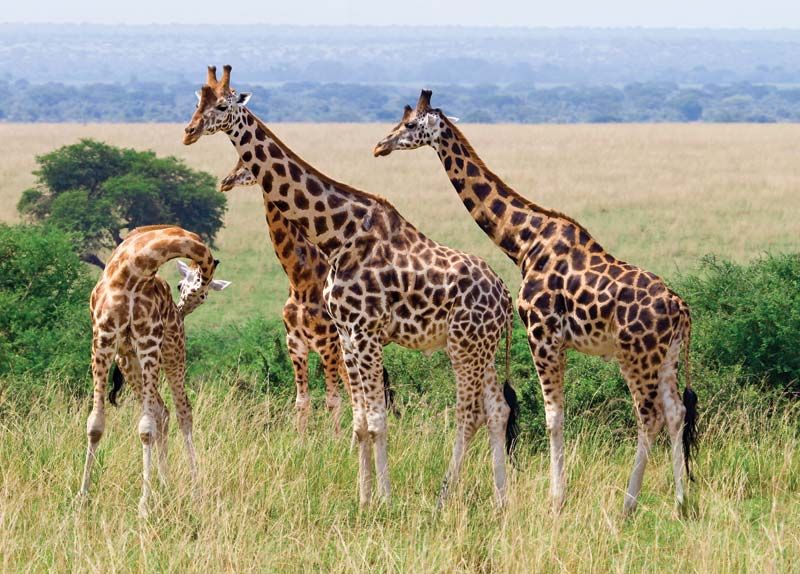
The giraffe (Giraffa camelopardalis) is the tallest living terrestrial animal and the largest ruminant on Earth. Native to the savannas and open woodlands of Africa, giraffes are instantly recognizable by their extraordinarily long necks, distinctive coat patterns, and towering stature, which can reach heights of up to 5.5 meters (18 feet). These gentle giants play a quiet but important role in their ecosystem, shaping vegetation structure and dispersing seeds across the landscape.
Physical Characteristics
A giraffe’s neck alone can measure up to 2 meters, yet it contains only seven cervical vertebrae—the same number found in humans and most other mammals, just greatly elongated. Their legs are roughly 1.8 meters long, and their hearts weigh about 11 kilograms, generating enough blood pressure to pump blood up the long neck to the brain. Each giraffe’s coat features a unique pattern of polygonal patches separated by pale lines, much like a human fingerprint. Both males and females carry two to five ossicones—skin-covered horns—atop their heads.
Diet and Feeding
Giraffes are browsers that feed primarily on the leaves, flowers, and fruits of woody plants, especially acacia trees. Their long, prehensile tongues (up to 45 cm) and flexible upper lips allow them to select the most nutritious shoots while avoiding thorns. Like the African elephant, giraffes are megaherbivores that profoundly influence plant communities, though they prefer browsing at heights unreachable by most other ground-dwelling animals.
Social Behavior
Giraffes live in loose, fluid herds with no strong permanent bonds. Males establish dominance through “necking”—swinging their necks to deliver powerful blows—with the winner gaining preferential access to females. Females form bond groups and collectively look after calves. Despite their size, adult giraffes have few natural predators, though young calves may fall prey to lions and spotted hyenas.
Reproduction and Lifespan
After a gestation of about 15 months, a single calf is born, dropping nearly 2 meters to the ground. Calves can stand and run within hours. In the wild, giraffes live around 20 to 25 years. Maternal care is intensive during the first few months, when calves gather in “crèches” while mothers forage nearby.
Conservation Status
The IUCN lists giraffes as Vulnerable, with some subspecies classified as Endangered. Over the past three decades, giraffe numbers have declined by more than 40 percent due to habitat loss, civil unrest, and poaching—a trend sometimes called the “silent extinction.” Protected reserves and transboundary conservation programs are now crucial to securing their future.
Giraffes are among the most iconic animals of the African continent, symbols of grace and curiosity. Their survival depends on continued habitat protection and a global commitment to conserving the open ecosystems they help define.
[…] and curved backward like lyres. The long, flexible neck and raised posture give the gerenuk a Giraffe-like silhouette. Their large, dark eyes and mobile lips help them select tender leaves, while a […]