 By st20113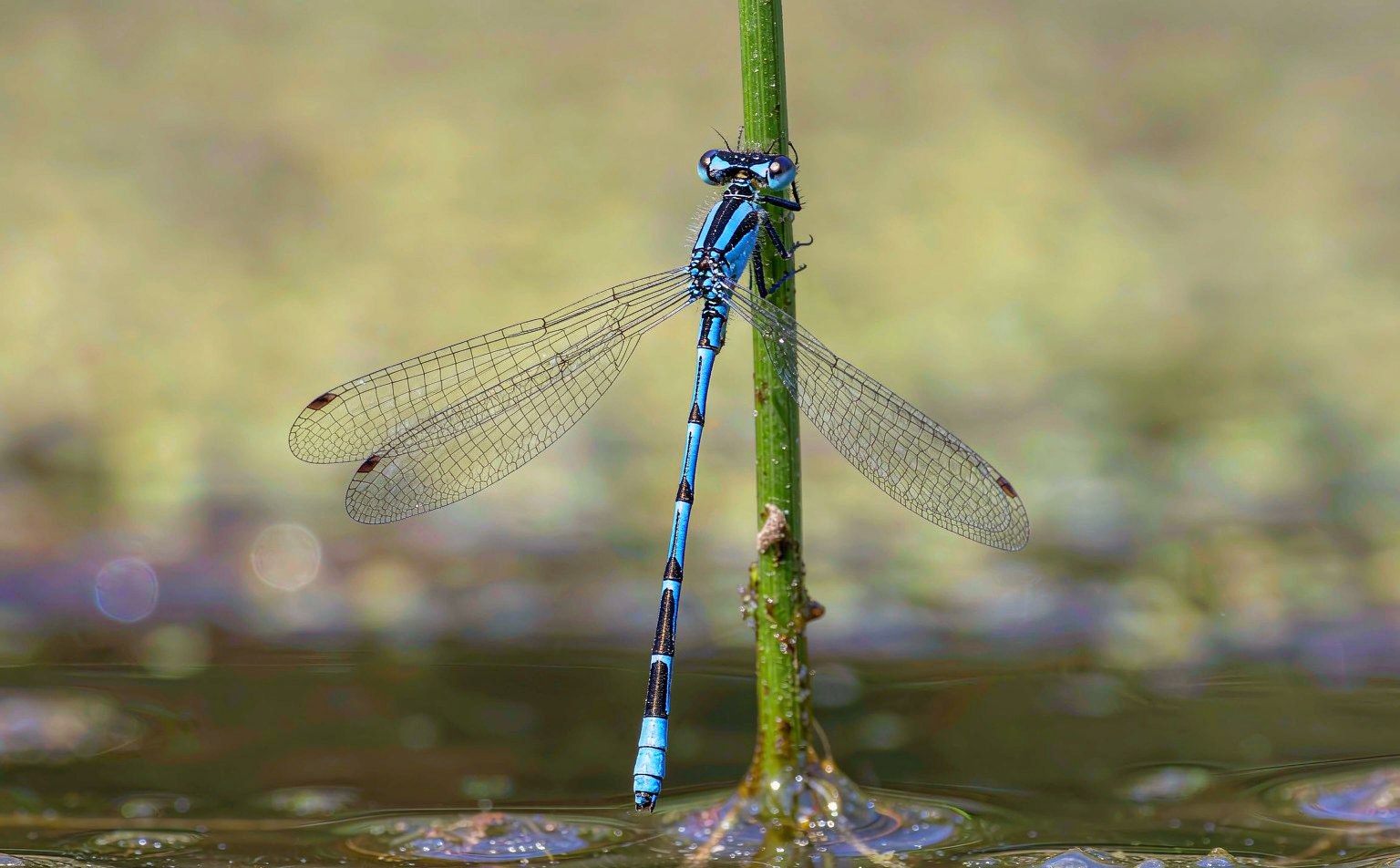
Coenagrion puella | Azure Damselfly
Introduction
The Azure Damselfly (Coenagrion puella) is one of the commonest and most graceful damselflies of Europe, a slender insect of ponds, lakes and slow canals that flits low over the water from late spring to summer. Males are a striking sky-blue with black markings, while females may be blue or a green-and-black form, adding to the variety on the reed stems. Small and delicate, it is nonetheless a sharp predator of tiny flying insects and a familiar sight to anyone who walks beside fresh water. It is among the first damselflies to appear each year and one of the easiest to recognise.
Taxonomy
Coenagrion puella belongs to the family Coenagrionidae, the narrow-winged damselflies, and is the type species of the large genus Coenagrion. It is one of several similar blue damselflies and is told from its relatives by the shape of the black markings on the abdomen. It shares ponds with the broader dragonfly fauna, including the Emperor Dragonfly, and with the Banded Demoiselle, another damselfly of waterside plants. No subspecies are formally separated across its European range, though individuals from different regions vary slightly in size. It is part of a genus that contains many of Europe’s commonest pond damselflies.
Physical Characteristics
Adults are small, with a body length of about 3.2 to 3.6 centimetres and a wingspan near 4.5 centimetres. The wings are clear and narrow, held together above the body when at rest, unlike the spread-winged dragonflies. Males are powdery azure blue on the thorax and abdomen, broken by narrow black bands and a distinctive “well-marked” pattern of spots; females occur in a blue form and a duller green form, both with black markings. The eyes are blue in males and greenish in females. The legs are slender and black, and the head bears a pair of widely separated compound eyes typical of damselflies. Freshly emerged adults are pale pinkish before gaining full colour.
Habitat
Azure damselflies favour still or slow-moving fresh water with abundant emergent vegetation: ponds, lakeshores, canals, ditches and gently flowing rivers with reed beds. They need upright stems—reeds, rushes, sedges—on which to perch, mate and lay eggs, and open water warm enough for the larvae to develop. They tolerate mildly shaded and even garden ponds better than many species, which makes them one of the most widespread damselflies. They meet the European Pond Turtle-inhabited waters and the Common Frog-breeding margins of the same healthy ponds.
Diet
Adults hunt small flying insects—midges, gnats, aphids and tiny flies—caught in short darts from a perch or in slow handling flight just above the water. They are beneficial predators of nuisance insects around ponds. The larvae are aquatic predators of water fleas, mosquito larvae and other small invertebrates, lurking among pond weeds and leaf litter. Both stages help keep the water’s invertebrate life in balance. The species thus links the underwater nursery to the air above, feeding and being fed upon within the pond ecosystem.
Reproduction
Mating follows the typical damselfly tandem: the male clasps the female’s head and the pair form a heart-shaped “wheel” as she curves her abdomen to receive sperm. They then fly together to waterside plants, where the female slits open soft stems and inserts eggs underwater, the male often still guarding her. The larvae, called nymphs, live among pond vegetation for several weeks to a few months before climbing a stem to moult into the adult. There is no care after egg-laying, and adults live only a few weeks through the summer.
Conservation
The azure damselfly is abundant and rated Least Concern across its range. It is adaptable and readily uses garden and park ponds, so it is less threatened than specialist species, but it still suffers where ponds are filled in, heavily stocked with fish that eat the larvae, or smothered by pollution. It benefits from leaving marginal vegetation un-cut, from creating new ponds, and from reducing pesticide runoff. Because it is so common and visible, it serves as a useful, everyday indicator that a pond still supports a healthy aquatic community.
Fun Facts
- Males are sky-blue, but females come in both blue and green forms.
- It rests with its wings pressed together straight above its back.
- The mating pair forms a neat heart-shaped “wheel” in the air.
- The female lays eggs inside living plant stems just under the water.
- It is often the first damselfly to appear each spring.
[…] are the narrow winged damselflies. Our animal shares that family with the Azure Damselfly. That insect is a brighter blue. It lives in still […]