 By st20113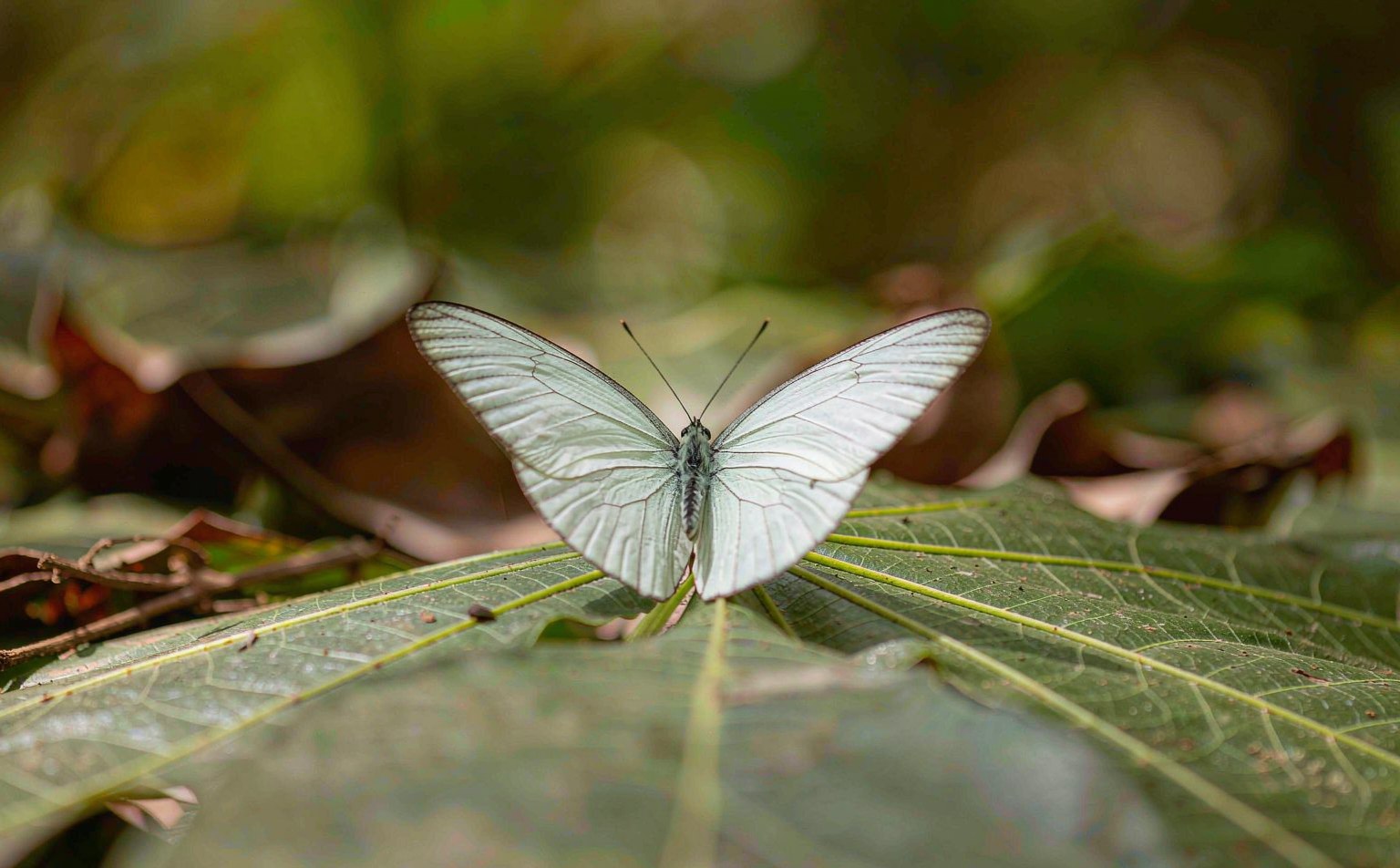
Leptidea sinapis | Wood White
Introduction
The Wood White (Leptidea sinapis) is a delicate, chalk-white butterfly of woodland rides and hedgerows, easily mistaken for a [Small White](https://www.gloencyc.com/small-white-butterfly-pieris-rapae/) but distinguished by its slower, weaker flight and the greenish undersides of the male’s wing tips. A butterfly of dappled shade rather than open meadow, it has declined in parts of its range and is a species of quiet conservation interest.
Taxonomy
The Wood White is a pierid, a member of the family Pieridae and the subfamily Dismorphiinae, and is the smallest of the European whites in its group. It was long confused with a second species, Leptidea reali, and the two are now separated by genital examination rather than appearance. It is related to the garden whites but prefers woodland margins and rides over farmland and gardens.
Physical Characteristics
Adults have a wingspan of 38 to 48 millimetres. The wings are pure white above, the male with a grey-green dusting at the wing tip, the female plainer; the undersides are white with a faint green-grey wash that helps the resting butterfly vanish against leaves. The body is slim and grey, the antennae clubbed and dark.
The flight is weak and fluttering, with the butterfly often settling among grasses and low plants rather than on flowers in full sun. The caterpillar is a green larva with a yellow line and a forked tail, coloured to match the leaves of its food plants. The chrysalis is green or brown and hangs from a stem, shaped like a small pod.
Habitat
The Wood White favours light woodland, rides, glades, hedgerows and scrub where its larval food plants grow, especially in calcareous districts. It needs a mosaic of sun and shade and avoids dense, dark forest and open arable land alike. It is a weak colonist, so isolated populations are vulnerable when suitable habitat is lost or becomes too shady or too overgrown.
Diet
Adults take nectar from a range of flowers including bluebell, bugle, bird’s-foot trefoil, hawthorn and bramble, favouring those in lightly shaded spots. The caterpillars feed on the leaves of leguminous plants such as tufted vetch, meadow vetchling, bitter-vetch and goatsrue, resting by day along the midrib and eating at night. The link to vetches ties the butterfly to flower-rich grassland within woodland.
Reproduction
Females lay single pale green eggs on the leaves or flower buds of the larval food plant, often choosing young growth. The caterpillar feeds and grows through several instars, then pupates on a stem. There are usually two broods a year in warmer areas, with adults flying in late spring and again in midsummer; in cooler regions a single brood occurs and the chrysalis overwinters.
Conservation
The Wood White has declined locally through the loss of coppice management, scrub encroachment and the disappearance of flower-rich rides, and it is a priority species in several conservation programmes. It benefits from ride management that keeps a varied structure of sun and shade and from maintaining vetch-rich grassland. As a poor disperser, it relies on a network of nearby habitats, making connectivity important for its survival.
Fun Facts
- Its weak, fluttering flight and green-tipped wings separate it from the common Small White.
- The species was only recently split from a look-alike, *Leptidea reali*, by close study.
- It prefers dappled woodland shade over sunny gardens and fields.
- The caterpillars feed on wild vetches rather than cabbage family plants.
- Because it spreads poorly, isolated colonies are easily lost when habitat changes.