 By st20113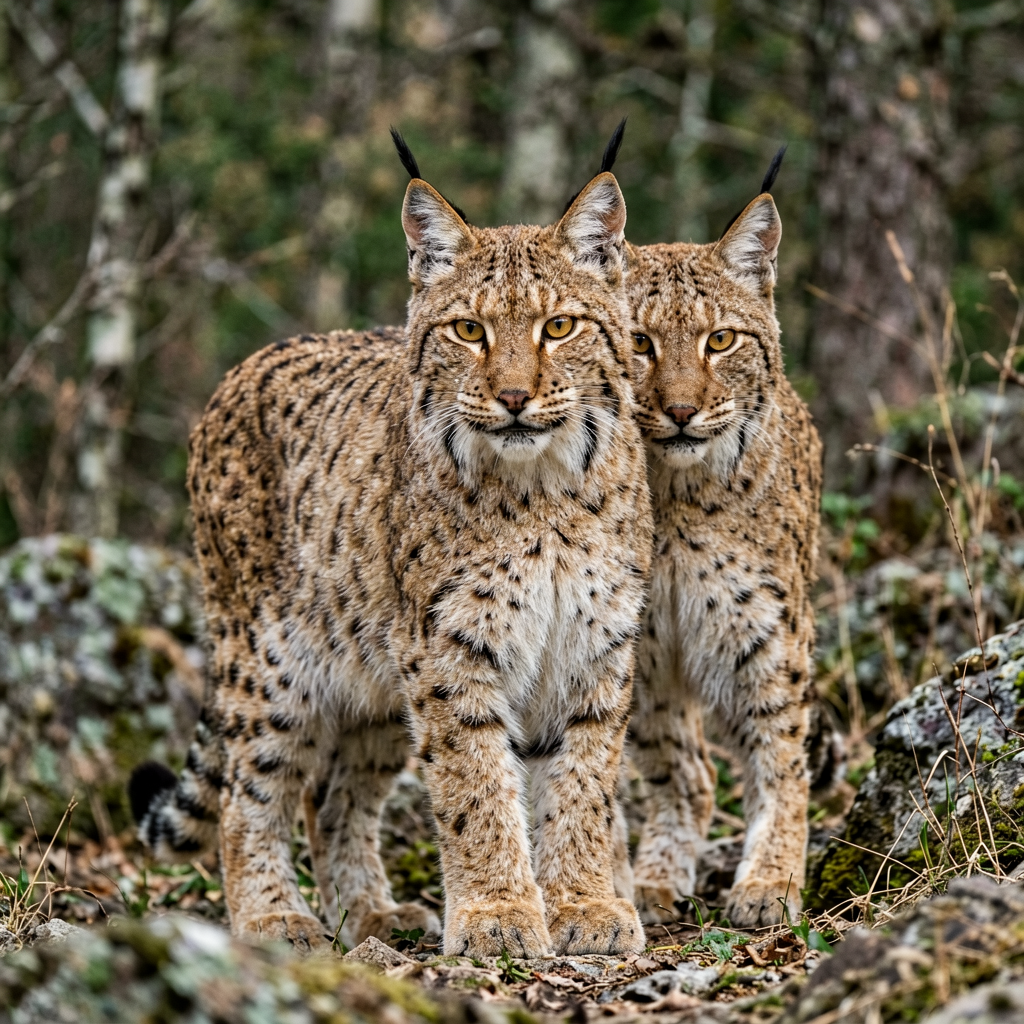
Lynx lynx | Eurasian Lynx
Introduction
The Eurasian lynx (Lynx lynx) is a medium-sized wild cat native to forests across Europe and Asia. It is the largest and most widespread member of the lynx genus, ranging from the dense woodlands of Central Europe to the boreal taiga of Siberia. This elusive predator plays a vital role in maintaining balanced ecosystems by regulating populations of medium-sized ungulates and small mammals.
Recognized by its distinctive appearance, the Eurasian lynx features a thick, spotted coat, a short bobbed tail, and prominent black tufts on its ears. Its large, padded paws act as natural snowshoes, allowing it to navigate deep winter snow with remarkable ease. These adaptations make it well-suited to the cold, forested environments it calls home.
Despite its wide distribution, the Eurasian lynx has faced significant population declines over the past two centuries due to hunting, habitat loss, and persecution by livestock farmers. Conservation efforts across its range have helped stabilize and even recover some populations, though it remains a species of concern in certain regions.
Taxonomy
The Eurasian lynx belongs to the family Felidae and the genus Lynx, which also includes the Iberian lynx, the Canada lynx, and the caracal. It was first described by Carl Linnaeus in 1758. The species is divided into several subspecies based on geographic variation in size and coat color, with animals in the far north generally larger and paler than their southern counterparts.
Genetic studies have confirmed that the Eurasian lynx is most closely related to the Canada lynx, with both species sharing a common ancestor. The two are sometimes considered part of a single species complex, though they are generally classified separately. The Eurasian lynx’s nearest relative within its range is the caracal, with which it shares certain morphological traits.
Unlike the grey wolf, which occupies a broader ecological niche across diverse habitats, the Eurasian lynx is a specialized forest predator. Its evolutionary history reflects adaptation to wooded environments, where its camouflage and stealth are essential for survival.
Physical Description
The Eurasian lynx is a robust feline with a body length of 75 to 110 centimeters and a tail measuring only 10 to 25 centimeters. Males are noticeably larger than females, weighing between 18 and 30 kilograms. Its coat varies seasonally, ranging from pale yellowish-grey in winter to reddish-brown in summer, with dark spots that provide effective camouflage in dappled forest light.
One of its most striking features is the facial ruff of long hair framing its face, which gives the lynx its characteristic expressive appearance. The ear tufts, composed of long black hairs, are thought to enhance hearing by channeling sound into the ear canal. Its large, forward-facing eyes provide excellent binocular vision, essential for a nocturnal and crepuscular hunter.
The lynx’s paws are exceptionally large relative to its body size, a trait that distinguishes it from other felids. Each paw bears retractable claws and thick fur on the soles, offering traction on ice and support while moving through deep snow. These physical adaptations underscore the species’ specialization for life in cold, forested habitats.
Habitat
The Eurasian lynx inhabits dense forests, particularly coniferous and mixed woodlands, across its extensive range. It prefers areas with substantial ground cover and a reliable supply of prey, avoiding open plains and heavily deforested regions. In Europe, it is found in the Carpathians, the Alps, the Balkans, and scattered populations in Central and Northern Europe.
Its habitat requirements include sufficient prey density and minimal human disturbance. The species is known to overlap with the brown bear in several forested regions, where both predators coexist in relatively undisturbed wilderness areas. Lynx territories are typically smaller than those of larger carnivores, reflecting its reliance on concentrated prey populations.
In Asia, the Eurasian lynx extends across the taiga of Siberia and into mountainous regions of Central and South Asia. It demonstrates remarkable adaptability, occupying elevations from sea level to over 3,000 meters, provided suitable forest cover and prey are available.
Diet
The Eurasian lynx is a carnivorous predator whose diet consists primarily of medium-sized ungulates such as roe deer, red deer calves, and young wild boar. In areas where large prey is scarce, it supplements its diet with hares, rodents, and occasionally birds. Its hunting strategy relies on stealth and ambush rather than prolonged pursuit.
Lynx are solitary hunters that patrol well-defined territories, marking them with scent and scratch marks on trees. They typically stalk prey to within a few meters before launching a short, powerful pounce. Their large paws and flexible spine allow them to leap significant distances, making them effective hunters even in dense undergrowth.
The species exerts top-down control on prey populations, influencing the structure of forest ecosystems. By culling weak, old, or young individuals, lynx help maintain healthier prey herds and reduce the spread of disease among ungulate populations.
Reproduction
Eurasian lynxes breed once a year, typically between late winter and early spring. Mating is brief, and females give birth after a gestation period of approximately 63 to 72 days. Litters usually consist of two to three kittens, though larger litters of up to five have been recorded.
Kittens are born blind and completely dependent on their mother. They remain in a den for several weeks before venturing out, learning to hunt through observation and play. Mothers are highly protective and will relocate their young if the den is disturbed.
Sexual maturity is reached at around 10 to 12 months, though most females do not breed until their second year. The species has a relatively low reproductive rate compared to other carnivores, which makes population recovery from declines a slow process.
Conservation
The Eurasian lynx is listed as Least Concern on the IUCN Red List, but its status varies significantly across its range. Populations in Central Europe have rebounded thanks to strict protection laws and rewilding initiatives, while some isolated groups remain vulnerable. In parts of Asia, hunting and habitat fragmentation continue to threaten local populations.
Conservation programs have focused on corridor restoration, anti-poaching enforcement, and mitigating human-lynx conflicts. Compensation schemes for livestock losses have been introduced in several countries to reduce retaliatory killings. Public education campaigns aim to shift perceptions of the lynx from threat to valued ecosystem partner.
Ongoing monitoring through camera trapping and genetic sampling provides valuable data on population trends. Continued international cooperation is essential to ensure the long-term survival of this iconic forest predator.
Fun Facts
- The Eurasian lynx can leap up to three meters horizontally in a single bound, making it one of the most agile jumpers among wild cats.
- Its ear tufts function as acoustic funnels, helping the lynx detect the subtle movements of prey hidden beneath snow or leaf litter.
- Despite its reputation as a solitary hunter, lynx have been observed tolerating each other near abundant prey sources, a rare behavior among felids.
- The species can survive on as few as one to two large prey animals per week, demonstrating remarkable energy efficiency.
- Eurasian lynx have been successfully reintroduced to several European countries, including Belgium, the Netherlands, and parts of the United Kingdom, where they had been extinct for centuries.