 By st20113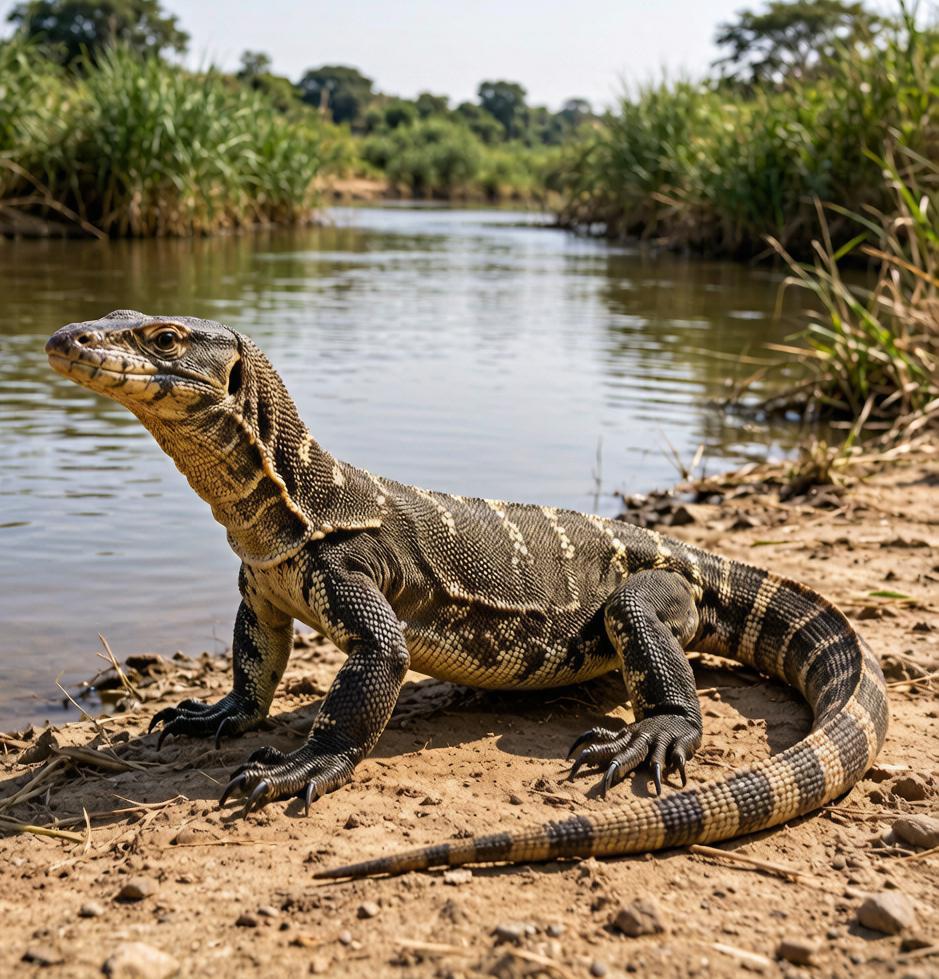
Introduction
The Nile Monitor is one of Africa’s largest lizards, a powerful, semi-aquatic reptile that haunts the rivers, lakes and swamps of sub-Saharan Africa. Sleek and muscular with a long neck, a deep tail and sharp claws, it is an expert swimmer and climber equally at home on land, in water and among the branches of waterside trees. An opportunistic predator and scavenger, it plays an important role in its wetland ecosystem, and it is among the most widespread and adaptable monitors on the continent.
Taxonomy
Varanus niloticus belongs to the family Varanidae, the monitor lizards, the same family as the Komodo dragon and the broader lizard radiation that includes the lizard. The genus Varanus is distributed across Africa, Asia and Australia, with the Nile monitor among the most successful African members. Once thought to be a single widespread species, it is now sometimes split, with a smaller relative in West Africa; nevertheless it remains one of the best-known large lizards of the African interior and coasts.
Physical Characteristics
Adults commonly reach 1.2 to 2 meters in length and may weigh more than 15 kilograms in large individuals. The body is muscular and covered in small, keeled scales, typically olive or black above with pale yellow or cream bands and ocelli (eye-like spots) along the back and tail. The head is elongated with a rounded snout, and the nostrils sit far back to aid breathing while submerged. The long, laterally compressed tail is a powerful swimming rudder, and the strong limbs bear long claws used for climbing, digging and tearing prey apart at the water’s edge.
Habitat
Nile monitors inhabit a great variety of watery habitats: rivers, lakes, swamps, mangroves, estuaries, agricultural canals and even coastal shores. They are rarely far from permanent water, which they use for refuge, hunting and travel. During the day they bask on rocks, logs or low branches, slipping into the water at the first sign of danger. They den in burrows, hollow logs or thick vegetation, and in cooler periods they may retreat underground. Their tolerance of human-altered wetlands lets them persist across much of Africa.
Diet
These monitors are formidable, opportunistic feeders. They take fish, frogs, crabs, turtles and their eggs, birds and their eggs, small mammals, reptiles, insects and carrion, hunting both on land and in the water. Young lizards eat mostly insects and small invertebrates, shifting to larger prey as they grow. With keen sight and smell they locate nests and scavenge readily, and their strong jaws and claws let them crush shells and tear flesh. As both predator and scavenger, the Nile monitor helps recycle nutrients and control populations of pests and sick animals.
Reproduction
Breeding occurs in the warm season. Females lay from ten to sixty leathery eggs, often in a termite mound, an abandoned burrow or a rotting log, where the warmth aids incubation. The eggs hatch after several months, and the tiny, independent young must fend for themselves immediately. Hatchlings are vulnerable to birds, snakes and larger monitors, but those that survive grow steadily, reaching maturity in a few years. Long-lived in the wild, adults can persist for well over a decade.
Conservation
The Nile monitor is listed as Least Concern and remains common and widespread across sub-Saharan Africa. It is hunted locally for meat and skin and collected for the pet trade, but its adaptability and high reproductive output keep populations stable overall. The main concerns are severe wetland loss and pollution in some regions. Protecting rivers, lakes and swamps, along with the termite mounds and banks where they nest, is enough to secure this resilient and ecologically valuable African lizard.
Fun Facts
A Nile monitor can hold its breath and stay submerged for many minutes while hunting or hiding. Its tail is a deadly whip and a powerful swimming propeller. It often raids crocodile and turtle nests for eggs, risking a fierce parent’s wrath. Young monitors are expert climbers that retreat up trees to escape danger. Despite their fearsome look, they prefer flight to fight and will bolt for the water at the first hint of trouble.