 By st20113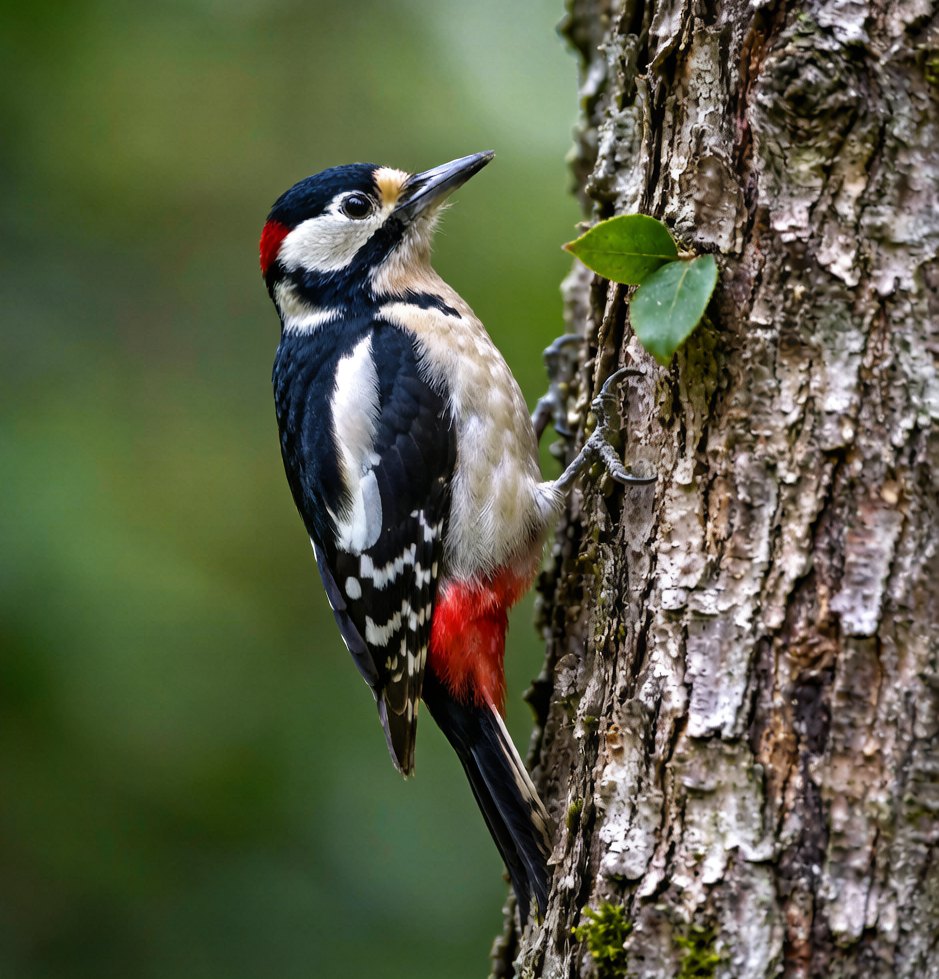
Introduction
The Great Spotted Woodpecker is the most familiar woodpecker of European woodlands, parks and gardens. About the size of a starling, it is unmistakable with its black-and-white barred back, red undertail and, in males, a red nape patch. Famous for drumming on dead wood and resonating branches, it announces territory and searches for insects hidden beneath bark. Adaptable and widespread, it has even colonized city parks where mature trees provide the cavities it needs to nest and raise its young.
Taxonomy
Dendrocopos major sits within the woodpecker family Picidae, a global group of more than two hundred species. The genus Dendrocopos includes several spotted woodpeckers of Eurasia, distinct from the common kingfisher and other bird families despite sharing the same woodlands. Several subspecies are recognized across its huge range from southern Europe to the Pacific coast of Asia. Its closest relatives include the Syrian and white-winged woodpeckers of adjacent regions, with which it forms a closely knit clade of pied, drumming forest birds.
Physical Characteristics
Adults measure twenty to twenty-four centimetres with a wingspan near thirty-five to forty centimetres. The plumage is boldly patterned: white shoulder patches, black wings with white bars, and a white belly marked by black flank streaks. The stiff tail feathers prop the bird against trunks, while the strong, chisel-like bill hammers into wood with remarkable force. A long, barbed tongue can be extended deep into cracks to spear insect prey hidden from view. Zygodactyl feet—two toes forward and two back—give a vice-like grip on vertical bark as the bird climbs with short, bouncing hops.
Habitat
Great Spotted Woodpeckers favor deciduous and mixed woodlands, tall parks, orchards and tree-lined avenues, avoiding treeless open ground where they cannot nest. They need trees old enough to contain dead wood and natural cavities for breeding and roosting. In winter they range more widely, visiting feeders for suet and peanuts where people provide them. The species tolerates fragmented habitat better than many woodland birds, provided a few large, mature trees remain to supply both food and safe nest sites through the seasons.
Diet
Its diet shifts with the season in a predictable rhythm. In summer it takes beetles, ants, caterpillars and other invertebrates gleaned or excavated from bark; in winter it increasingly eats tree seeds, especially the kernels of conifer cones, which it wedges into bark crevices as makeshift anvils. Sap may be drunk from its own drilled holes, and fallen fruit is taken when available. This flexibility helps it survive when insects are scarce, and it readily exploits garden feeders, becoming a regular visitor to many suburban households across its range.
Reproduction
Breeding begins in spring when both sexes excavate a new nest cavity in a dead or decaying trunk, usually two to fifteen metres above ground. The female lays four to six glossy white eggs, incubated by both parents for about eleven to fourteen days. Helpless, naked chicks fledge after roughly three weeks but continue to be fed by the adults for several more weeks as they learn to forage among the branches. Excavating a fresh cavity each year helps reduce the buildup of parasites that could otherwise threaten the developing brood inside the confined space.
Conservation
Listed as Least Concern, the Great Spotted Woodpecker has expanded its range northward and into suburban areas over recent decades. Maturing plantations and increased protection of dead wood have helped populations grow steadily. The main threats are the loss of very old trees and intensive management that removes the decay needed for nest cavities, but the species remains common and widespread. Where dead wood is retained, these woodpeckers thrive and, in turn, provide cavities later used by owls, starlings and bats.
Fun Facts
A woodpecker’s drumming can exceed forty strikes per second, yet its brain is cushioned against concussion by a spongy bone and a flexible skull. The tongue can extend far beyond the bill to snare grubs hidden deep in timber. Males and females can be told apart by the red nape patch, present only in males of the species. They “anvil” pine cones in bark to crack the seeds inside with repeated blows. Their call is a sharp “kik,” quite unlike their rhythmic, resonant drumming on a hollow branch.