 By st20113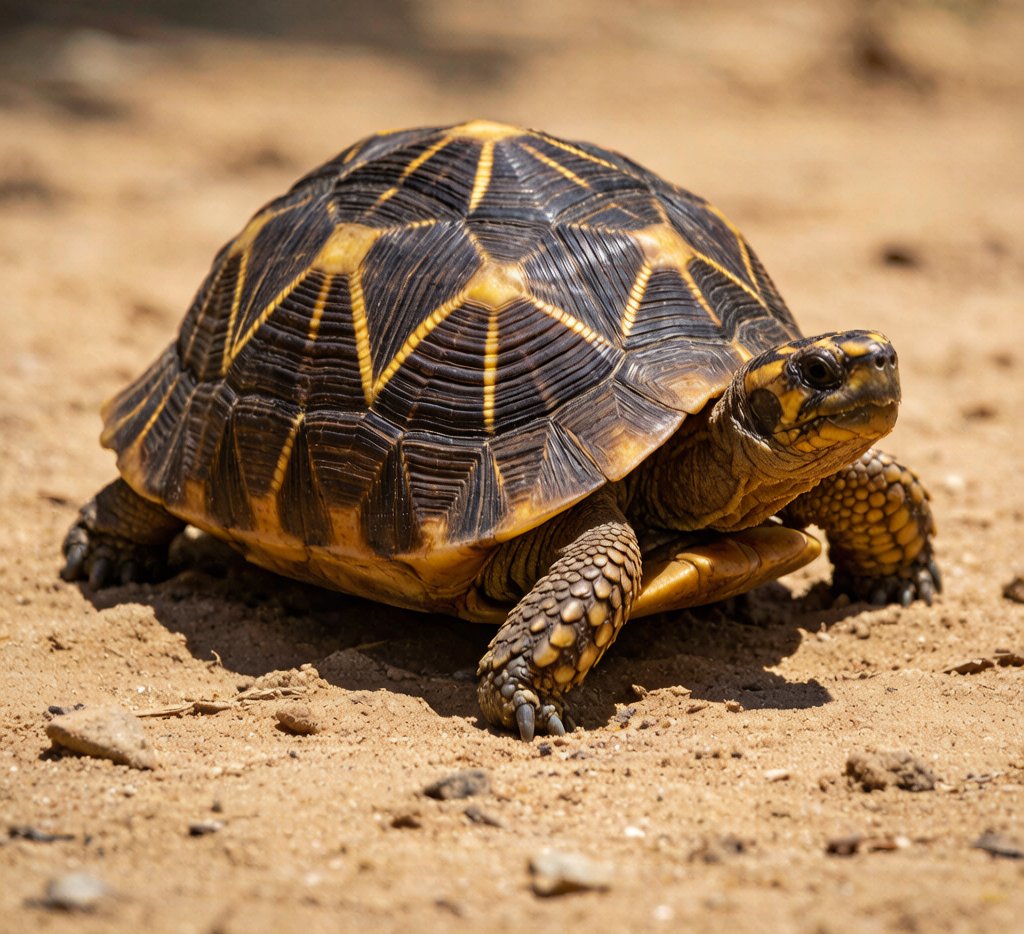
Introduction
The radiated tortoise (Astrochelys radiata) is a striking tortoise endemic to the southern and southwestern regions of Madagascar. It is celebrated for its high-domed shell marked with brilliant yellow lines radiating from the center of each dark plate, a pattern that gives the species both its name and its appeal. Sadly, it is now among the most threatened tortoises in the world, prized by collectors and pushed toward extinction by habitat loss and illegal trade. Reaching a respectable size and living for decades, it has become a flagship for Madagascar’s unique but fragile reptile fauna.
Taxonomy
The radiated tortoise belongs to the family Testudinidae. Once placed in the genus Geochelone, it is now classified in Astrochelys, a group of Madagascar tortoises. Its closest relative is the ploughshare tortoise, also Malagasy and also critically endangered. Unlike the Galapagos giant tortoise, which is much larger, the radiated tortoise is modest in size but unmatched in shell ornamentation. Molecular work continues to clarify relationships among Indian Ocean tortoises, many of which evolved in isolation on Madagascar and neighboring islands before human arrival.
Physical Characteristics
Adults typically measure 30 to 40 centimeters in shell length and weigh 8 to 16 kilograms, with females slightly smaller. The carapace is dome-shaped and black or dark brown, overlaid with radiating yellow or cream star patterns on each scute. The head, legs, and tail are yellow with black markings. These bold markings provide camouflage among dry grasses and leaf litter when viewed from above by predators such as birds of prey. The front legs are covered with blunt scales and are adapted for digging, while the neck can withdraw almost completely into the shell for protection.
Habitat
Radiated tortoises inhabit dry spiny forests, thorn scrub, and coastal dunes of southern Madagascar. They prefer areas with a mix of open ground for basking and low vegetation for foraging. During the hottest part of the day they shelter in burrows or shade, emerging in the morning and late afternoon to feed and thermoregulate. Seasonal droughts force them to rely on succulent plants for moisture, and they may aestivate in shaded refuges until conditions improve. Their survival is tightly linked to the persistence of native spiny forest, one of the most endangered ecosystems on the island.
Diet
They are primarily herbivorous, grazing on grasses, succulents, fallen fruit, and flowers. Like the leatherback sea turtle, they have a specialized diet shaped by their environment, though the radiated tortoise feeds almost entirely on land plants and obtains much of its water from moisture-rich vegetation. In captivity they readily eat leafy greens, but excessive fruit can cause digestive upset. Their grazing helps maintain open habitat structure and may aid in spreading the seeds of certain plants across the dry landscape.
Reproduction
Mating can occur at any time of year but peaks in the warmer months following the rains. Females lay one to four eggs, sometimes up to six, in a shallow nest scraped into the soil and then covered. Incubation lasts about four to seven months depending on temperature, with warmer nests tending to produce females. Hatchlings emerge with soft shells that harden over the first years of life, and they face intense predation from birds, mammals, and introduced dogs until they grow large enough to be protected by their armor.
Conservation
The IUCN classifies the radiated tortoise as Critically Endangered. Its decline is driven by habitat destruction, collection for the pet trade, and subsistence hunting for food. International trade is banned under CITES Appendix I, yet illegal smuggling remains a severe threat, and captive breeding programs in Madagascar, Europe, and the United States are now vital to its survival. Community-based conservation that gives local people incentives to protect tortoises offers the best hope for the species in the wild.
Fun Facts
Radiated tortoises are remarkably long-lived, often exceeding 40 years and sometimes reaching 60 in captivity. They can survive long dry spells by drawing water from food, and their vivid radiating shell pattern is unique to each individual, much like a fingerprint. When threatened they often retreat silently into their shell rather than attempting to flee, relying on their heavy dome to deter even large predators.