 By st20113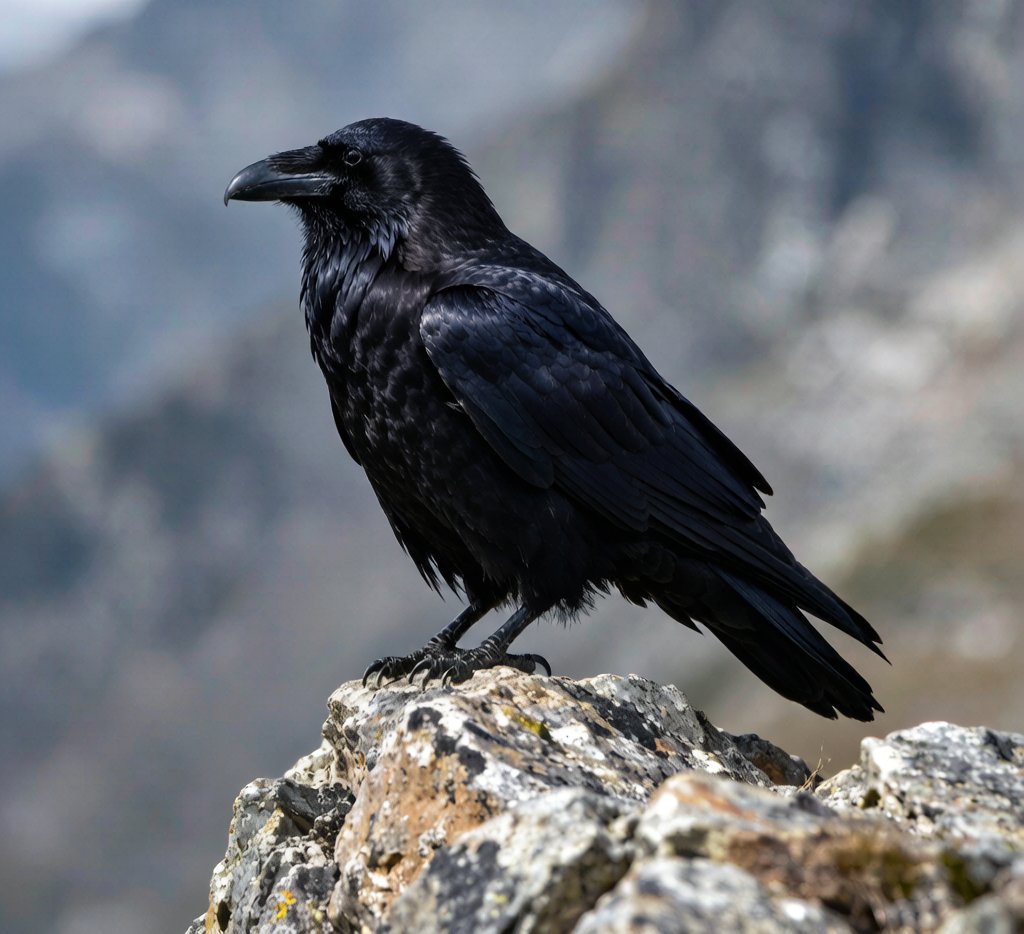
Introduction
The common raven is one of the most intelligent and adaptable birds on Earth, found across the entire Northern Hemisphere in a remarkable diversity of habitats from the Arctic tundra to high mountain peaks and from dense forests to arid deserts. With its glossy black plumage, wedge-shaped tail, shaggy throat feathers, and deep, resonant croaking call, the common raven is unmistakable throughout most of its range. Ravens are remarkably intelligent birds, capable of problem-solving, tool use, social reasoning, and even mimicry of human speech and other sounds. Their complex social lives, long-term pair bonds, and remarkable cognitive abilities have made them the subject of fascination and cultural significance for millennia.
Taxonomy
The common raven belongs to the family Corvidae, order Passeriformes, and genus Corvus. It is the largest of the world’s crow family, with a body length of up to 69 centimeters and a wingspan that can exceed 120 centimeters. The species name corax comes from the Greek word for raven. Among corvids, the common raven is closely related to other large ravens and crows, with the white-necked raven and thick-billed raven among its nearest relatives. Ravens have been the subject of extensive genetic study that has clarified the evolutionary relationships among corvid species worldwide.
Physical Characteristics
The common raven is a large, all-black bird with iridescent plumage that shows purple and green sheens in good light. It has a thick, heavy bill with a slight curve, shaggy throat feathers known as a “beard,” and a long, wedge-shaped tail visible in flight. Its legs and feet are strong and black, and its eyes are dark brown. Ravens are powerful fliers capable of aerial acrobatics including barrel rolls and inverted flight. Juveniles resemble adults but have a duller, less glossy plumage and blue-gray eyes. Ravens can live more than 15 years in the wild, with individuals in captivity sometimes exceeding 40 years of age.
Habitat
Common ravens occupy an extraordinary range of habitats across their Holarctic distribution. They are equally at home in the Arctic tundra, temperate and boreal forests, mountain ranges, grasslands, deserts, and coastal cliffs. Ravens were historically absent from much of the eastern United States but have expanded rapidly in response to human landscape changes, particularly the establishment of agricultural areas and landfills that provide reliable year-round food sources. They are generally non-migratory, with individuals and pairs maintaining year-round territories. Ravens avoid dense unbroken tropical forests but otherwise show remarkable flexibility in habitat selection.
Diet
The common raven is among the most omnivorous of all birds, with a diet that includes insects, small mammals, birds, eggs, carrion, garbage, fruit, seeds, and virtually any other edible item it encounters. Ravens are skilled hunters capable of taking prey as large as young deer and lambs in some regions, though carrion constitutes a significant portion of their diet in many areas. They are known to cache surplus food for later retrieval, sometimes burying items under snow or soil and relocating them days or even weeks later. Ravens will also follow wolf packs to locate and scavenge from their kills.
Reproduction
Common ravens form long-term monogamous pair bonds that can last for life, and pairs work cooperatively to build large nests of sticks, bones, and metal objects on cliff ledges, in trees, or on artificial structures. The female lays three to seven eggs and incubates them for approximately 18 to 21 days, during which time the male provides food. Both parents feed the nestlings, which fledge at around 35 to 40 days old. Young ravens may remain with their parents for several months after fledging, and some individuals assist their parents in raising subsequent broods—a rare form of cooperative breeding among corvids that reflects the complex social intelligence of the species.
Conservation
The common raven is listed as Least Concern by the IUCN and is considered one of the most widespread bird species in the world. While populations have declined in some parts of Europe due to persecution and environmental contaminants, overall numbers appear stable or increasing in many regions. In North America, ravens have significantly expanded their range eastward and into human-modified landscapes. However, ravens are considered agricultural pests in some regions where they predate livestock, and they have been subject to lethal control programs in parts of their range.
Fun Facts
Ravens are among the most intelligent non-human animals on Earth, capable of solving complex problems, using tools, and demonstrating self-awareness in mirror tests. Wild ravens have been observed engaging in play behavior including sliding down snow-covered rooftops and performing aerial acrobatics purely for enjoyment. They are skilled mimics capable of copying human speech and the calls of other animals with remarkable accuracy. Ravens have demonstrated the ability to plan for future events, understand cause-and-effect relationships, and communicate about events happening at a distance—cognitive abilities once thought to be unique to primates. They feature prominently in the mythologies and folklore of cultures across the Northern Hemisphere.