 By st20113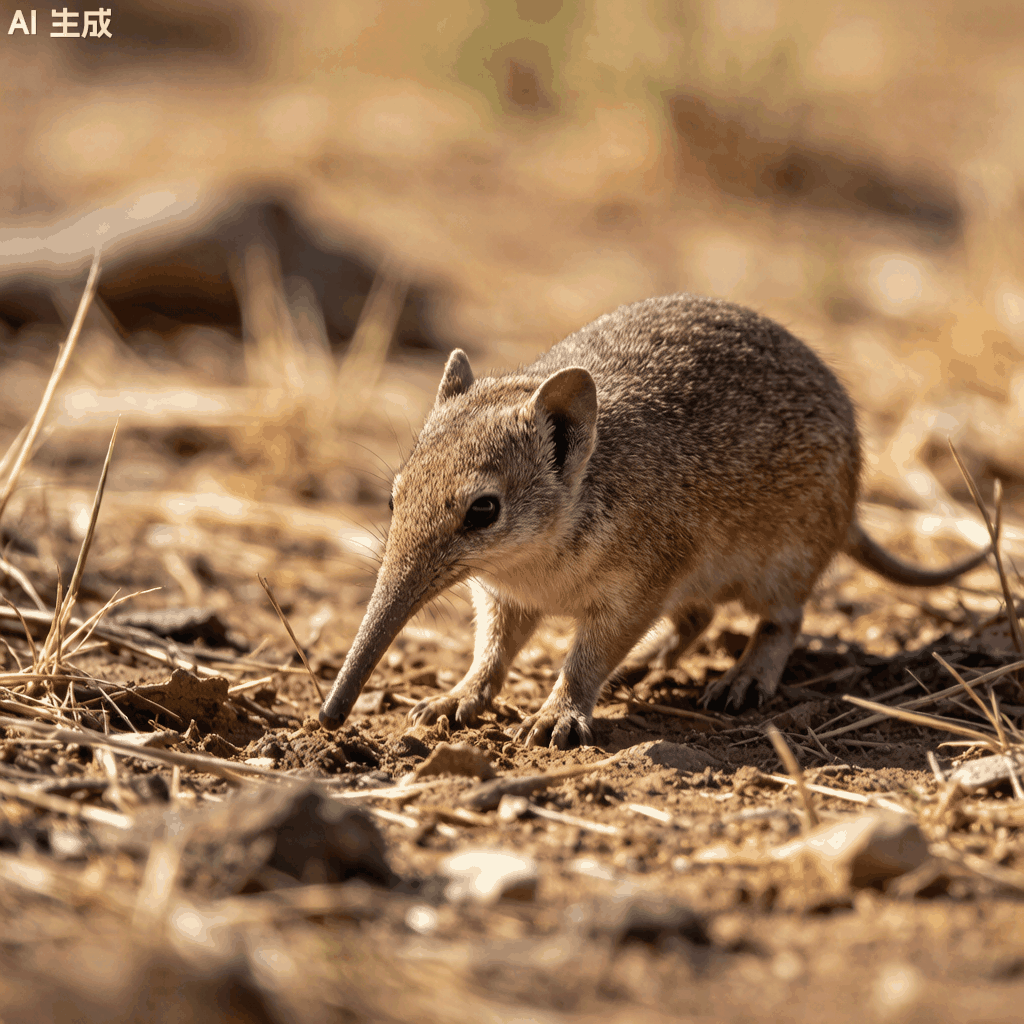
Introduction
The elephant shrew, scientifically known as Elephantulus rozeti and commonly called the North African elephant shrew or the bare-footed elephant shrew, is a small insectivorous mammal native to the scrublands and woodlands of North Africa. Despite its name, it is neither a shrew nor closely related to elephants; the moniker comes from its long, mobile, trunk-like nose that it uses to sniff out food. Like the gray wolf and other placental mammals, it is born relatively well-developed and belongs to the diverse group of mammals that nourish young through a placenta. Elephant shrews are remarkable for their surprisingly close evolutionary relationship to elephants, sea cows, and aardvarks, belonging to the order Afrotheria, a clade of mammals that originated in Africa. Active by day, these tiny creatures dart along well-worn runways beneath shrubs, using their slender legs to sprint from cover to cover. Though little known outside scientific circles, they are important components of arid and semi-arid ecosystems, controlling insect populations and serving as prey for larger animals. Their combination of rat-like body, scaly tail, and trunk-like snout makes them among the most distinctive small mammals on the continent.
Taxonomy
Elephantulus rozeti is a member of the order Macroscelidea, the elephant shrews or sengis, and the family Macroscelididae. The genus Elephantulus, meaning “little elephant,” encompasses many of the smaller species formerly grouped under the name elephant shrews. The species name rozeti honors a naturalist associated with its early description from North Africa. For much of history, elephant shrews were classified near the true shrews and rodents because of superficial similarity, but molecular and anatomical evidence revealed a startling truth: they belong to Afrotheria, the African clade that includes elephants, hyraxes, dugongs, and aardvarks. This makes them more closely related to elephants than to the shrews they resemble. Within Macroscelidea, species are divided between the smaller Elephantulus and the larger, often forest-dwelling genera. Elephant shrews are among the oldest distinct lineages of placental mammals, with a fossil record extending back tens of millions of years in Africa. Their placement in Afrotheria illustrates how physical appearance can be misleading in evolution, and how genetic evidence reshaped our understanding of mammalian family trees.
Physical Characteristics
The North African elephant shrew is a compact mammal weighing roughly forty to sixty grams and measuring about ten to thirteen centimeters in body length, with a tail of similar or slightly longer length. Its most striking feature is the elongated snout, which is flexible and trunk-like, constantly twitching as the animal explores its surroundings. The body is slender and covered in coarse, sandy to grey-brown fur that camouflages against dry soil and leaf litter, often with a lighter underside. The legs are unusually long and slender relative to body size, an adaptation for quick, bounding movement, and the hind limbs are especially powerful. The tail is slender and scaly, sometimes with a slightly tufted tip, and is used for balance rather than grasping. The eyes and ears are moderately sized, suited to a diurnal lifestyle, and the animal has keen sight and hearing. Its feet are bare-soled, a trait reflected in the common name bare-footed elephant shrew. The dentition includes small, sharp teeth adapted for an insect diet. Overall, the elephant shrew’s build reflects a life spent sprinting along ground runways, pausing to dig for prey, and vanishing into cover at the first sign of danger.
Habitat and Distribution
Elephantulus rozeti is distributed across the Maghreb region of North Africa, including Morocco, Algeria, Tunisia, and parts of Libya, occupying a range shaped by Mediterranean and arid influences. It favors open habitats such as scrubland, rocky slopes, dry woodland, maquis, and grassland with scattered shrubs, generally avoiding dense forest and bare desert interior. The species thrives where there is enough low vegetation to provide both cover and the insects it eats, and it is often associated with arid and semi-arid zones where few other small mammals are active by day. Elephant shrews construct and maintain networks of narrow runways through the leaf litter and around the bases of bushes, which they use like highways to forage and escape predators. These pathways are kept clear and are patrolled regularly, a behavior unusual among such small mammals. They shelter in natural crevices, burrows, or dense thickets during the hottest part of the day and at night. Because they rely on ground cover and stable shrubland, changes in land use, overgrazing, and desertification can affect local populations, though the species remains relatively adaptable across its broad North African range.
Diet and Behavior
The North African elephant shrew is predominantly insectivorous, feeding on ants, termites, beetles, and other small invertebrates that it locates with its sensitive trunk-like nose. It forages by darting along its runways, probing leaf litter and soil with the snout, and occasionally digging with its forelimbs to uncover prey. Unlike many small mammals, it does not hoard food extensively and instead feeds frequently through the day to meet its high metabolic demands. Elephant shrews are diurnal and solitary, each individual maintaining a territory centered on its runway network and marking boundaries with scent. They are extraordinarily agile, capable of sudden sprints and rapid changes of direction to evade predators such as snakes, birds of prey, and small carnivores. When alarmed, an elephant shrew freezes, then bolts for the nearest cover along a familiar path. Males and females may share overlapping ranges but generally interact only during mating. Their constant snout twitching and quick, mouse-like movements make them lively occupants of the scrub, and their predation on ants and termites helps regulate invertebrate populations in fragile dry ecosystems.
Reproduction
Elephant shrews are notable among small mammals for a reproductive pattern that resembles that of rabbits and hares more than rodents. After a short gestation of roughly six to eight weeks, the female gives birth to one to three well-developed, precocial young in a hidden nest lined with vegetation, often located in a burrow or dense thicket. The newborns are furred, sighted, and mobile within days, a contrast to the helpless young of many similarly sized mammals. They are weaned quickly, often within a couple of weeks, and reach sexual maturity within a few months, allowing populations to turn over rapidly. Females can breed several times in a year when conditions are favorable, and some evidence suggests they may enter a state of delayed implantation in certain species, though this is not firmly established for E. rozeti. Both parents may maintain separate territories, with the male not heavily involved in rearing. The combination of precocial young and multiple litters gives elephant shrews resilience in variable arid environments, where rainfall and insect abundance can fluctuate sharply. This flexible breeding strategy helps them persist where less adaptable small mammals might fail.
Conservation Status
The North African elephant shrew is currently assessed as a species of Least Concern by the International Union for Conservation of Nature, reflecting its broad distribution and apparently stable populations across the Maghreb. It occupies a variety of habitats and tolerates a degree of human-modified landscape, provided shrub cover remains. Nevertheless, the species faces localized pressures from habitat degradation, overgrazing by livestock, agricultural expansion, and the loss of low vegetation that supports its runway system and prey base. Climate change and increasing aridity across North Africa could intensify desertification and shrink suitable habitat in the long term. Because elephant shrews are small, secretive, and difficult to survey, population trends are not precisely known, and regional declines could go unnoticed. Conservation measures that benefit the species include preserving native scrub and woodland, reducing overgrazing, and maintaining connectivity between habitat patches. As a member of the uniquely African Afrotheria clade, the elephant shrew also holds scientific value as a living representative of an ancient mammalian lineage. Continued monitoring and habitat protection will help ensure this distinctive snouted forager remains a common sight in North African shrublands.
Fun Facts
The elephant shrew’s trunk-like nose is not just for show; it is constantly moving, packed with scent receptors that let the animal detect hidden insects with remarkable precision. Despite the name, elephant shrews are more closely related to elephants than to true shrews, a surprising twist revealed by genetic science. They build and maintain tidy networks of runways through the undergrowth, almost like tiny highways, which they patrol and keep clear of debris. Elephant shrews are surprisingly fast, using their long hind legs to sprint and change direction in a flash to escape predators. Their young are born furred and active, ready to move within days, an unusual trait for such small mammals. A female can produce several litters a year, helping populations bounce back quickly after harsh conditions. The order they belong to, Afrotheria, is an ancient African branch of mammals that also includes elephants, manatees, and aardvarks. Perhaps most charming is that this tiny creature carries a miniature version of an elephant’s most famous feature, proving that evolution sometimes packages greatness in the smallest of bodies.