 By st20113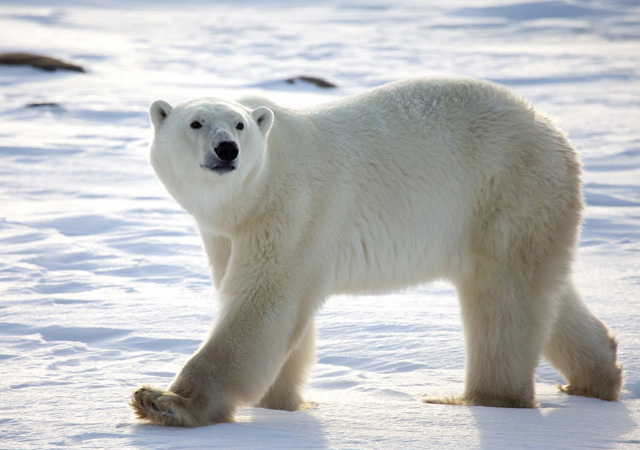
The Polar Bear (Ursus maritimus) is the largest terrestrial carnivore on Earth — an enormous, magnificent apex predator of the Arctic, perfectly adapted to life on the sea ice and in the freezing waters of the circumpolar Arctic. Adult males typically weigh 350–700 kg (770–1,540 lbs) and measure 2.4–3.0 meters (8–10 feet) from nose to tail, with the largest individuals recorded at over 1,000 kg (2,200 lbs). Despite its taxonomic classification as a bear — making it a close relative of the brown bear and the American black bear — the Polar Bear has diverged so significantly from its terrestrial ancestors that it is increasingly considered by some biologists to be more accurately classified as a marine mammal. Its scientific name Ursus maritimus literally means “sea bear,” and indeed the Polar Bear spends so much of its life on sea ice and in the ocean that it is essentially a marine predator, supremely adapted for swimming and hunting in freezing Arctic waters.
Arctic Adaptations
The Polar Bear’s adaptations to its extreme Arctic environment are among the most remarkable in the animal kingdom. Its white fur — which is actually translucent, with each hair shaft being hollow and filled with air for maximum insulation — provides both camouflage against the snow and ice and exceptional thermal insulation, while its black skin beneath the fur efficiently absorbs the limited solar radiation of the Arctic to warm the body. The Polar Bear’s fur is so effective an insulator that adult bears can overheat and must regulate their body temperature by shedding heat through their tongue and foot pads during physical exertion. A thick layer of subcutaneous fat (blubber) up to 11 cm thick beneath the skin provides additional insulation and energy reserves, serving as both a thermal blanket and a metabolic reserve during periods of food scarcity.
Polar Bears are superb swimmers, capable of sustaining swimming speeds of approximately 10 km/h and covering distances of over 300 km in open water. Their large, powerful, partially-webbed front paws — measuring up to 30 cm across — function as effective paddles, while their streamlined body and ability to close their nostrils and ears while swimming allow them to dive and swim underwater for extended periods. This aquatic proficiency is essential for hunting: the Polar Bear’s primary prey is the ringed seal (Pusa hispida) and, to a lesser extent, the bearded seal, which it hunts both on the sea ice and in the water. The Polar Bear’s hunting strategy typically involves stalking seals at their breathing holes in the sea ice — waiting motionlessly for hours until a seal surfaces — before delivering a killing blow with its massive forepaw.
Arctic Ecosystem Role
As the Arctic’s apex land predator, the Polar Bear plays a critical role in the Arctic ecosystem, regulating seal populations and serving as an indicator of overall Arctic ecosystem health. Polar Bears are particularly vulnerable to ecosystem changes because their entire life history — breeding, denning, hunting, and movement — is intimately tied to sea ice. They give birth in snow dens on land or on sea ice, hunt seals on the sea ice platform, and use sea ice as a substrate for long-distance travel across the Arctic basin. The Water Cycle shapes the Polar Bear’s world: the formation and melting of sea ice is fundamentally a product of the interaction between ocean temperature, atmospheric circulation, and the Water Cycle, and any disruption to these processes — such as the warming-driven acceleration of Arctic sea ice loss — has direct consequences for Polar Bear survival. The Polar Bear also shares its Arctic habitat with the Arctic Fox, which scavenges Polar Bear kills and follows Polar Bears across the sea ice — an ecological relationship that connects apex and mesopredator levels of the Arctic ecosystem.
Climate Change Emergency
The Polar Bear is one of the most iconic symbols of the climate crisis and is classified as Vulnerable by the IUCN, with populations projected to decline significantly — by 30–50% — by mid-century under current climate warming trajectories. The scientific consensus is that the primary long-term threat to Polar Bears is the loss of sea ice habitat caused by climate warming. Arctic sea ice is declining in both extent and thickness at rates that far exceed those predicted by climate models just a decade ago, driven by the Arctic amplification of global warming. As sea ice disappears from larger areas of the Arctic for longer periods each year, Polar Bears are forced to spend more time on land, where they cannot hunt their primary prey (seals) and must rely on fat reserves or alternative food sources. The cascading effects of this ecosystem disruption — including increased Polar Bear starvation, reduced reproductive success, increased human-bear conflicts, and population declines — provide an early warning of the ecological consequences of climate change for the entire Arctic.
Orangutan | Pongo Komodo Dragon | Varanus komodoensis Blue Whale | Balaenoptera musculus Polar Bear | Ursus maritimus Rose | Rosa spp. African Wild Dog | Lycaon pictus Water Cycle | Hydrological Cycle
coastal plains, open tundra, and sea ice environments. During winter, some Arctic foxes follow polar bears onto the sea ice, scavenging seal carcasses left by the larger
Habitat loss and the illegal wildlife trade pose the most severe threats to their survival. The polar bear and tiger are also critically threatened, and international conservation efforts have intensified
[…] forage. They practice coprophagy, re-ingesting certain feces to extract more nutrients. Polar Bear and Arctic Wolf hunting grounds often overlap with hare feeding areas. They must remain vigilant […]
[…] Despite their fearsome reputation, brown bears prefer to avoid human contact whenever possible. polar bear gray wolf red […]