 By st20113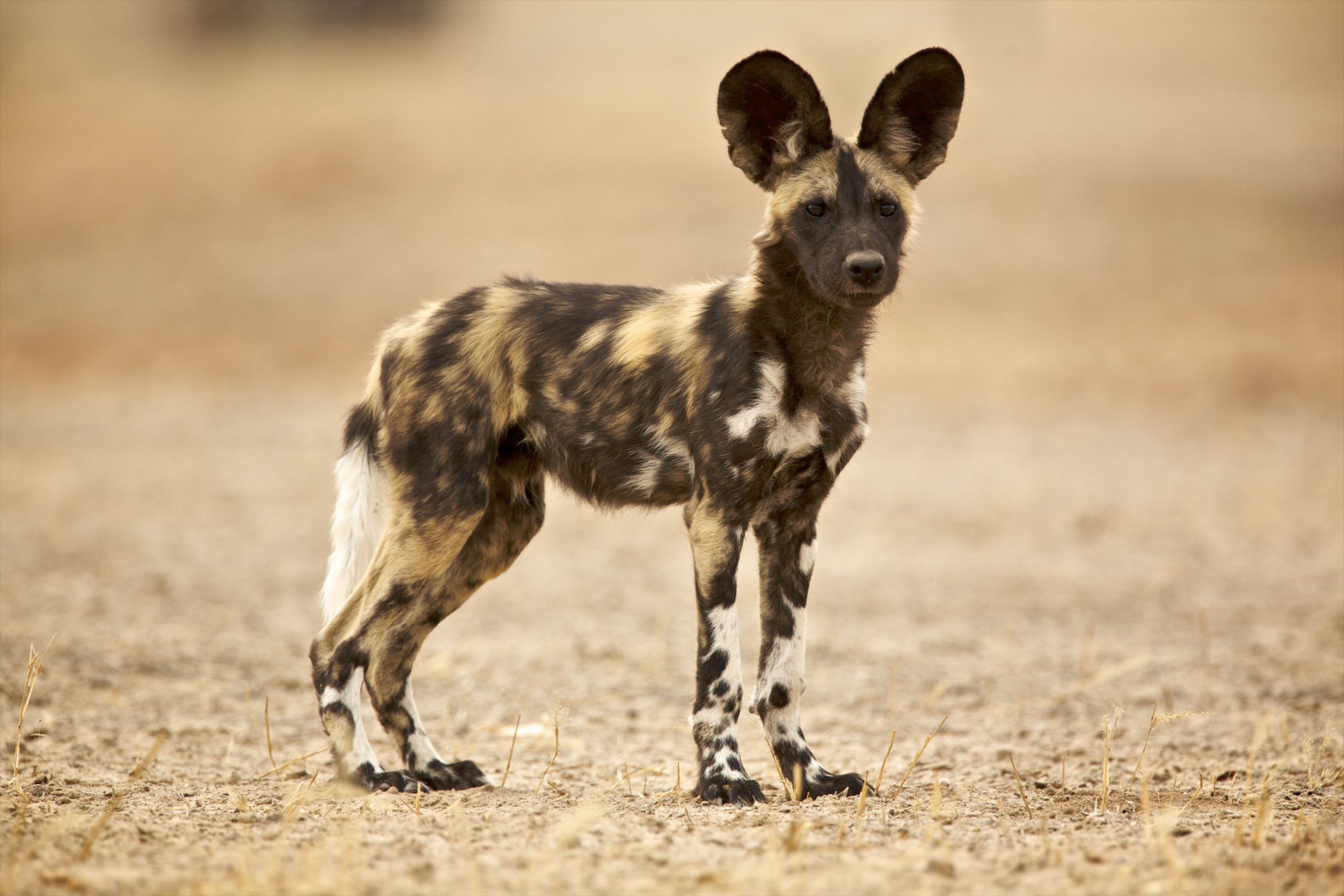
The African Wild Dog (Lycaon pictus), also known as the Cape Hunting Dog, Painted Dog, or Painted Wolf, is one of Africa’s most distinctive and Endangered predators — a highly social canid distinguished by its large rounded ears, mottled coat of brown, black, white, and yellow patches (unique to each individual, like a fingerprint), and its extraordinary cooperative hunting behavior. Native to sub-Saharan Africa, where it inhabits grasslands, savannas, and open woodlands, the African Wild Dog is one of the most efficient hunters on the African continent, with a hunting success rate exceeding 80% — dramatically higher than the Lion (approximately 30%) or the Cheetah (approximately 50%). This efficiency is entirely dependent on the pack’s cooperative hunting strategy, in which the dogs communicate, coordinate, and execute sophisticated pursuit tactics that no single individual could accomplish alone.
Cooperative Hunting
The African Wild Dog’s hunting strategy is a masterpiece of collective coordination. Packs of 10–40 individuals — typically 15–20 — work together using a combination of endurance and strategy to exhaust and capture prey. The hunt typically begins with the pack locating a herd of prey animals — most commonly impalas, gazelles, wildebeest, or warthogs — and then initiating a coordinated pursuit. The dogs use a distinctive “revolving door” system during hunts: some dogs pursue the prey at high speed while others cut off escape routes, and the pursuing dogs periodically rotate positions, allowing fresh dogs to take over the chase while tired individuals drop back. This remarkable stamina-based hunting system allows African Wild Dogs to run prey to exhaustion — sometimes for over 5 kilometers — until the prey collapses from heat exhaustion, at which point the pack collectively holds the prey and dismembers it rapidly.
The African Wild Dog’s hunting efficiency creates significant competitive pressure from other large predators, particularly Lions and Cheetahs, which share the same habitats and compete for similar prey. Studies have shown that Lions will actively seek out and kill African Wild Dogs when the opportunity arises — typically when the wild dogs are resting after a hunt and are vulnerable — and a single Lion can easily kill multiple wild dogs. This competition is particularly intense in areas where the African savanna ecosystem is fragmented by human activity, forcing predators into closer contact and competition. African Wild Dogs have evolved a remarkable counter-strategy: they avoid areas with high Lion density and tend to hunt during daylight hours when Lions are typically resting in shade — a form of temporal niche partitioning that minimizes competitive overlap.
Social Structure and Pack Dynamics
African Wild Dogs live in packs with one dominant breeding pair — the alpha male and alpha female — while all other pack members help raise the pups. This cooperative breeding system is one of the most sophisticated in the animal kingdom: all pack members participate in hunting (providing food for the breeding pair, pups, and elderly or injured individuals who cannot hunt), pup-rearing (with multiple individuals regurgitating food for nursing mothers and pups), and territorial defense. Unlike the more rigid dominance hierarchies of wolf packs, African Wild Dogs exhibit remarkably egalitarian social behavior, with all members — male and female, dominant and subordinate — participating in collective decision-making about pack movements and activities.
Conservation Status
The African Wild Dog is classified as Endangered by the IUCN, with only approximately 6,600 individuals remaining in the wild, distributed across 39 subpopulations — the majority of which contain fewer than 10 individuals and are therefore highly vulnerable to extinction through demographic stochasticity or inbreeding. The species has disappeared from approximately 80% of its historical range. The primary threats include habitat loss and fragmentation (which forces packs into small, isolated populations vulnerable to inbreeding), disease (particularly rabies and canine distemper, which can devastate entire populations), accidental mortality from snares set for other species in bushmeat poaching operations, and deliberate killing by livestock farmers who perceive the species as a threat to their herds. Like the Red Panda, the Snow Leopard, and other endangered species highlighted in this encyclopedia, the African Wild Dog’s survival depends on the protection of large, connected habitat corridors that allow genetic exchange between populations.
[…] vegetation structure, nutrient cycling, and ecosystem dynamics. The African savannas — where African Wild Dogs, Lions, and Gray Wolfs hunt — are shaped in part by the fire ecology driven by lightning […]
[…] ancestors during the Miocene epoch. The Aardwolf diverged early from the lineage that produced the African Wild Dog and other large carnivores. Two subspecies are recognized: P. c. cristata in southern Africa and P. […]
[…] and for bushmeat in some regions. Natural predators include the African lion, cheetah, and African wild dog. Protected areas such as Tanzania’s Ruaha National Park and Namibia’s Etosha National […]
lizards, insects, and fallen fruit, and will raid garbage near villages. Unlike the cooperative African wild dog, the striped hyena usually feeds alone or in loose family groups and rarely tackles large living
[…] reserves sustain healthy numbers, and education programs are slowly shifting attitudes. The African wild dog and the cheetah share the same savanna but are far more […]
[…] a distinct South American branch of the dog family, more closely allied with the maned wolf and the African wild dog than with true foxes or wolves. The genus name Speothos refers to its original description from […]