 By Iris
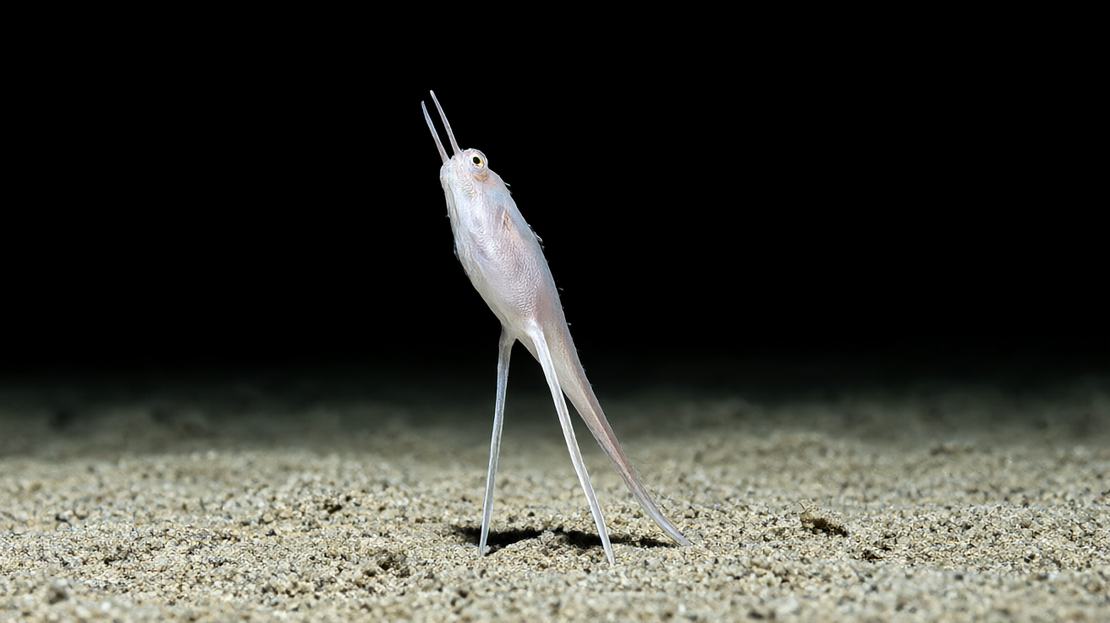
Bathypterois grallator | Tripod Fish
Species Profile · Ipnopidae
Tripod Fish
A deep sea fish that stands on three stiff fins and waits for the current to feed it.
Not Evaluated
Body
Fin rays
Depth
Eyes
Sex
Rating
Four kilometres down
A fish that stands up
A pale fish stands on the sea floor a kilometre and a half below the surface. It stands on three stiff fins. The name tripod fish comes from that posture, and no other fish stands quite the same way. Bodies run about 30 cm, while the fin rays may stretch a metre, which makes the animal look far bigger than it is.
Water here stays close to freezing, and no sunlight reaches the bottom. Pressure kills most animals that come from shallow water. Tripod fish live in every ocean, and they sit on soft mud far below the reach of nets. Eyes stay tiny, and sight plays almost no part in finding food.
The fish waits instead, facing into the current. Nobody has watched one for long, since the depth makes study expensive. Submersibles brought the first clear photographs. Each one showed the same pose, and the animal barely moved.
Family tree
Ipnopidae, the deep water tripods
Ipnopidae covers a small group of deep water fishes, and this species sits inside it. A Humpback Anglerfish shares the same dark water, yet it hunts with a glowing lure instead of a net. Both live below the light, and both grow slowly. Aulopiformes holds the group, and the order also includes lizardfishes from shallow reefs.
The genus holds several species, and divers have filmed at least three of them. Fin rays gave early workers their first clue, since no shallow fish carries anything similar. Each ray has bone inside and skin outside, and the structure works like a stilt. Deep trawls brought up hurt animals for decades, and nobody could tell what the rays did.
Cameras later showed the fish standing on the bottom. Names stay stable now, although the family has moved between orders more than once. Gene work backs the placement, and it also shows close ties to other deep water hunters. Finds remain rare in museums, since the depth limits collecting.
One order of deep hunters
How to tell one
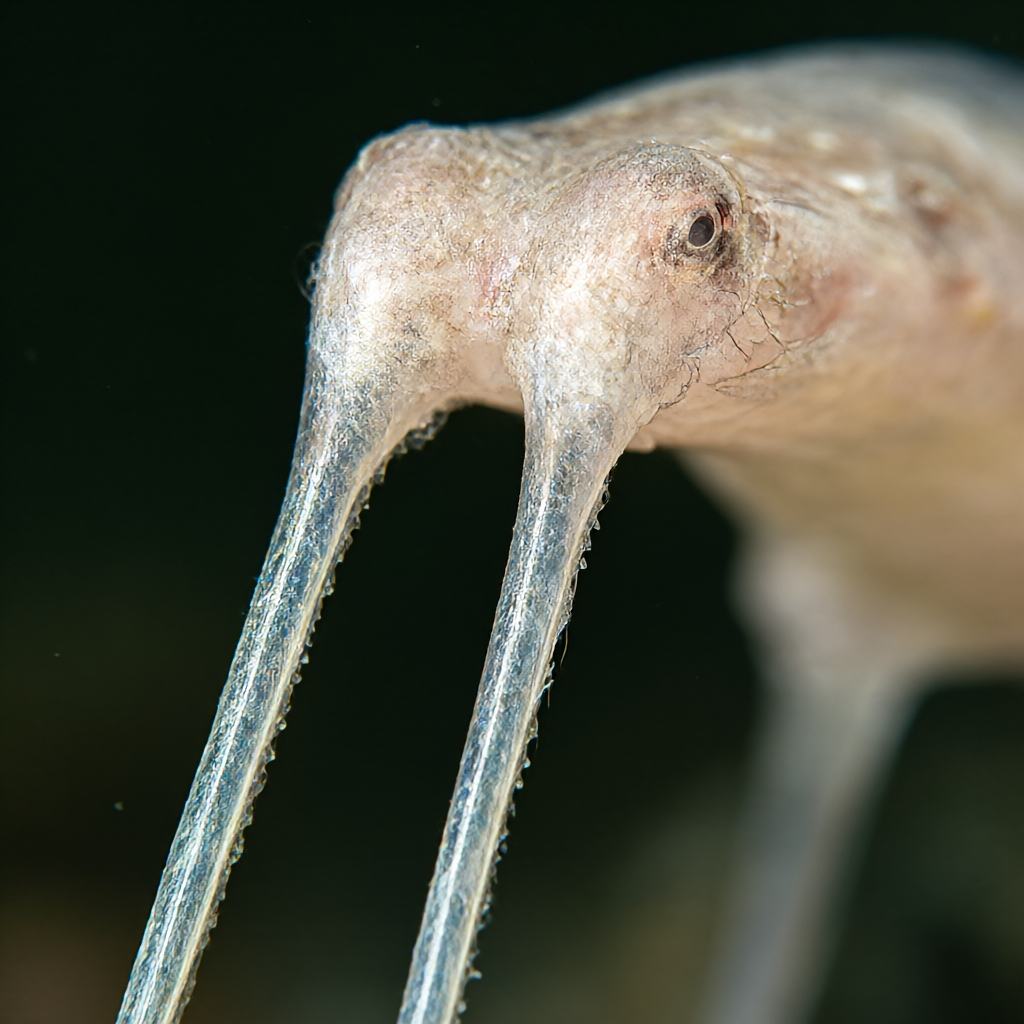
Body colour stays pale grey to brown, and the skin looks smooth. Scales stay large and thin. Armour would only slow the fish down. Pectoral fins sit high on the body, and they work as sensors rather than paddles. Pelvic fins grow into long stiff rays, and the tail does the same.
Those rays reach the mud and hold the fish clear of it. Eyes stay very small. Each one carries little lens. Lateral lines run along the body, and they pick up movement in the water. The mouth opens upward, which suits prey that drifts past overhead.
Teeth stay small and point backward. Nothing slips out once taken. Muscle stays soft, since the fish never chases anything. Swim sac stays small, and the body weighs almost nothing in water. Every part of the body points to a life of waiting rather than hunting.
1
2
3
Stilts instead of fins
Where it lives
The sea floor here lies between 800 and 4,700 m down. Mud covers the bottom. Currents run slowly above it. No plants grow, and no sunlight reaches the mud. Water stays near freezing through the year.
Oxygen stays low, and few animals can live here, so the mud holds little else. Tripod fish sit in the current and let food come to them. Numbers stay low, and one fish may hold a patch of mud many metres across. Bottom trawls damage the ground, since the gear scrapes the top layer away. Recovery takes decades, because everything down here grows slowly.
Nodule mining threatens the same ground, and the mud holds metals that firms want. Protected areas remain rare, since the deep sea sits outside most national rules, and no single country owns the bottom. Crews now photograph the bottom before any mining licence is granted.
Cold mud far below the light
What it eats
Small shrimp and fish form most of the diet. Whatever drifts past the raised head gets taken. The fish holds position facing the current, and the current brings the meal, so hunting costs almost nothing. Feeding costs almost no energy, which matters where food arrives rarely.
Stomach contents show a wide mix, and that mix suggests the fish takes whatever comes. Prey gets swallowed whole, and digestion takes a long time. A fish may wait hours between mouthfuls. Nobody has measured how often one feeds, since the depth stops long observation.
Scent may help, since the nostrils sit close to the mouth. Movement sensors along the lateral line pick up a shrimp before it arrives. The raised head lets the fish strike upward without moving the body. Water enters through the mouth, and the fish needs no separate drink.
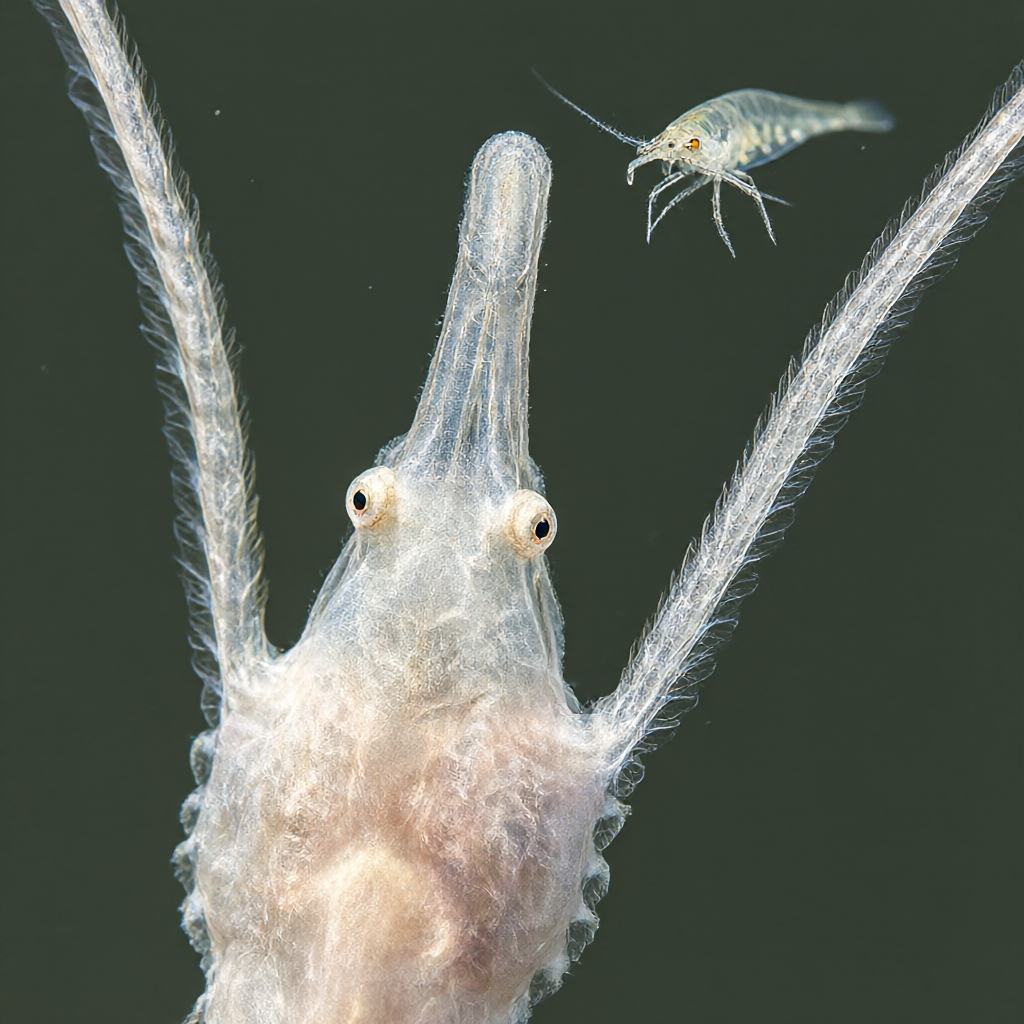
Whatever the current brings
The breeding cycle
Every tripod fish carries both male and female organs. That arrangement suits a deep sea where meeting a mate is unlikely. Each fish can breed with any other one it meets. Eggs and sperm ripen at the same time, and the fish may fertilise itself.
Nobody has seen a spawning run. Young have been caught near the surface, which suggests they drift upward. Currents carry them far, and survivors settle on mud thousands of kilometres away. Young fish look like small adults, and the long rays grow early.
Growth stays slow, since food arrives rarely and the water stays cold. Age counts come from ear bones, and those rings suggest decades. A fish that lives this slowly cannot replace heavy losses. Trawling removes adults faster than any group can regrow.
Not Evaluated, and trawled
Conservation
IUCN lists no assessment for the species. That absence reflects the difficulty of counting fish at these depths rather than a healthy population. Bottom trawling scrapes the mud and removes everything in its path. Deep sea mining now poses the larger risk, since the same ground holds metal nodules.
Dust clouds from mining would smother the mud far beyond the machines. Climate change warms the surface, yet the deep water responds slowly. Research funds stay small, and most of the ocean floor has never been photographed. New submersibles now survey more ground each year.
Fishing nations have agreed to some closures, although enforcement stays weak. Long term survival depends on the mud staying undisturbed, since the fish cannot move far or breed fast. Every trawl pass removes animals that took decades to grow. Protection will only work if it covers the bottom as well as the water above it.
Side by side
How It Compares
| Trait | Tripod Fish | Humpback Anglerfish |
|---|---|---|
| Length | 30 cm body, fin rays close to a metre | 8 to 18 cm in females |
| Depth | 800 to 4,700 m down | 1,000 to 4,000 m down |
| Lure | none, it waits on the floor | a glowing bulb on the head |
| Diet | small crustaceans drifting past | whatever swims within reach |
| Habit | stands on stiff rays facing the current | ambushes prey in the dark |
| Rating | Not Evaluated | Not Evaluated |
Common misreadings
What People Get Wrong
- Most people assume deep fish swim constantly, yet this one stands on the floor and waits.
- Popular drawings give the fish three legs, although the stilts are only stiff fin rays.
- Some guides call the animal blind, yet its small eyes still detect faint light.
Going further
Sources and Further Reading
Quick hits
Five things to remember
- Three stiff fin rays hold the fish above the mud.
- Each fish carries both male and female organs.
- Eyes stay tiny, and sight hardly matters.
- The fish faces into the current and waits.
- Some fin rays grow longer than the body.