 By Iris
Tarsipes rostratus | Honey Possum
Species Profile · Tarsipedidae
Honey Possum
A possum smaller than a mouse, living on nothing but nectar and pollen.
Least Concern
Body
Tail
Weight
Young
Teats
Rating
Eleven grams at most
A diet of flowers only
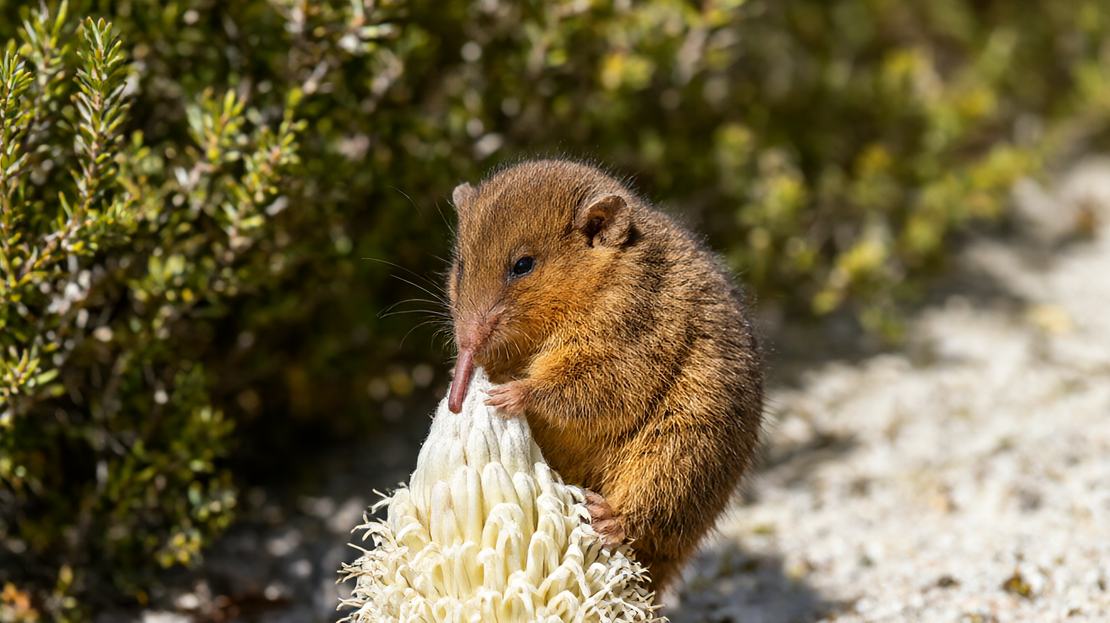
A mouse sized animal pushes its long snout into a banksia flower and laps at the nectar. Weight stays between 7 and 11 g. Adults run 6 to 9 cm in the body, and the tail adds another 10 cm, which curls around a stem like a hand. That tail curls around stems like an extra hand.
Honey possums live only in the sandplain heath of south west Australia, where the flowers never quite stop. Nothing else eats quite like them, since nectar and pollen form the whole diet and nothing else fills the gap. Tongues reach into flowers that no other mammal can use, and they come out covered in pollen. Eyes stay large, yet the animal hunts by smell as much as by sight.
Males grow smaller than females, which is unusual among mammals. Most of the day passes in a nest of leaves and bark. Movement starts at dusk. Few people ever notice one.
Family tree
Tarsipedidae, a family of one
Tarsipedidae holds this animal alone, and the family has no close relatives at all, which makes every other possum a distant cousin. A Sugar Glider shares the same broad group of possums, yet the two live very differently. Both belong to the marsupials, so both raise tiny young in a pouch. The honey possum split from other possums tens of millions of years ago.
That long separation left the animal with a body unlike any other possum, from the snout to the tail. Teeth shrank to tiny pegs, since the animal never chews its food. The stomach stays simple because nectar needs little breaking down. Two subspecies have been named, although the split remains uncertain.
Field workers now treat the group as one species. Names caused little trouble here, since the animal was described early. Local people called it the noolbenger long before science arrived. That name still appears in popular books.
One family, one species
How to tell one
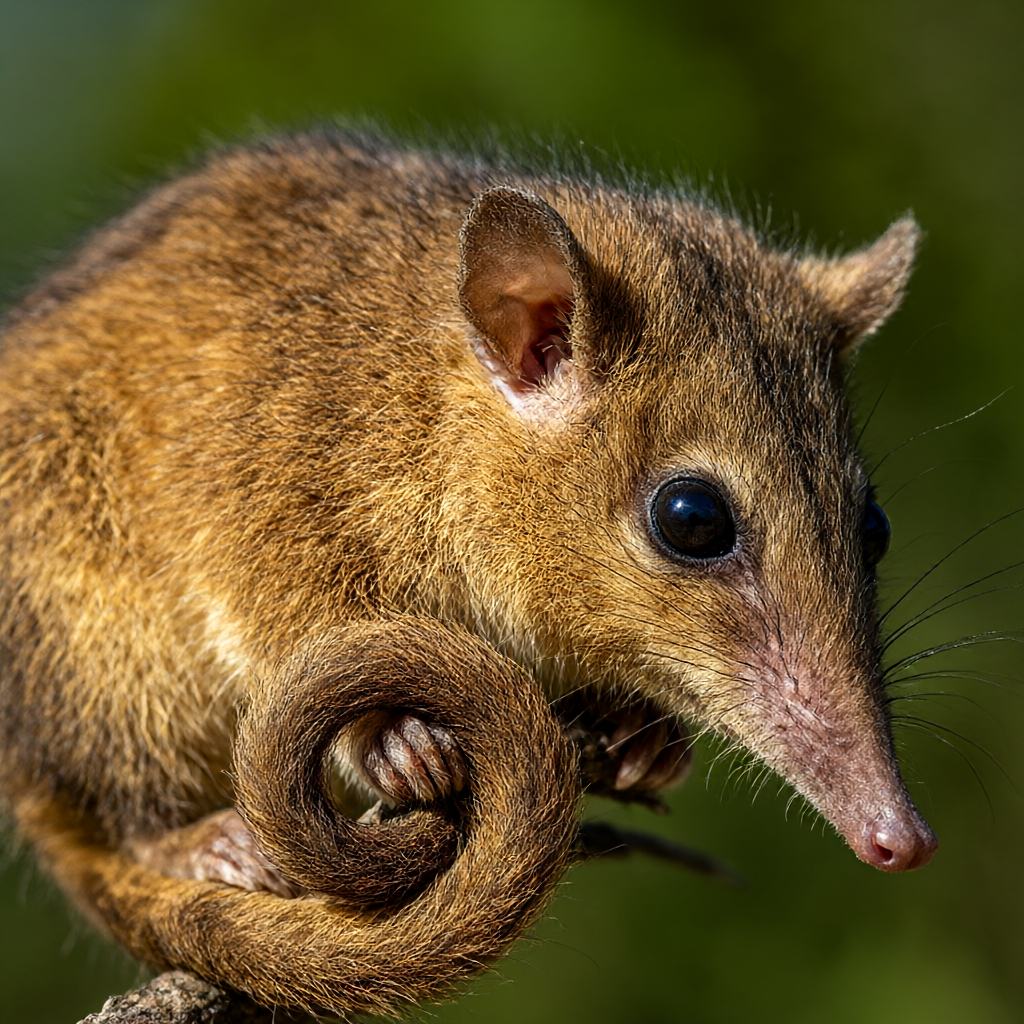
Fur looks grey brown above and paler below. Reddish tinges mark the head. Nostrils sit at the tip of a very long snout. The tongue extends far past the snout. Fine hairs tip the end.
That brush traps pollen, which the animal swallows afterwards. Prehensile tails grip stems while the front feet work the flower. Hind feet carry an opposable toe, which helps in climbing. Fingers end in small claws and soft pads. Eyes sit large and round, and they face forward.
Males carry a scent gland on the chest. Scent marks go on stems. Body temperature drops at night, which saves energy in a cool climate. The engine runs hot, so the animal must feed often. Sleeping animals curl into a tight ball with the tail wrapped over the face, which keeps the nose warm through cold nights.
1
2
3
A snout built for flowers
Where it lives
Sandplain heath covers the coastal strip, and the animal stays inside it. Banksia and dryandra grow thick here, and both supply flowers through the year. The soil stays poor and sandy, which suits the shrubs rather than the trees. Fire sweeps the heath every decade or so, and the plants regrow from roots. Animals survive fire in unburnt pockets, then spread back as the flowers return.
Clearing for housing removes the heath, and regrowth takes years to flower. Drainage also changes the ground, since these plants need wet winters. One dry year can stop flowering, which leaves the animal short of food. Patches of heath link through narrow strips, and those strips carry the animals. Roads cut the strips.
Traffic kills animals that cross at night. Cats and foxes hunt here, although the heath gives good cover. Fox baiting has helped in some districts, although the work never stops.
Sandplain heath in the south west
What it eats
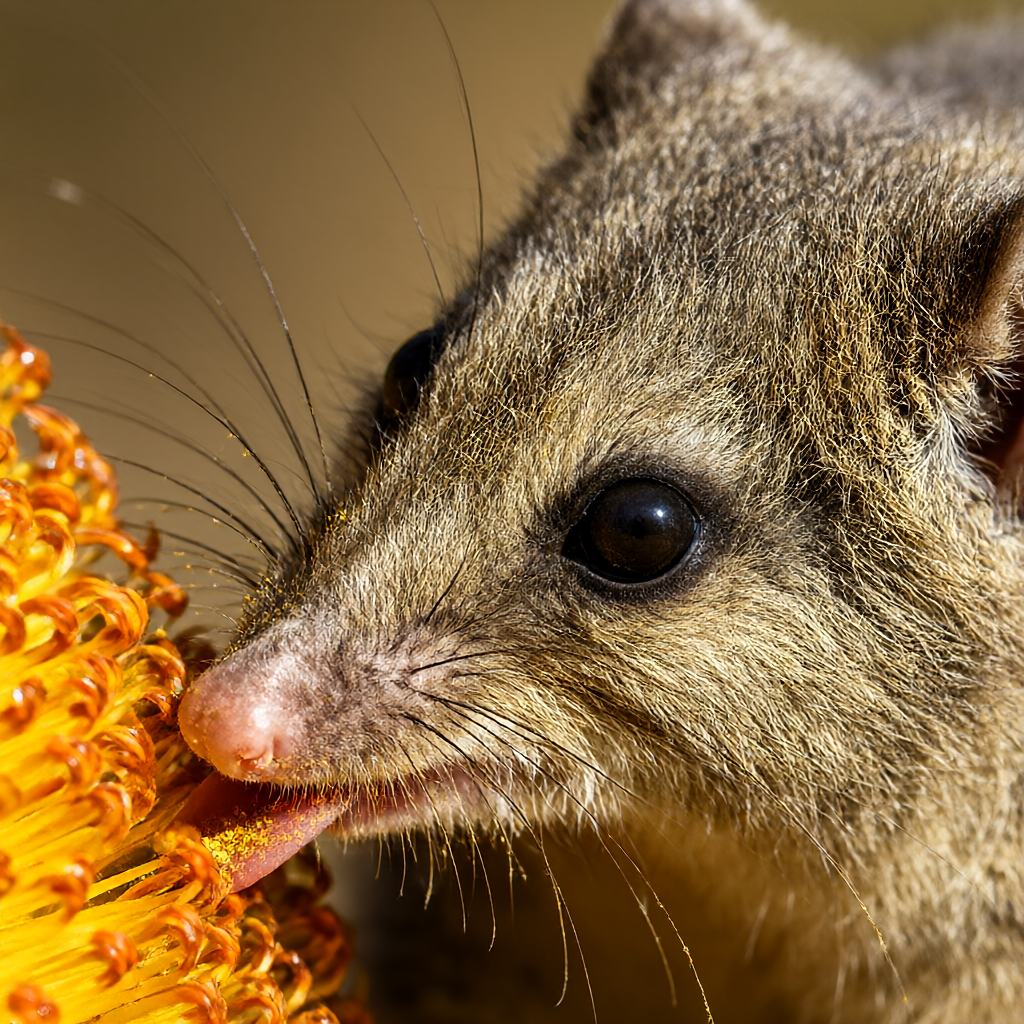
Nectar and pollen form the entire diet, which no other mammal manages. An animal visits hundreds of flowers in a night. Pollen supplies protein, since nectar alone would leave the animal short. That mixed diet suits a very small body with a fast engine. Flowers open in waves through the year, so the animal follows the bloom.
The tongue reaches nectar that sits deep inside a banksia spike. Feeding stops when the flowers close, and the animal then rests. Banksia and dryandra matter most, but other heath plants get used too. Insects almost never get eaten. Such a habit sets the animal apart from its relatives.
Water comes from nectar, so drinking happens rarely. Captive animals fed on sugar water alone sicken within weeks. Pollination happens as a side effect, since pollen sticks to the snout.
Nectar and pollen, nothing else
The breeding cycle
Females breed in the first year, and they may raise two litters in a season. Each litter holds two or three young. The newborn weighs less than a grain of rice. Four teats sit inside the pouch, and the young attach at once.
Young stay in the pouch for about two months. After that they ride on the mother’s back for a few weeks. Weaning comes early, and the young then feed on flowers like adults. Males live shorter lives than females, and few see a second year.
Breeding stops when flowers fail, which keeps numbers in step with food. Nobody has measured how long a wild animal lives. Captive animals have reached three years at most. Females with young need flowers nearby, since they cannot travel far.
Least Concern, and heath bound
Conservation
IUCN lists the species as Least Concern. Numbers look stable across the remaining heath. Clearing for houses and for farms still removes habitat each year. Phytophthora root rot kills banksia, and dead shrubs give no flowers.
Fire that burns too often removes the plants before they seed. Foxes and cats take animals, although the heath hides them well. Protection rests on reserves and on corridors between them. Local councils now keep strips of heath when they approve new housing.
Gardens planted with banksia also feed animals, which helps a little. Climate change may dry the winters, since these plants need steady rain. Long term survival depends on the flowers, since the animal eats nothing else. One bad fire season could leave a district without blossom for years.
Side by side
How It Compares
| Trait | Honey Possum | Sugar Glider |
|---|---|---|
| Length | 6 to 9 cm body, 10 cm tail | 12 to 32 cm body |
| Weight | 7 to 11 g | 100 to 160 g |
| Home | heath and banksia scrub in south west Australia | woodland across Australia and New Guinea |
| Diet | nectar and pollen only | sap, nectar and insects |
| Habit | brushes pollen with a haired tongue | glides between trunks |
| Rating | Least Concern | Least Concern |
Common misreadings
What People Get Wrong
- Most people take it for a small rodent, although the pointed snout belongs to a marsupial.
- Popular accounts say it drinks nectar, yet pollen supplies most of the protein it needs.
- Field guides often place it near the gliders, though the animal cannot glide at all.
Going further
Sources and Further Reading
Quick hits
Five things to remember
- Nectar and pollen form the whole diet.
- Weight stays between 7 and 11 g.
- The tongue ends in a brush of fine hairs.
- Males grow smaller than females.
- Four young may share the pouch at once.