 By Iris
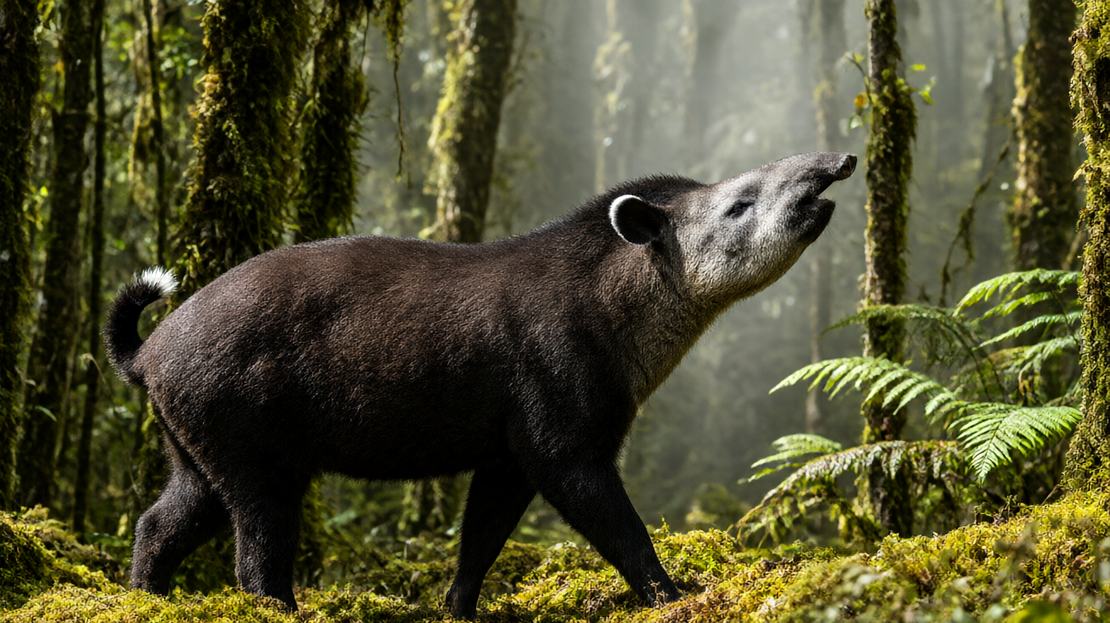
Tapirus pinchaque | Mountain Tapir
Species Profile · Tapiridae
Mountain Tapir
The smallest tapir, wearing wool against Andean cold.
Endangered
Length
Shoulder
Weight
Coat
Pregnancy
Rating
Two thousand metres and rising
Wool on a tapir
A stocky animal with woolly fur pushes through bamboo on a cold Andean ridge. It is the smallest of the four tapirs. Nobody sees one easily. Mountain tapirs live between about 2,000 and 4,500 m, where cloud forest gives way to open grassland. Adults run 1.8 m from nose to tail, and they stand about 80 cm at the shoulder.
Weight falls between 130 and 250 kg. Thick fur covers the body, and that coat keeps out rain and cold. Trunks stay short and bend like a finger. Ears carry white rims, and many animals show pale lips. The animal walks with its snout close to the ground, since it follows scent rather than sight.
Paths cut through bamboo. They follow the same routes for years. Fresh tracks look like those of a small rhino.
Family tree
Tapiridae, the tapirs
Tapiridae holds four species, and three of them live in the American tropics. The fourth belongs to Asia, where a Malayan Tapir wears a black and white coat. Perissodactyla ties tapirs to horses and rhinos, although the three groups split long ago. Odd toes carry the weight, and every tapir stands on three of them.
This species keeps the name pinchaque, which comes from a local word. Bones place the animal beside the lowland tapirs, and gene work supports that view. Mountain animals split from lowland ones when the Andes rose. That split left the mountain form isolated, which explains its woolly coat and shorter legs.
Skins once caused confusion, since museums held several named varieties. Modern work recognises no subspecies at all. Field records rest on tracks and on camera traps, because the animal avoids people. Names matter less than the ground, since the Andes hold every living group.
One of four tapirs
How to tell one
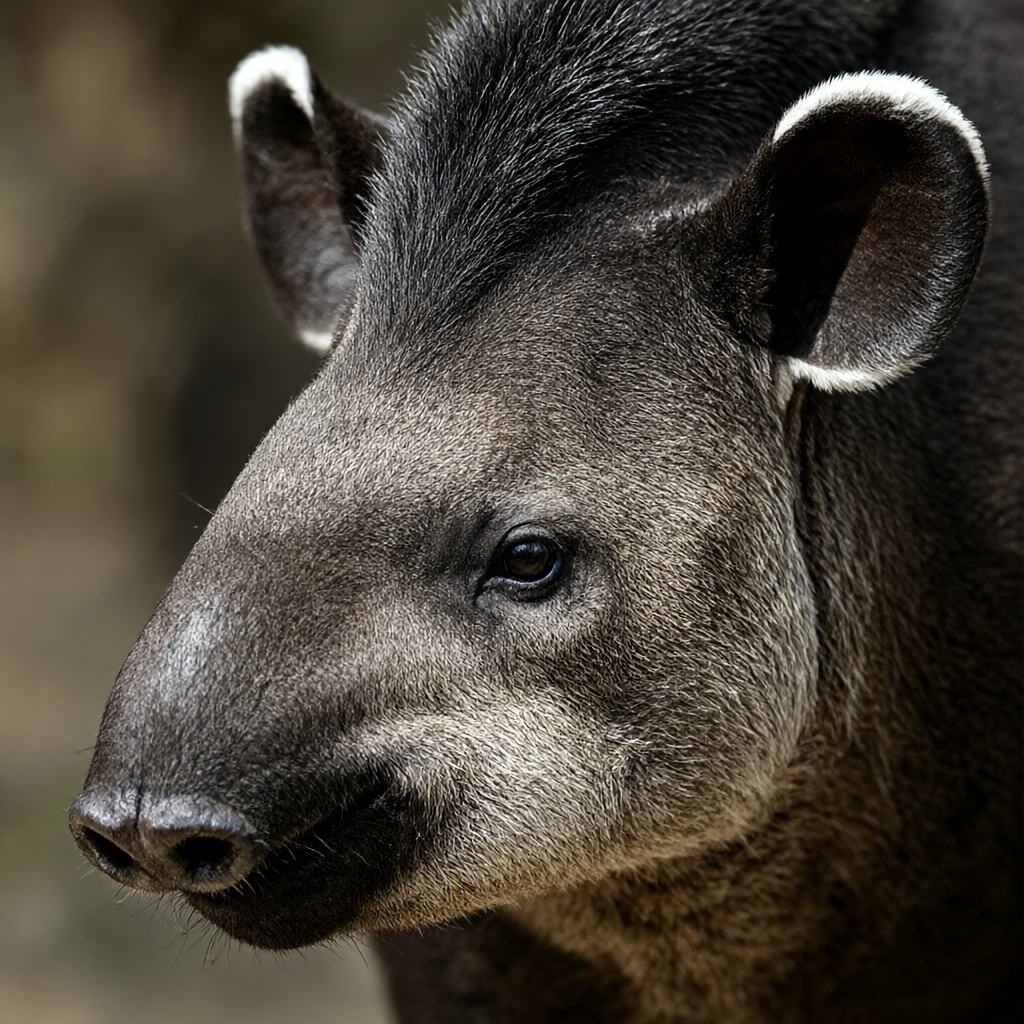
Woolly hair covers the body, and it grows longer than the coat of any lowland tapir, which keeps the animal warm in cold rain. That fur traps air, which keeps the animal warm in wet, cold air. Front feet carry four toes, and the hind feet carry three. Each toe ends in a broad hoof that grips mud. Short flexible trunks bend in every direction, and the animal uses one like a hand.
White tips on the ears break up the outline of the head, which makes the animal hard to pick out in bamboo. Body colour runs dark brown. Some animals look almost black. Young animals wear pale spots and stripes, and those marks fade within a year. Cheek teeth cut through tough plants, and the jaw works with a strong sideways motion.
Eyes sit on the sides of the head, so the animal sees a wide field, yet it still relies on scent. Scent carries further than sight in a misty forest, and the nose does most of the finding. Tapirs climb steep ground with steady steps, although they never run fast.
1
2
3
Wool, trunk and three toes
Where it lives
Cloud forest covers the lower slopes, and open grassland sits above it, so the animal moves between two worlds. Both habitats matter, since the animal moves between them through the year. Bamboo grows thick in the middle zone, and it gives cover from people. Streams cut through the slopes, and soft mud beside them draws animals.
Temperatures drop below freezing at night on the high ground, and wet fur would kill a smaller animal. Woolly fur answers that cold, although the animal still seeks shelter in thickets. Forest loss breaks the range into pieces, and each piece holds fewer animals. Roads cut across migration routes, and a road kills animals that cross at night.
Cattle graze the high grassland, and they trample the wet ground where tapirs feed. Protected areas cover part of the range, yet many animals live outside them. Ridge tops link one valley to the next, and animals use those passes. One cleared pass can cut a group off from the rest.
Cloud forest and open grassland
What it eats
Ferns, grasses and bamboo shoots form most of the diet. Leaves from shrubs fill the rest. Trunks pull food in, and strong teeth cut it. Feeding happens in short bouts through the night.
An animal may walk several kilometres between patches of good food. Salt licks draw tapirs from far away, and several animals may meet at one. Digestion handles tough fibre slowly, since the gut works like that of a horse. Fruit appears in the diet now and then, and seeds pass through intact.
That habit makes the animal a seed carrier, although few studies have measured it. Water comes from streams and from wet plants. Calves learn which plants to take by following the mother. Food stays short in the dry months, and animals lose weight then.
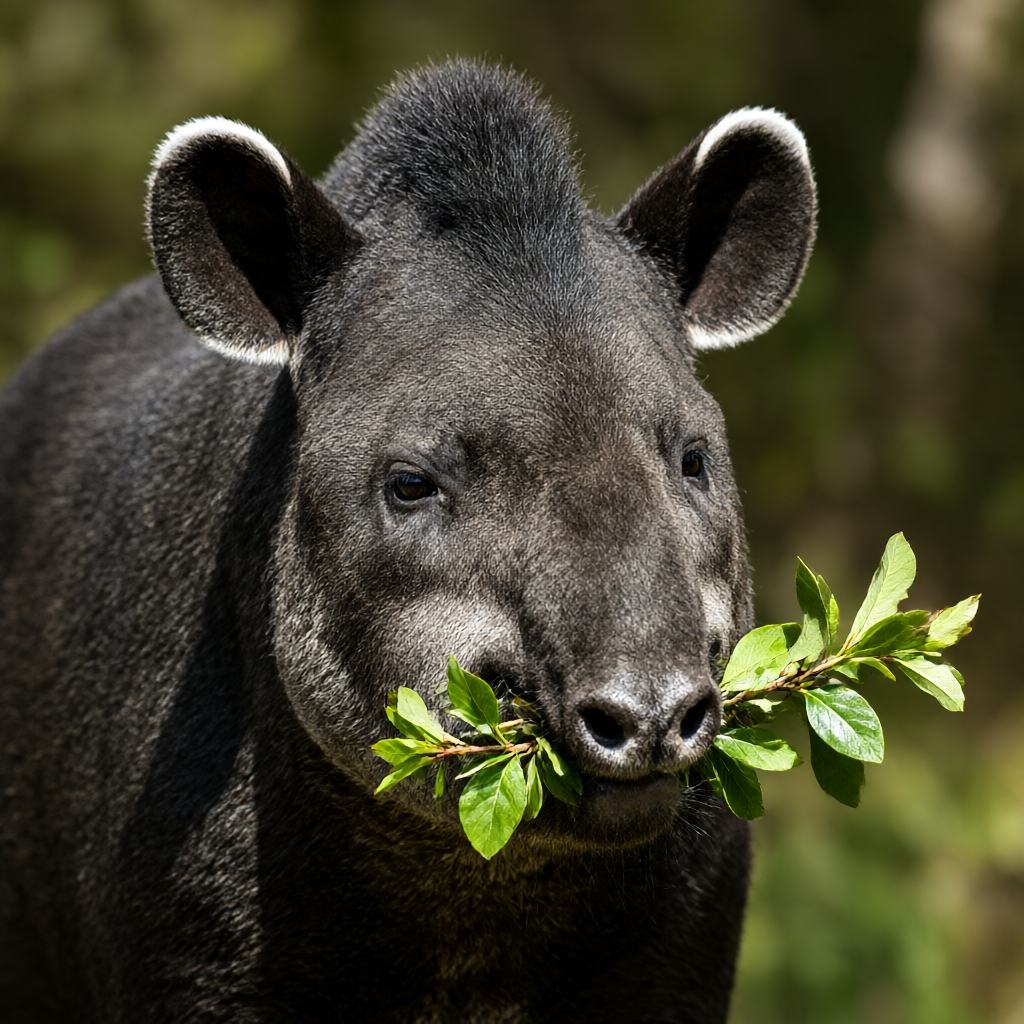
Ferns, bamboo and leaves
The breeding cycle
Females reach breeding age at about three years. One calf is born after a pregnancy of roughly thirteen months. The calf stands within an hour. Walking comes within a day. Pale stripes fade by the end of the first year.
Mothers hide calves in dense cover while they feed. Young animals stay with the mother for more than a year, which slows any recovery. Males live alone, and they meet females only to breed. Fights between males involve biting and shoving, although serious wounds stay rare. Births happen at any time of year in the north, while southern groups calve in the wet season.
Nobody has measured how long a wild animal lives. Captive tapirs have reached thirty years, so the animal can take its time. One calf every year or two cannot replace steady losses.
Endangered, and squeezed uphill
Conservation
IUCN lists the species as Endangered. Fewer than 2,500 mature animals may remain. Hunting drives part of the fall, since people take the animal for meat. Habitat loss adds more pressure, as forest is cleared for pasture and for crops.
A single road can open a valley to hunters, and that road usually arrives with logging. Climate change threatens the high grassland, since the animal cannot move much higher. Parks cover parts of Colombia, Ecuador and Peru, yet patrols stay thin. Camera traps now confirm animals in places where nobody had seen them for years.
Local campaigns have reduced hunting in a few districts. Corridors between reserves matter most, because cut-off groups lose variety fast. Captive breeding has produced calves, and release remains difficult. Long-term survival depends on the Andes staying connected, since the animal needs cold ground and room to move.
Side by side
How It Compares
| Trait | Mountain Tapir | Malayan Tapir |
|---|---|---|
| Length | 1.8 m, standing 80 cm at the shoulder | 1.8 to 2.4 m |
| Weight | 130 to 250 kg | 250 to 320 kg |
| Coat | woolly, dark and thick | black at both ends, white in the middle |
| Home | cloud forest at 2,000 to 4,500 m | lowland rainforest below 1,500 m |
| Diet | Andean shrubs, grasses and salt | leaves, shoots and fruit |
| Rating | Endangered | Endangered |
Common misreadings
What People Get Wrong
- Most people picture a tapir in hot lowland jungle, yet this one lives in cold cloud forest.
- Popular drawings give the animal a long trunk, though the snout is a short flexible nose.
- Zoo labels often call all tapirs tropical, yet only three of the four live in warm forest.
Going further
Sources and Further Reading
Quick hits
Five things to remember
- Smallest of the four tapirs.
- Woolly fur keeps out cold and rain.
- A calf wears pale stripes for its first year.
- Salt licks draw animals from far away.
- A pregnancy lasts about thirteen months.