 By st20113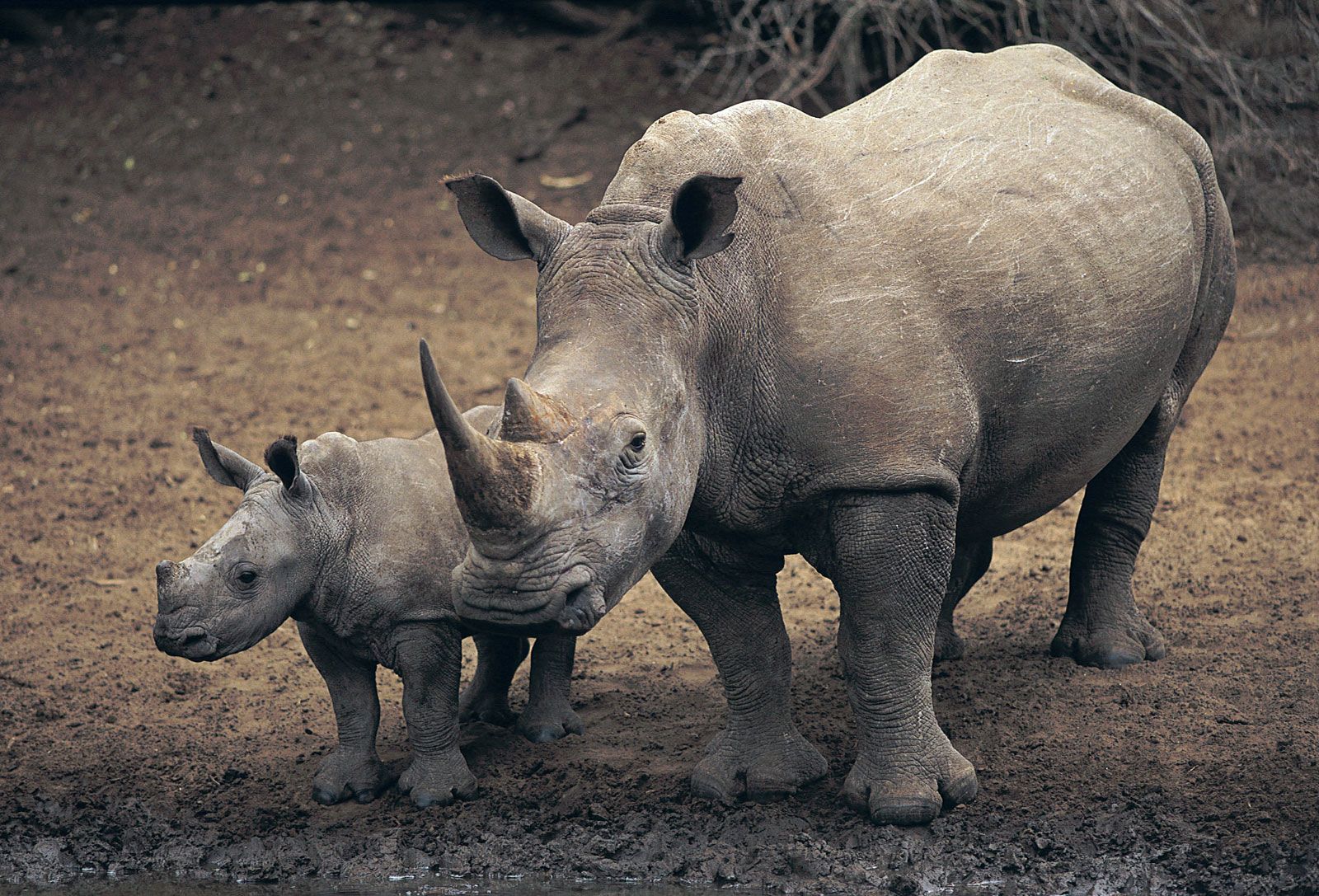
The rhinoceros is a large, thick-skinned herbivorous mammal belonging to the family Rhinocerotidae. Native to Africa and Asia, rhinoceroses are recognized by their massive bodies, short legs, and one or two distinctive horns growing from the snout. As megaherbivores, they play a critical role in shaping their ecosystem by creating paths through dense vegetation and dispersing seeds across the landscape.
Physical Characteristics
Rhinoceroses are among the largest land animals, with white rhinos weighing up to 2,500 kilograms. Their thick, armor-like skin is 1.5 to 5 centimeters thick. The horn, made of keratin like human hair, continues growing throughout life and can reach over a meter-the longest recorded was 1.58 meters. Five living species exist: white, black, Indian, Javan, and Sumatran rhinos.
Species and Distribution
African Species
The white rhinoceros is the largest species, with a wide mouth adapted for grazing on short grass. The black rhinoceros is smaller, with a pointed prehensile upper lip for browsing leaves and twigs. Both inhabit savannas and dry woodlands of sub-Saharan Africa, often sharing habitat with the African elephant.
Asian Species
The Indian rhinoceros is a single-horned species living in the floodplains of Nepal and Assam, India. The Javan and Sumatran rhinos are critically endangered and survive in small, protected populations in Indonesia.
Behavior and Diet
Rhinoceroses are mostly solitary, though females live with calves. White rhinos form loose grazing herds. They are crepuscular-most active at dawn and dusk, resting in mud wallows during the heat of day. Their diet is entirely plant-based; they graze or browse for several hours daily and drink whenever water is available.
Conservation Status
Poaching for their horns remains the greatest threat. Conservation successes include the southern white rhino’s recovery from under 100 to over 18,000 animals through rigorous protection and translocation programs. The Javan and Sumatran rhinos each number fewer than 100 individuals, requiring intensive anti-poaching efforts.
Rhinos are ancient herbivores that have shaped African and Asian landscapes for millions of years. Their survival depends on continued anti-poaching enforcement and habitat protection.
White Rhinoceros (Ceratotherium simum) is the largest living species of rhinoceros and the second-largest land animal after the African Elephant. Despite its name, its skin is pale