 By st20113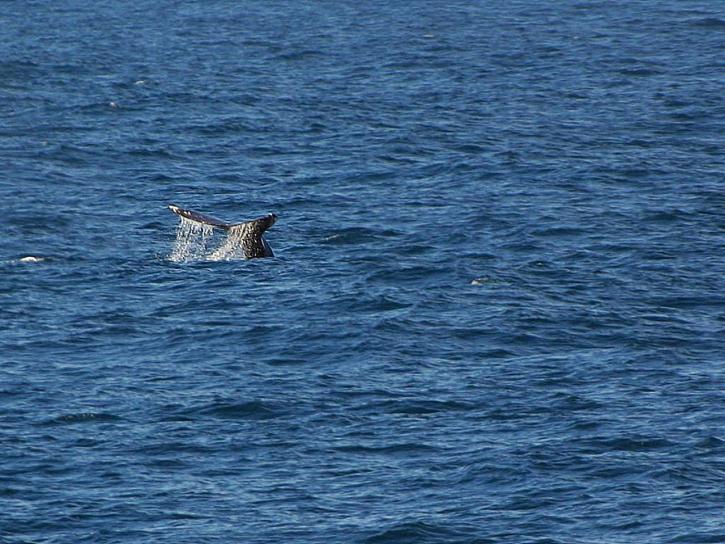
The narwhal (Monodon monoceros), often called the “unicorn of the sea,” is a medium-sized toothed whale found in the Arctic waters of Canada, Greenland, Norway, and Russia. This elusive cetacean is renowned for its extraordinary long spiral tusk, which is actually an elongated canine tooth.
Physical Characteristics
Adult narwhals measure 4 to 5.5 meters (13 to 18 feet) in length, with males being slightly larger than females. They weigh between 800 and 1,600 kilograms (1,760 and 3,530 pounds). Their coloration changes with age: newborns are blue-grey, adults are mottled grey and white, and old narwhals are almost entirely white.
The narwhal’s most famous feature is its tusk. This spiraled, ivory-colored tooth erupts from the left side of the upper jaw in males (and occasionally females) and can grow to lengths of 2 to 3 meters (6.6 to 9.8 feet). The tusk has an estimated 10 million nerve endings and is sensitive to changes in water pressure, temperature, and salinity. Its spiral pattern forms as the tooth grows in a counterclockwise helix.
Habitat and Distribution
Narwhals are Arctic cetaceans, spending much of the year in deep offshore waters of the High Arctic. During summer, they migrate to coastal fjords and bays. Their range includes the waters around Baffin Island, Greenland, Svalbard, and the Russian Arctic. Narwhals are among the deepest-diving Arctic mammals, capable of reaching depths of over 1,800 meters (5,900 feet).
Diet
Narwhals feed primarily on deep-water fish including Greenland halibut, Arctic and polar cod, cephalopods, and shrimp. They consume relatively small amounts of food compared to their body size—estimated at around 30 kilograms (66 pounds) per day. Narwhals use suction feeding to draw prey into their mouths.
Social Behavior
Narwhals typically travel in groups of 5 to 10 individuals, though aggregations of hundreds or even thousands can occur during migrations. Like other Arctic cetaceans, narwhals rely on echolocation to navigate and find prey in dark, icy waters. Males have been observed engaging in “tusking”—rubbing tusks together—possibly as a form of social communication.
Conservation
The narwhal is listed as Least Concern on the IUCN Red List, though certain populations are considered Near Threatened. Climate change poses a significant threat, as warming temperatures and melting sea ice alter their Arctic habitat. Ice entrapment events, where narwhals become trapped beneath forming ice, represent a natural but increasingly concerning mortality factor as sea ice patterns become more unpredictable.