 By st20113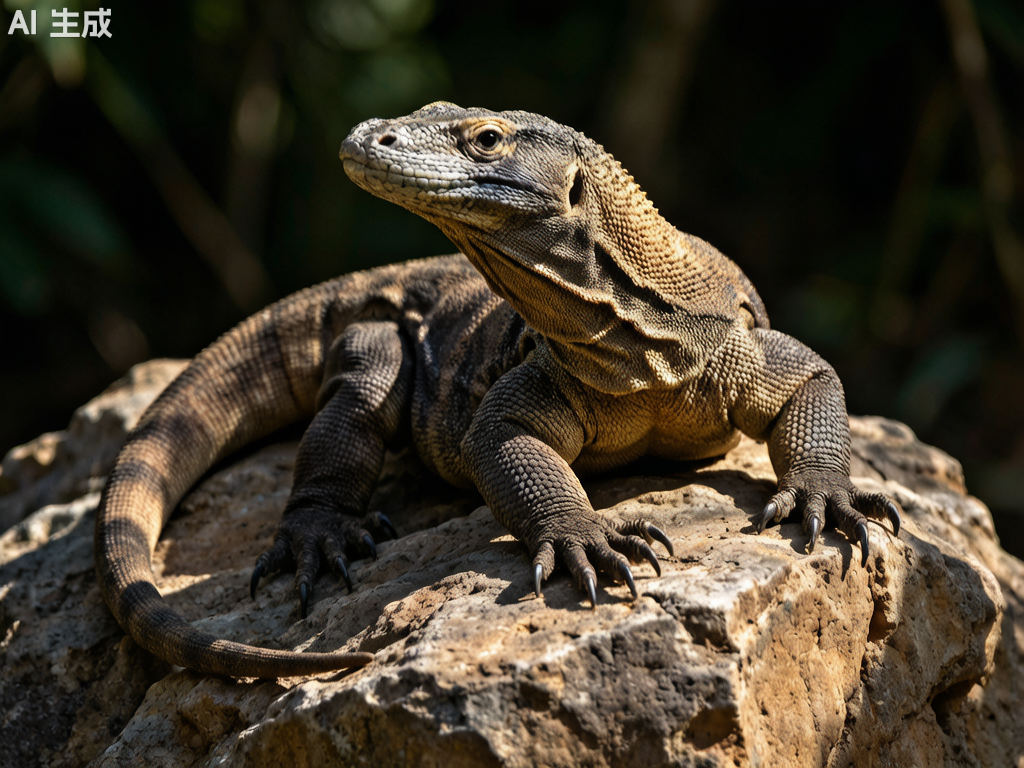
The Komodo dragon (Varanus komodoensis) is the world’s largest living species of lizard, a fearsome predator native to the Indonesian islands of Komodo, Rinca, Flores, and Gili Motang. Belonging to the family Varanidae, this remarkable reptile represents a living relic of the prehistoric era of giant monitor lizards.
Physical Characteristics
Adult Komodo dragons typically measure 2 to 3 meters (6.6 to 9.8 feet) in length and weigh between 40 and 70 kilograms (88 and 154 pounds), with some exceptional individuals reaching lengths of over 3 meters and weights exceeding 100 kilograms. They possess a robust, muscular body covered in rough, osteoderm-reinforced skin that provides a natural suit of armor.
Their heads are flat with a rounded snout, and their mouths contain approximately 60 serrated teeth that are regularly replaced throughout their lives. Komodo dragons have long, powerful tails and four limbs with sharp claws. Their deeply forked tongue, similar to that of a snake, is used to detect chemical cues from potential prey and carrion.
Habitat and Distribution
Komodo dragons inhabit the islands of Komodo, Rinca, Flores, Gili Motang, and Padar in eastern Indonesia. These islands support tropical savanna forests, open grasslands, and dry riverbeds, providing diverse hunting grounds for these apex predators. The islands experience a hot, arid climate with limited freshwater sources, and Komodo dragons can survive on relatively little water, obtaining most of their moisture from prey.
Hunting and Venom
Komodo dragons are apex predators with a diverse diet that includes deer, goats, pigs, horses, water buffalo, and smaller Komodo dragons. Their hunting strategy combines ambush tactics with remarkable patience. They can run at speeds of up to 20 kilometers per hour in short bursts.
Research has confirmed that Komodo dragons possess venom glands in their lower jaws. The venom prevents blood clotting and causes hypotension, meaning prey that escapes an initial attack often succumbs to blood loss and shock within hours or days. Komodo dragons track wounded prey using their acute sense of smell, capable of detecting carrion from up to 10 kilometers away.
Reproduction
Female Komodo dragons lay eggs in deep burrows or mound nests, typically depositing between 15 and 30 eggs. The eggs incubate for approximately 8 to 9 months. Hatchlings are around 40 centimeters (16 inches) long and spend much of their early lives in trees, where they are safer from adult dragons and other predators. Interestingly, Komodo dragons can reproduce through parthenogenesis—females can produce viable eggs without mating with a male.
Conservation
The Komodo dragon is listed as Endangered on the IUCN Red List, with fewer than 1,400 adult individuals remaining. Habitat destruction, human persecution, and climate change threatening their island habitats are the primary conservation concerns. Komodo National Park, a UNESCO World Heritage Site established in 1980, provides critical protection for these remarkable reptiles.