 By st20113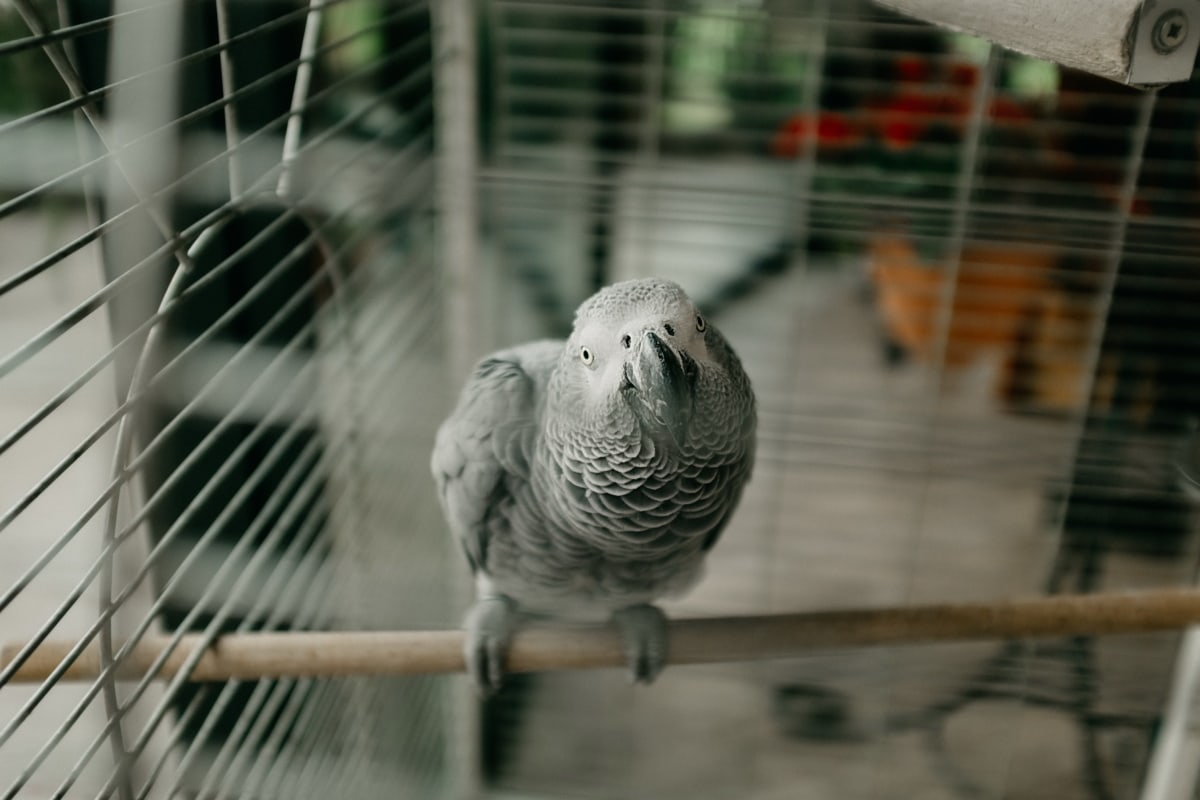
The Gray Parrot (Psittacus erithacus), also known as the African Grey Parrot or the Timneh Parrot, is widely regarded as the most intelligent and articulate of all parrot species – a bird whose cognitive abilities have been compared to those of a 4-6 year old human child and whose capacity for vocal learning and comprehension has transformed scientific understanding of the nature of language and intelligence in non-human animals. Native to the rainforests of West and Central Africa – from Ivory Coast and Ghana in the west through Cameroon, the Congo Basin, and into Uganda, Kenya, and Tanzania in the east – the Gray Parrot inhabits one of the most biodiverse environments on Earth, the African tropical rainforest, where it plays an important ecological role as a seed disperser while simultaneously being one of the most threatened bird species on the continent due to its popularity in the international pet trade. With its striking slate-grey plumage, brilliant red tail feathers, and piercing orange-red eyes, the Gray Parrot is also one of the most visually distinctive birds in the African rainforest.
Cognition and Vocal Learning
The Gray Parrot’s cognitive abilities are among the most extensively studied of any non-human animal, largely because of its remarkable capacity for vocal learning – the ability to hear sounds and reproduce them accurately, which is relatively rare in the animal kingdom (birdsong and human speech are the most famous examples). Research with Gray Parrots – most famously with Alex, the African Grey studied by Dr. Irene Pepperberg for 30 years – has demonstrated that these birds can understand and use hundreds of words and phrases in meaningful contexts: labeling objects by color, shape, and material; requesting and refusing specific items; expressing emotions; and demonstrating concepts like “same,” “different,” “bigger,” “smaller,” “over,” and “under.” Alex could count up to six objects accurately and showed evidence of understanding the concept of zero – a cognitive achievement shared only with humans, some primates, and a handful of other species. This research fundamentally challenged assumptions about the uniqueness of human language and cognitive abilities, demonstrating that complex, abstract reasoning is not the exclusive province of mammals with large brains.
The Gray Parrot’s intelligence has direct implications for its conservation: highly intelligent animals that are social, curious, and long-lived (Gray Parrots can live 40-60 years in captivity) are notoriously difficult to keep in captivity, and the global pet trade in wild-caught Gray Parrots has driven massive population declines across the species’ range. In the wild, Gray Parrots are social birds that live in flocks of 20-30 or more individuals, foraging for fruits, nuts, seeds, and clay in the rainforest canopy. Their fruit-eating behavior makes them important pollination agents and seed dispersers – the seeds of many rainforest fruits pass through the parrot’s digestive system and are deposited in droppings far from the parent tree, facilitating forest regeneration and contributing to the maintenance of rainforest ecosystem diversity. The loss of Gray Parrot populations from heavily traded areas has measurable effects on the plant species that depend on them for seed dispersal.
Deforestation and the Pet Trade
The Gray Parrot is classified as Endangered by the IUCN, with populations having declined by 50-79% over three generations (approximately 45 years), driven by two primary factors: habitat loss and unsustainable trapping for the international pet trade. The African rainforest – the Gray Parrot’s primary habitat – is under intense pressure from logging, agricultural expansion (particularly palm oil and cocoa cultivation), and artisanal mining, all of which fragment and destroy the large, mature forest tracts that Gray Parrot populations require. Orangutans, countless bird species, and hundreds of plant species share this same habitat under the same threats, illustrating how deforestation in Central African rainforests threatens not single species but entire ecosystems. Simultaneously, the international demand for Gray Parrots as pets – driven by the species’ legendary vocal abilities – has created an enormous illegal wildlife trade that removes millions of birds from wild populations each year.
The case of the Gray Parrot illustrates the dangerous intersection between intelligence, desirability, and conservation vulnerability. The very cognitive abilities that make the Gray Parrot so fascinating – its capacity for vocal learning, social bonding, and emotional complexity – are precisely what make it attractive to the pet trade, and these same qualities make it extraordinarily unsuited to captivity. Parrots removed from wild populations experience severe stress, often refusing to eat, self-mutilating, or developing stereotypic behaviors in environments that cannot possibly satisfy the complex social, cognitive, and foraging needs of a wild-caught intelligent bird. Conservation strategies for the Gray Parrot must address both the supply side (combating illegal trapping and trade) and the demand side (reducing consumer demand through education and awareness), while simultaneously protecting the rainforest ecosystems on which all African rainforest biodiversity – including the parrots – depends.