 By st20113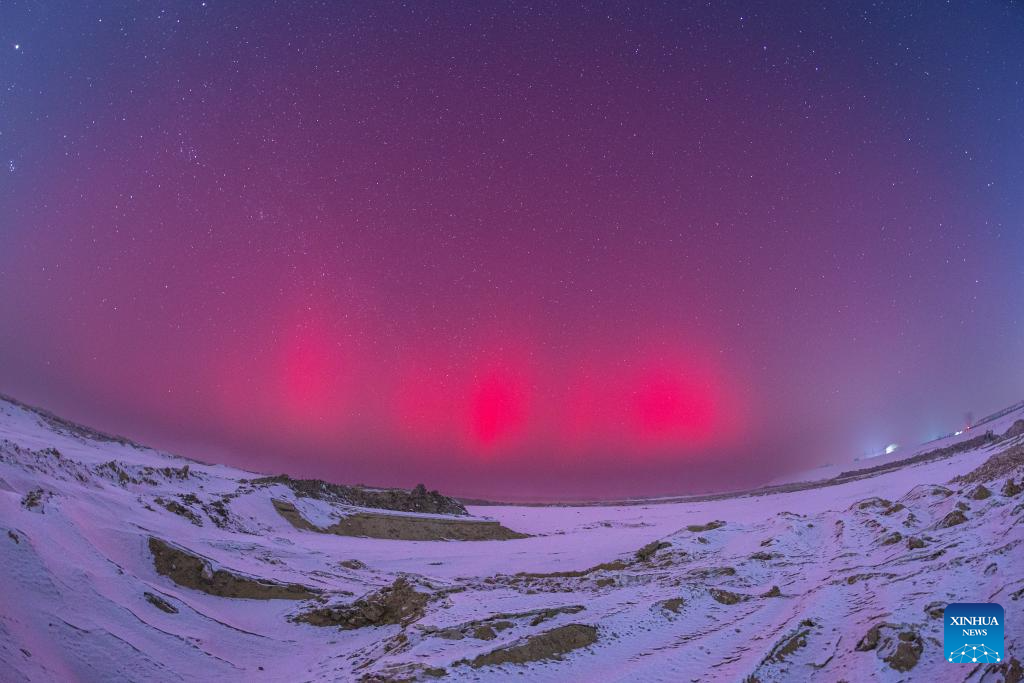
The Aurora Borealis, commonly known as the Northern Lights, is one of the most awe-inspiring natural phenomena visible to the human eye. This luminous display of light appears in the night sky near the Earth’s polar regions, manifesting as flowing curtains, shimmering rays, and pulsating arcs of green, blue, violet, and red light that dance across the darkness.
Physical Mechanism
The Aurora is produced when charged particles from the Sun — part of the solar wind — collide with atoms and molecules in Earth’s upper atmosphere. This interaction transfers energy to atmospheric gases, causing them to emit light at specific wavelengths. The color of the aurora depends on the gas involved and the altitude of the collision: oxygen at high altitudes (above 240 km) produces red auroras; oxygen at lower altitudes (100 to 240 km) produces green auroras; nitrogen at all altitudes produces blue and purple hues.
These charged particles are guided toward the poles by Earth’s magnetosphere — the region of space dominated by Earth’s magnetic field. This explains why auroras are predominantly visible at high latitudes. However, during intense solar storms, auroras can be seen much closer to the equator as the increased solar wind distorts and compresses Earth’s magnetosphere.
Variations and Types
The Aurora Borealis is not the only aurora. The Aurora Australis (Southern Lights) occurs in the southern hemisphere. Both display the same underlying physics but in opposite polar regions. There are also auroras on other planets with magnetic fields — Jupiter, Saturn, Uranus, and Neptune all produce their own auroras driven by solar wind and interactions with their moons.
Auroral displays vary enormously in brightness, color, pattern, and duration. The most dramatic forms are the corona auroras — which appear to radiate from a point directly overhead like an ethereal crown — and substorm auroras, which brighten suddenly and develop rapidly moving rays that can span the entire sky.
Cultural Significance
Auroras have inspired mythologies across cultures. Norse mythology attributed the lights to the reflections from the shields of the Valkyries, warrior maidens who chose which warriors died in battle. In Finnish folklore, auroras were caused by a fire fox running across the snow, its tail scattering sparks into the sky. Indigenous peoples of North America held diverse beliefs, with some linking the lights to the spirits of the dead or the campfires of northern chiefs.
Observing and Predicting
The best time to view auroras is during the winter months in polar regions, when nights are longest and skies are darkest. Auroras are most frequent and intense during the solar maximum — the peak of the Sun’s approximately 11-year activity cycle — when solar storms are strongest. Modern space weather forecasting can provide 24 to 72 hours of advance warning for significant auroral displays.