 By Iris
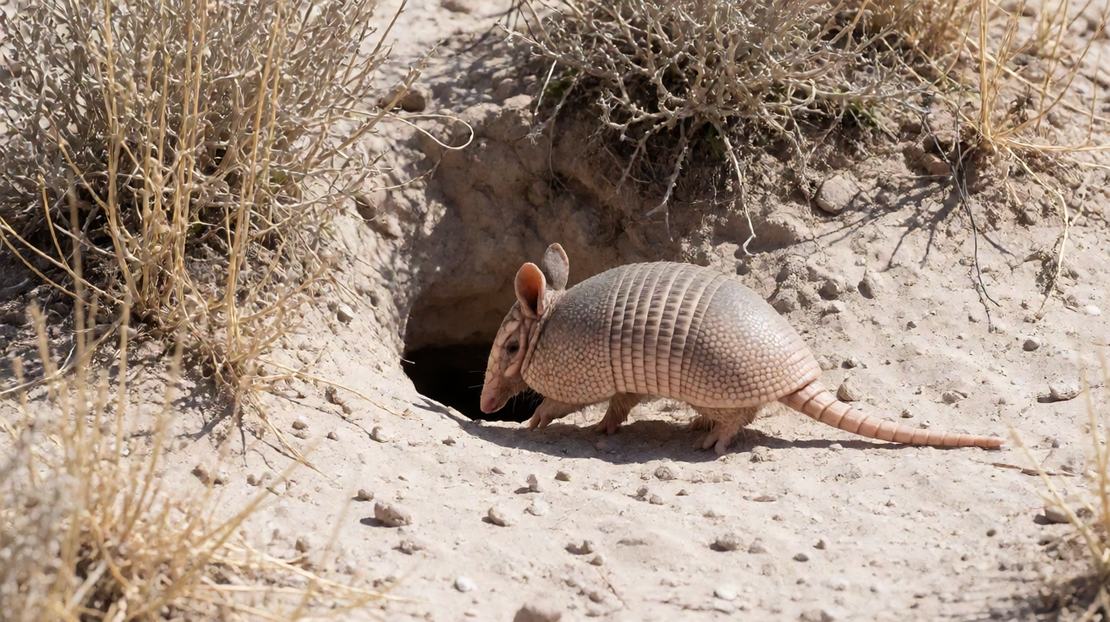
Chlamyphorus truncatus | Pink Fairy Armadillo
Species Profile · Chlamyphoridae
Pink Fairy Armadillo
The smallest armadillo, with a pink shell and a taste for loose sand.
Data Deficient
Length
Shell
Food
Young
Range
Rating
Fifteen centimetres of pale plate
Pink armour in the sand
Pink fairy armadillos look like a small shell with fur underneath, and they rarely appear. It measures 12 cm, and it weighs 120 g, although the plate looks heavier. It is the smallest armadillo. A pale pink plate covers the back, and white hair fills the sides.
It digs through sand, and it lives underground, since the soil offers cover. Nobody sees one often, since the animal works at night and stays below. Every sighting makes the news in Argentina, and researchers may go years without meeting a single animal. A rear plate works as a shovel, and it packs the tunnel behind.
Eyes are tiny. Nothing about the animal is easy to study.
Family tree
Chlamyphoridae, the armadillos
Chlamyphorus truncatus is one of two fairy armadillos. Family is Chlamyphoridae, and the group holds most of the living armadillos. Its nearest relative here is the Nine-banded Armadillo, a larger cousin of the same order.
Both carry bony plates, and both dig with heavy curved front claws. Yet the two differ in size, since one fits in a hand and the other does not. Richard Harlan described the species in 1825 from a single Argentine specimen.
Its genus holds one species, and no close relative sits beside it. Workers place it in a subfamily of its own, since the animal split from every other armadillo millions of years ago. No subspecies is listed.
A shell built for digging
How to tell one
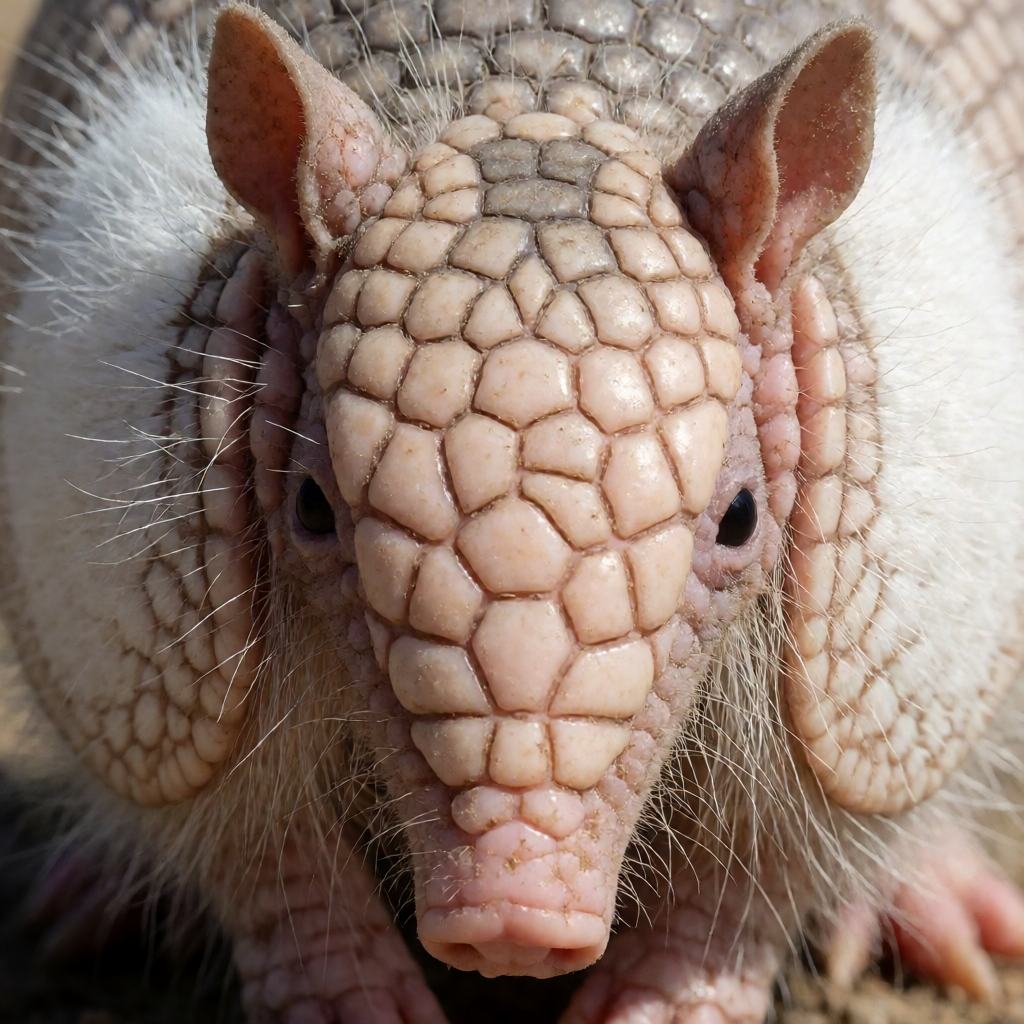
Body length runs from 11 cm to 15 cm, and the tail adds 3 cm. Weight stays near 120 g, and a large animal may pass 130 g. Its shell is pink. That plate covers the back, and it joins the body only along the spine.
Those sides stay free, so the animal can turn inside its own armour, and the plate then rides higher on the body. White hair fills the belly, and it feels like silk, although it traps sand. That rear plate stands upright, and it works as a tamper for sand. Front claws are large, and they cut through soil fast, since the animal digs nightly.
Sight plays little part. No ear shows outside the fur, and the animal listens through bone. Its tail is flat.
1
2
3
Sandy soil in central Argentina
Where it lives
Dry sand holds the species in central Argentina. Its range runs from Catamarca south to Rio Negro, and it stays below 1500 m. It digs burrows 15 cm below the surface.
Sandy soil decides the range. Grass and low scrub cover the ground, and the soil stays loose. One burrow runs a few metres and ends blind, and the animal then packs the entrance behind itself as it moves.
Farms break the soil, and the animals then leave, although some stay in field margins. Cattle compact the ground, although the species still tolerates some grazing. Rain matters little.
Insects taken underground
What it eats
Insects form the diet, and beetle larvae rank first. It also takes ants, worms and snails, and it may eat some plant matter. Meals come from the soil, and the claws open the way.
That search runs through loose sand rather than hard ground, so the animal follows the softest layers and leaves the rest alone. Nothing is chewed for long, and the small teeth do little work. Feeding happens at night, and the animal stays below by day, although it may surface after rain.
Water comes from food. Captive animals rarely eat, and most of them refuse food after a few days. Nothing is stored.
One young in a burrow
The breeding cycle
Almost nothing is known, since the animal breeds underground. Females probably bear one young, and the birth may come in spring. A young animal would stay in the burrow, and it would leave within weeks.
Workers base that guess on two pregnant females and a handful of captures, so the whole account rests on very little data. Nothing is known about courtship, and no one has seen a pair together. Captive animals die within days, and none has bred.
Stress kills the species quickly, and handling alone can end its life. The cycle stays hidden. Adults probably live a few years, and nobody has measured that.
Data Deficient, and rarely seen
Conservation
The Red List calls the species Data Deficient. Workers cannot count the population, and no trend has ever been measured. Farmland replaces the dry scrub, and the soil hardens.
Cats and dogs kill animals near houses, although the total loss stays unmeasured. Collectors pay for the animal on the black market, and most of those animals die within eight days of capture. No rule protects the species, and no reserve targets it.
Parks cover part of the range, and the animal still breeds inside them. Records stay rare. Field sightings have grown rarer, and nobody knows why.
Side by side
How It Compares
| Trait | Pink Fairy Armadillo | Nine-banded Armadillo |
|---|---|---|
| Length | 11 cm to 15 cm, with a 3 cm tail | 60 cm to 80 cm, tail included |
| Colour | a pale pink plate over white silk hair | grey brown plates over coarse hair |
| Food | beetle larvae, ants, worms and snails | insects, small frogs and carrion |
| Young | one young, born underground | four young from a single egg |
| Build | a rear plate that packs sand behind it | a flexible banded shell that lets it curl |
| Range | central Argentina, and nowhere else | the southern United States to South America |
Common misreadings
What People Get Wrong
- Many people think the animal swims well, yet the pink fairy armadillo stays underground and digs instead. Sand suits it, so hard ground holds none at all.
- A common tale says the plate covers the whole body, although it joins only along the spine. The sides stay free, so the animal can turn inside its own armour.
- Guides claim the species is easy to keep, yet most captives die within a week of capture. Stress kills quickly, and handling alone can end the animal life.
Going further
Sources and Further Reading
Quick hits
Five things to remember
- Its shell is attached only along the spine.
- The rear plate packs the sand.
- No ear shows outside the fur.
- It screams when frightened.
- Most captives die within a week.