 By Iris
Pyrosoma atlanticum | Pyrosome
Species Profile · Pyrosomatidae
Pyrosome
A tube of glowing clones that drifts through the open sea by the million.
Not Evaluated
Length
Members
Glow
Feeding
Depth
Rating
A living tube of clones
The glowing tube built from clones
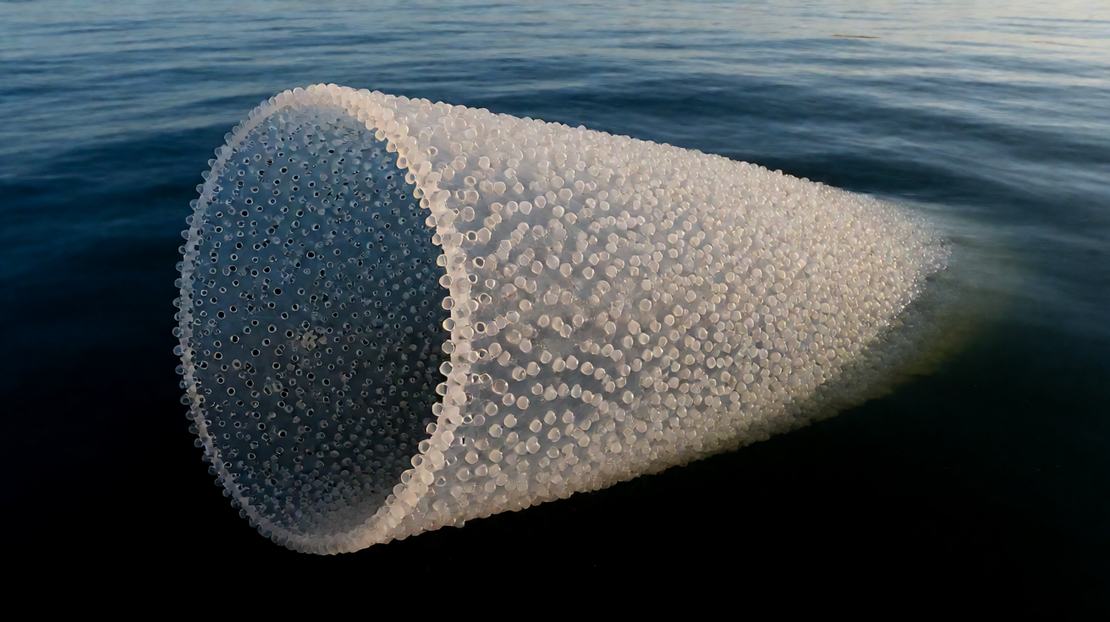
A pyrosome is a tube built from thousands of small animals, each one no longer than a grain of rice. Each small body sits in a wall of jelly. Thousands of them build one hollow cylinder. It drifts, and it glows. Divers call it the sea pickle.
Large ones can reach 60 cm, although most stay half that size. Water flows through the open end, since every mouth filters it. This colony moves by gentle jet power, and it steers nothing at all. On a dark night, a touch can set off a wave of blue light along the tube. That light runs from animal to animal in a ripple, although nobody knows why the colony glows.
Most people never meet one, because it lives far from shore. When they wash up, they arrive in thousands. One colony can colour a bay.
Family tree
Pyrosomatidae, the fire bodies
Science knows the species as Pyrosoma atlanticum. It belongs to the tunicates, a group of filter feeders close to the vertebrates. Its closest kin here is the Vase Sea Squirt, a single animal that pumps water through two openings. Both start life with a tail and a stiff rod, and both lose that tail as adults.
One settles on rock, while the other builds a colony and drifts. The name comes from two Greek words, fire and body. Sailors saw the glow long before science gave the animal a name, and they called it sea fire. Its genus was described in 1815, and the family has changed little since.
Only a handful of species share the group, and most look alike to the eye. Sorting them out is slow.
A tube of thousands of clones
How to tell one
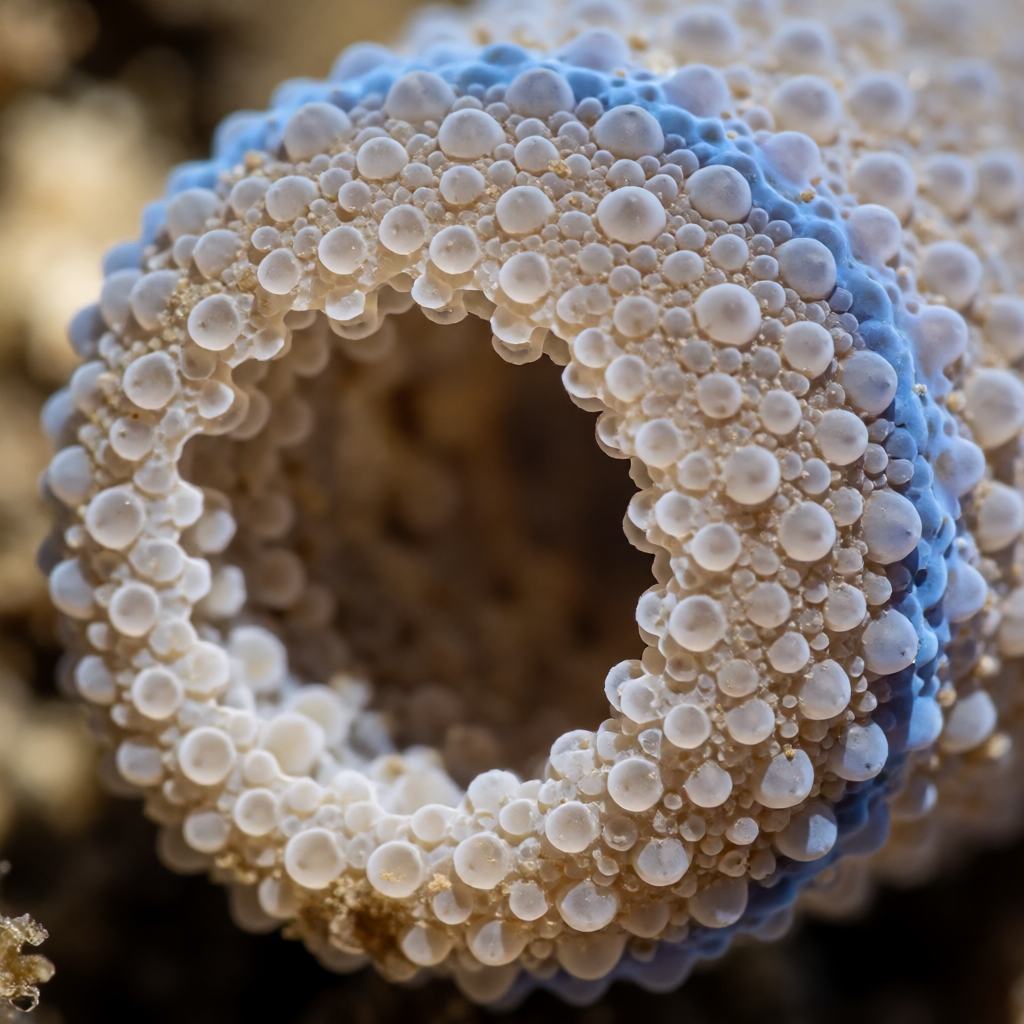
A colony forms a hollow tube closed at one end. Its wall is firm jelly, studded with small bumps that are the animals themselves. Each bump is one animal, called a zooid, though it looks like a wart. One zooid is only a few millimetres long, yet the colony can reach 60 cm. Inside the wall, each one has a mouth, a stomach and a pair of gill slits.
Cilia drive water through the gills and out of the tube, since there is no heart to pump it. That flow feeds the colony and pushes it slowly forward. Colonies vary from a few centimetres to 60 cm long. Some are almost transparent, while others look pink or pale grey in the hand. At night the whole tube glows blue green.
The light fades in seconds and returns when the colony is touched again. Large tubes are arm wide. Nothing inside the tube is solid.
1
2
3
Open ocean, deep by day
Where it lives
The species lives in warm and temperate oceans. It drifts mostly in the upper 200 m, where light still reaches and where its food also lives. Cool upwellings can carry it into cooler water for a short time. Because the colony cannot swim against a current, it goes where the water goes.
Eddies gather them into herds. Swarms can be dense enough to colour the sea. In some years, huge numbers wash onto beaches along the Pacific coast of North America. Those strandings puzzle scientists, since the animals die within hours once they reach dry sand.
Warm winters may help the colonies grow faster and drift further north. Each stranding brings a wave of public interest, and then the sea is quiet again.
Sea water filtered through the wall
What it eats
Each zooid filters tiny food from the water. Diatoms, dinoflagellates and bacteria form the bulk of the diet, although larger prey is taken too. Small copepods are caught as well, since they drift in the same water.
Because every animal in the wall feeds, the colony clears a great deal of water. A large tube can filter many cubic metres of water in a single day, and it does so without stopping. Food passes into a stomach, and waste leaves through the same opening at the back.
It feeds most actively at night, when it rises toward the surface. Daylight sends it back down, out of reach of many predators. That daily journey is one of the largest movements of life in the ocean.
A larva that founds a colony
The breeding cycle
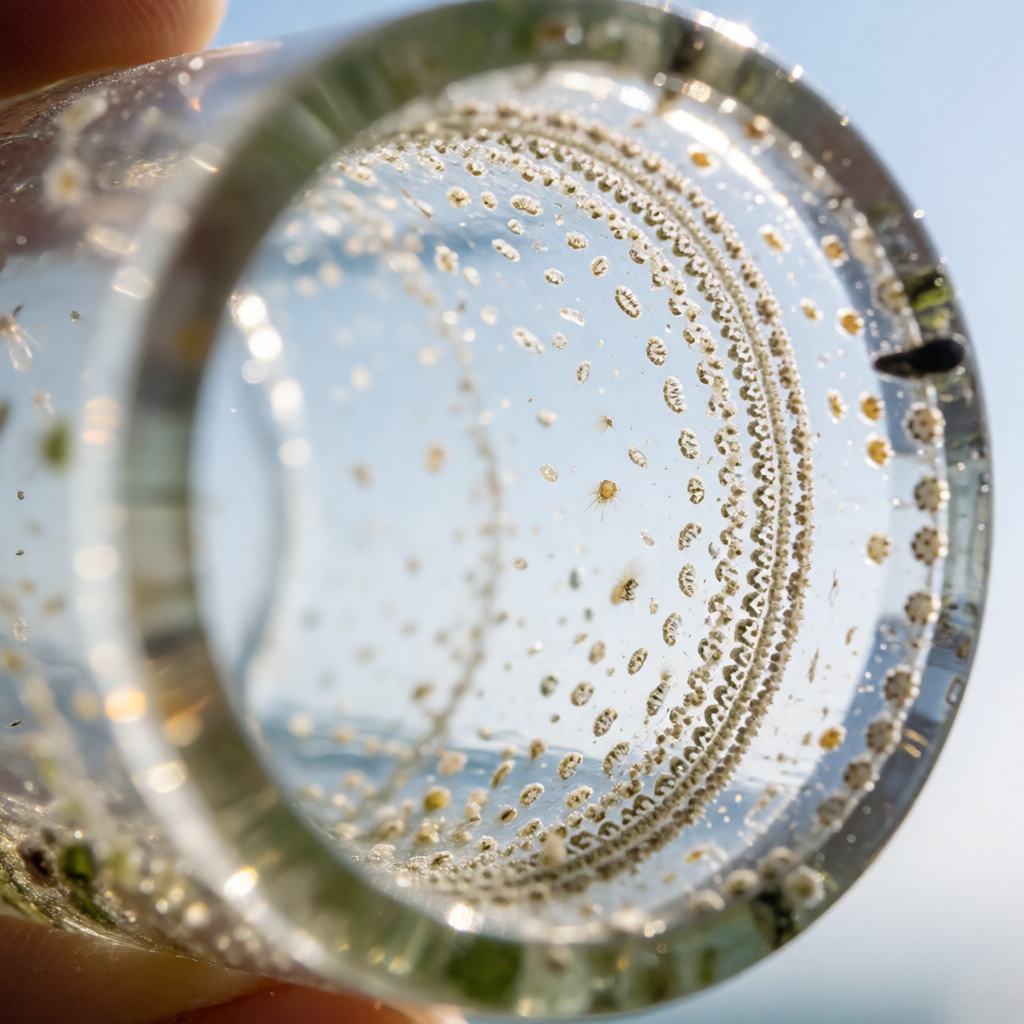
Every colony begins with one animal, the founder. The founder develops from a larva and starts to bud, and every other animal in the colony descends from it. Each bud grows into a new zooid inside the wall.
The colony expands as the buds divide and take their places. That founder dies later. Sex cells form in the older zooids later in the season, when the water warms.
Fertilised eggs become larvae with a tail and a nerve cord. Each larva swims for a short time before it settles and becomes a new founder. Because a single larva can start a colony, a small arrival can grow into a large swarm.
Not Evaluated, rarely seen
Conservation
No Red List entry covers the species. Its numbers rise and fall with currents and food, and nobody counts them. Plastic is a quiet threat.
The colonies cannot tell food from fragments, so they swallow both. Warming water is changing where the swarms appear, and some fisheries now report them as a nuisance. Trawls catch colonies by accident, and the soft bodies clog the nets until crews haul them out.
Because the animal drifts, no reserve can protect a swarm. Scientists study the glow to understand how simple animals make light, and the answer is still unclear. Its real value may be in the carbon it carries down when it dies.
Side by side
How It Compares
| Trait | Pyrosome | Vase Sea Squirt |
|---|---|---|
| Form | a hollow tube of many clones | a single sac in a leathery coat |
| Size | a few centimetres to several metres | 10 to 15 cm tall |
| Feeding | each member draws water through the wall | two siphons pull water through the body |
| Light | blue green flashes along the tube | none at all |
| Movement | drifts with the current | fixed to rock for life |
| Water | open ocean | harbours and rocky shores |
Common misreadings
What People Get Wrong
- A common tale says a pyrosome is one huge animal, yet it is a colony of thousands of small clones. Each member draws water in, and the whole tube glows when touched.
- Many people think the light comes from bacteria, yet the cells of the animal make it. A chemical reaction inside each member produces the blue green flash.
- Divers often mistake a pyrosome for a plastic bag, yet the tube is alive and easily torn. It drifts with the current and filters food through the colony wall.
Going further
Sources and Further Reading
Quick hits
Five things to remember
- A single colony can hold thousands of animals.
- The blue glow travels along the tube like a wave.
- Water leaves through the open end like a slow jet.
- The colony rises at night and sinks by day.
- Stranded colonies can cover a beach in a slippery carpet.