 By st20113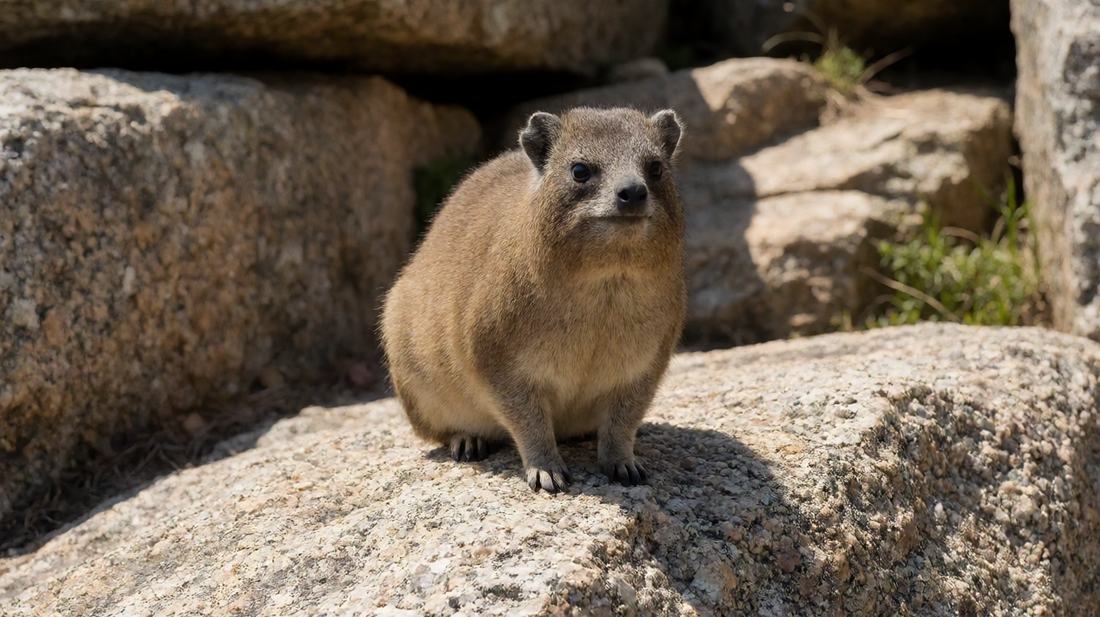
Procavia capensis | Rock Hyrax
Species Profile · Procaviidae
Rock Hyrax
A stocky rock dweller of Africa that looks like a giant guinea pig, yet counts elephants among its closest living relatives.
Least Concern across most of Africa
Weight
Length
Young
Milk
Range
Family
The Rock Hyrax
A small relative of giants
The rock hyrax is a small mammal. It looks a little like a large guinea pig. A full grown animal weighs about 4 kg.
It lives on rocky outcrops in Africa. These animals are also called dassies. They are common in many parts of the continent.
Family tree
Procaviidae, the hyraxes
The rock hyrax sits in the genus Procavia. Its scientific name is Procavia capensis. It is the only living species in that genus. The animal belongs to an old line of mammals.
Its nearest living relatives are elephants and sea cows. It shares its rocky home with animals like the Okapi. That pairing surprises most visitors.
50 cm of stocky fur
How to tell one
The body is short and thickset. Adults measure about 50 cm from nose to tail. Males are a little heavier than females.
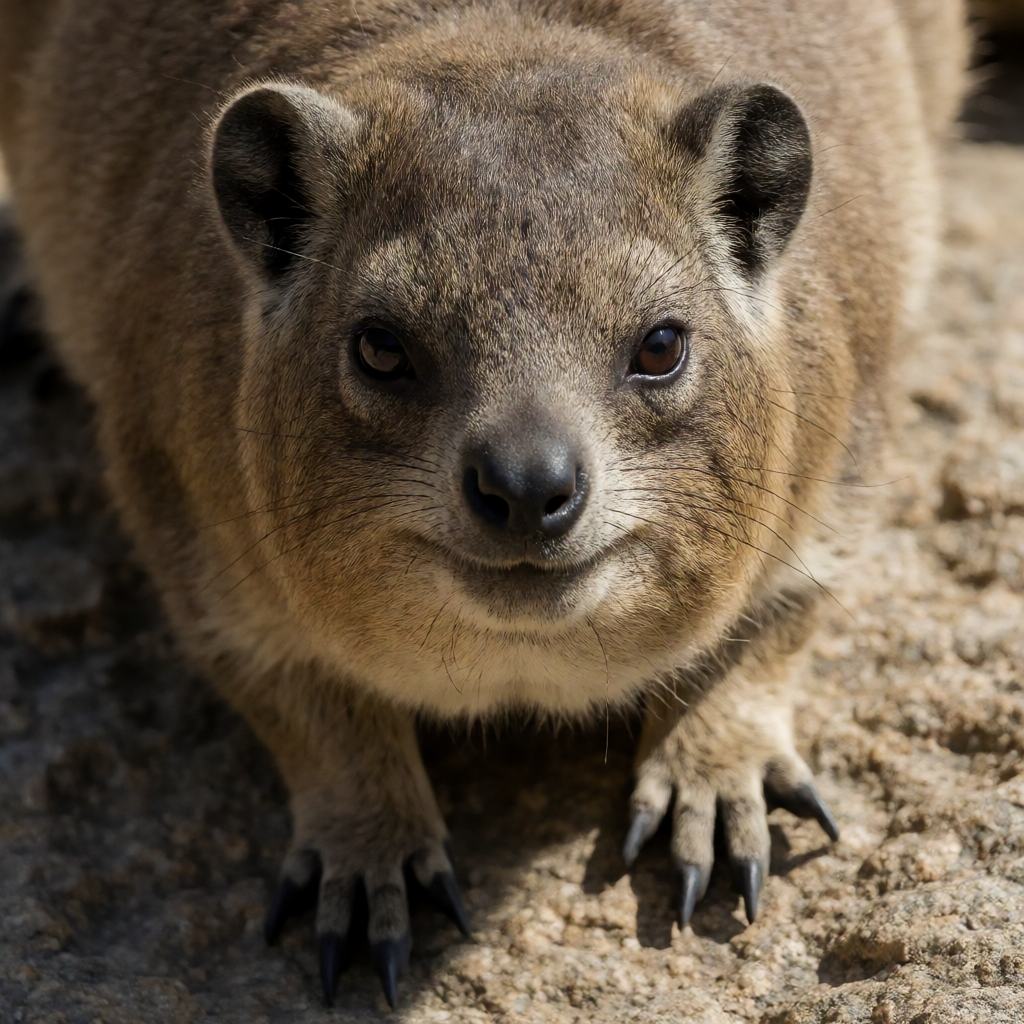
The fur is brown and grey. It helps the animal blend with stone. The feet carry soft rubbery pads.
Those pads grip rock very well. The eyes are small and dark. Sharp teeth sit at the front of the mouth.
1
2
3
Rocky outcrops and kopjes
Where it lives
Rock hyraxes live in rocky country. They use cracks and crevices as shelter. They range from sea level to 4000 m.
They also live in dry savanna with scattered boulders. The animals need cover close to their food. They rarely travel far from a safe rock.
Grasses, leaves and bark
What it eats
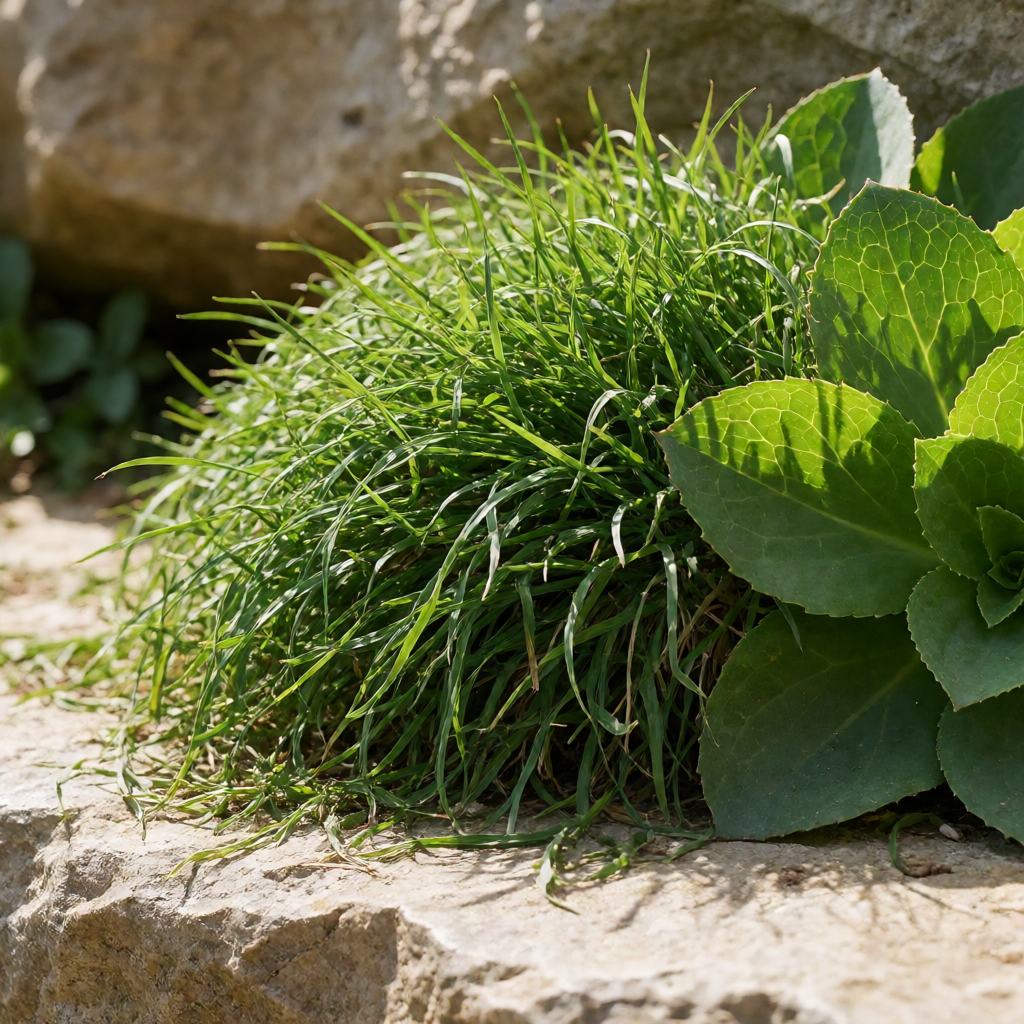
These animals eat plants. Their food includes grasses, leaves and fruit. They also take bark and small twigs. They feed in the morning and late afternoon.
A group often feeds together. One animal keeps watch while the others eat. They can go without drinking for long spells.
Young that can run within hours
The breeding cycle
Females give birth once a year. A litter holds 1 to 4 young. The young are well developed at birth. They can see and move within hours.
The mother feeds them milk for about 4 months. Young males leave the group early. Females often stay near their mother.
Least Concern, for now
Conservation
The Red List treats this animal as Least Concern. Numbers are steady across most of its range. The species lives in many protected areas.
Hunting takes place in some regions. Farmers sometimes treat the animal as a pest. No major threat faces it at present.
Quick hits
Five things to remember
- A hyrax can go 3 days without a drink.
- Its urine is very strong and dries into white crystals.
- Each foot carries a rubbery pad for grip.
- It is closer to an elephant than to a rodent.
- A group shares one toilet ledge on the same rock.