 By st20113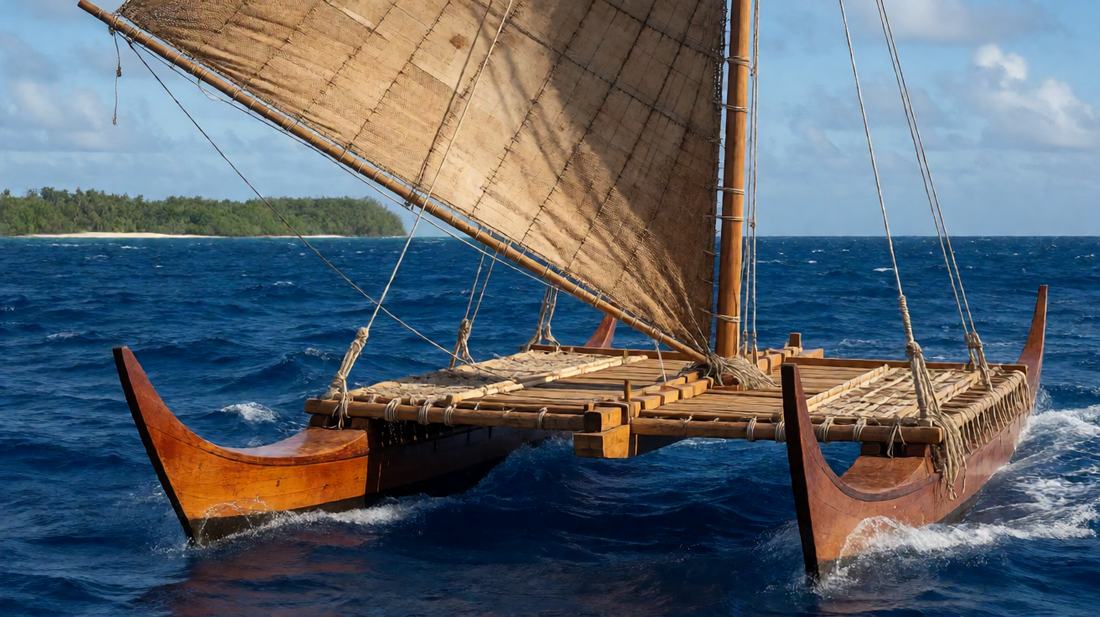
Polynesian Navigation | Wayfinding
Historical Profile · Pacific Ocean
Polynesian Navigation | Wayfinding
Using only stars, swell and birds, Polynesian sailors settled a triangle of ocean about 8000 km on a side.
c. AD 900-1300
Voyages
Triangle
Reached
Tools
Crew
The big picture
Introduction
Long before ships from Europe crossed the Pacific, the islanders of Polynesia had settled it. They sailed from island groups in the west. They reached Hawaii in the north, New Zealand in the south-west and Rapa Nui in the far east. They did it in canoes with no compass, no charts and no metal.
They found small islands scattered across an ocean larger than all the land on earth. This was one of the greatest feats of finding new land in human history. It was done by reading the sky, the sea and the birds.
Setting
Historical Context
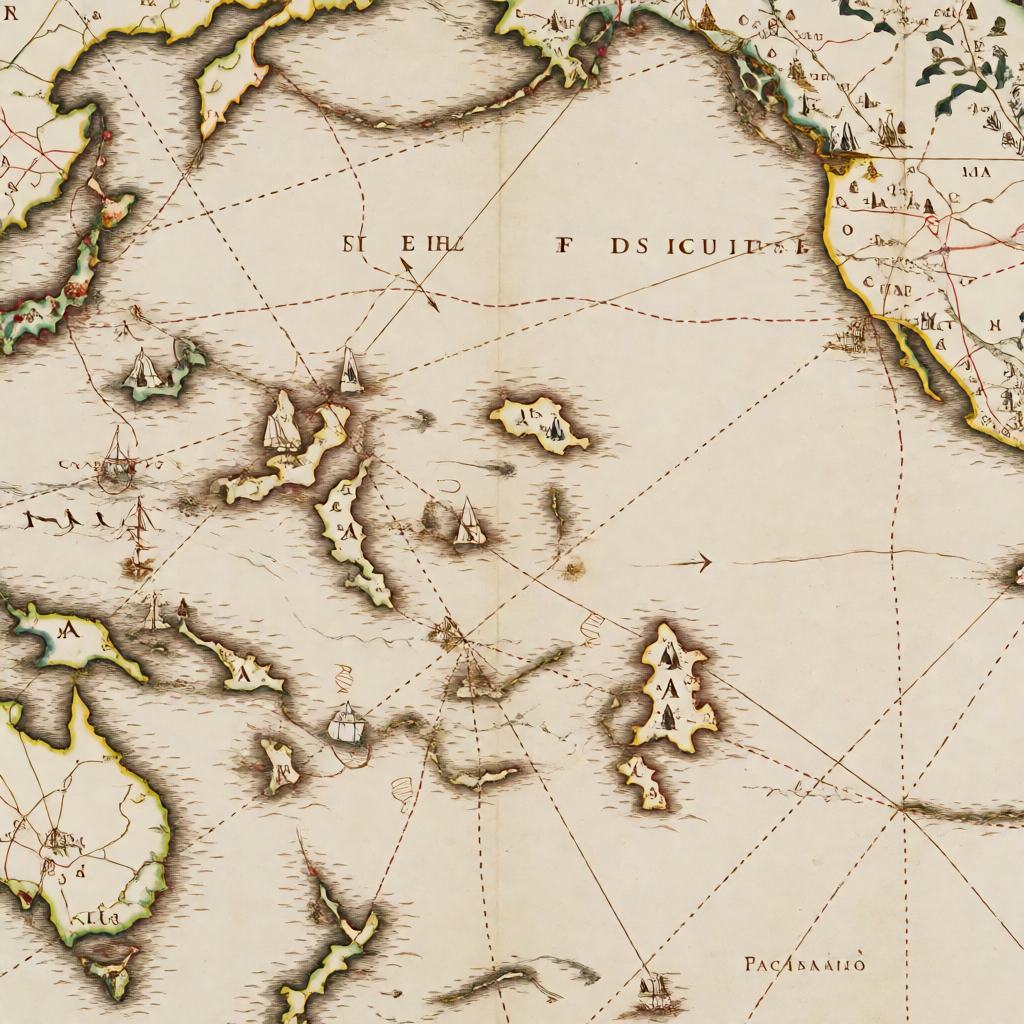
The Pacific is enormous. It covers about a third of the surface of the planet. Its islands are small and far apart. The Polynesian triangle runs from Hawaii to New Zealand to Rapa Nui. It is roughly 8000 km on a side, and most of it is empty water. Between the islands there are gaps of hundreds or thousands of km.
The first islanders came out of Southeast Asia. They were part of a wider movement of peoples. Over thousands of years those peoples spread across the islands of the Pacific. First they went through Melanesia and Fiji. Then into Tonga and Samoa. Finally they went out to the far corners of the ocean.
They carried crops such as taro, breadfruit and coconut. They carried pigs, dogs and chickens. So a new island could be made into a home. The great voyages of settling took place between about AD 900 and 1300.
Turning points
Key Events
The first stage was the settling of the western islands, Tonga and Samoa, which happened earlier. Then, from about AD 900, the islanders began to push east. They reached the Society Islands and the Marquesas. Then they went further south-east. Rapa Nui was settled by about 1200. New Zealand, a much larger and colder land, was reached around 1250. It became home to the Maori people.
Hawaii was settled from the south, probably about the same time. These were not one-way accidents. The islanders sailed back and forth. There is good evidence of regular two-way voyages between distant islands for centuries. Some traditions record long trips made on purpose to visit kin, to trade or to make war. The voyages were planned, stocked and repeated. They were not the work of a few lost boats.
The age of long voyages ended in about 1300. Scholars still argue about why. One likely reason is that the main islands had all been found. There was nothing left to find that could feed a home. Another is that the climate changed and the winds became less steady. What is clear is that the islanders stopped making the great crossings. The far islands grew apart.
1
2
3
Who held power
People and Powers
Island society was run by rank and by kin. Each island had chiefs. Chiefs were thought to carry a special power called mana. Rank passed down the line. The highest chiefs claimed descent from the gods. Land belonged to the group, not to one person. The chief decided who farmed what.
There were also skilled workers whose skills were vital. The master sailor was among the most respected. A sailor was trained from childhood. The knowledge was passed on by talk, in songs, chants and stories. A sailor had to know the stars, the winds, the currents, the swell and the habits of the birds. A mistake could kill everyone on board. The sailor did not travel alone.
A crew of skilled hands, a builder who understood the canoe and often a priest went along. The canoe itself was a wonder of design. Two hulls were joined together, or a single hull was given an outrigger. So the craft stayed steady on the open sea. The sails were woven from leaves. The hull was tied with cord, which let it bend in heavy waves instead of breaking.
Everyday world
Daily Life and Society
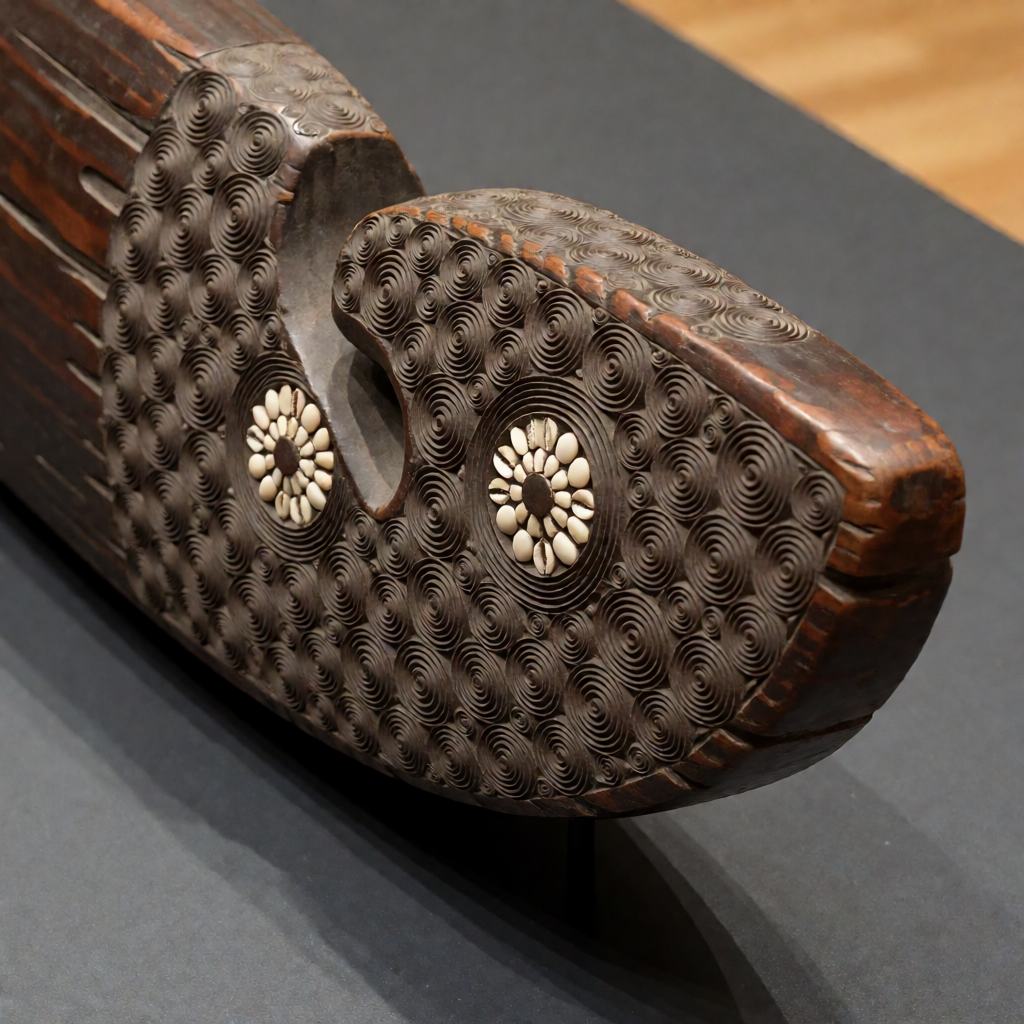
Life on an island was shaped by the land and the sea. People fished in the lagoon and beyond the reef with nets, lines and spears. They farmed taro in wet terraces, grew breadfruit and coconut, and kept pigs and chickens. On the larger islands they built houses of wood and straw. They carved wood, stone and shell into ornaments, tools and images of gods. The sea was both a larder and a road. Fishing was a daily job for men. Women wove mats and cloth from bark, made cord and looked after the gardens.
Food was often cooked in an earth oven. Heated stones were placed in a pit with the food and covered. Feasts marked births, marriages and the arrival of visitors. The sharing of food was a way of showing rank and respect. Faith was part of everything. People held that gods and spirits filled the land and the sea, and that the dead had power too. Holy places, called marae, were open courts of stone where rites were held. On Rapa Nui, huge stone statues called moai were raised in honour of the dead.
In Hawaii and New Zealand, the same kind of social and religious order grew up in very different climates. The natural world gave the sailors their signs. One of the most useful was a bird. The lesser frigatebird is a great flier. It spends days over the open ocean and cannot land on water, because its feathers are not waterproof. So it must return to land to rest each night. A sailor who saw the bird flying home at dusk knew that land lay that way. The lesser frigatebird and other sea birds were, in effect, a living map.
Craft and ideas
Trade, Technology and Ideas
Sailing by the stars rested on careful watching. In the day a sailor steered by the sun and the swell. He felt the rise and fall of the waves that came from distant storms. At night the stars showed the way. The rising and setting points of certain stars marked a course. A sailor knew which star rose over which island. Clouds could show an island below them, because a lagoon throws light upward. A green tint in the clouds was a strong hint of land.
The sailors also used the birds, the drift of floating plants and the change in the water. A swell from the wrong side could mean an island was blocking the waves. A skilled hand could feel it through the hull. All of this was held in the head and taught in a fixed order. It was accurate enough to find islands only a few km wide in an ocean of millions of square km. The canoe was the other half of the feat. A large double canoe could carry more than a hundred people, along with food, water, plants and animals, for weeks at sea. The hulls were shaped from whole trees.
The planks were tied, not nailed, because the islanders had no metal. The sails were three-sided and set so that the canoe could sail against the wind by tacking. That is what made return voyages possible. Modern research has shown how well the system worked. In the 20th century, sailors built canoes in the old way. They sailed them without any gear across long ocean gaps, using only the old knowledge learned from master sailors. The voyages proved that the old stories were not tales but records of real skill.
What lasted
Legacy
The island spread created a vast cultural region. The people of Hawaii, New Zealand, Samoa, Tonga, Tahiti and Rapa Nui are all descended from the same voyagers. They share a tongue and many stories.
Their knowledge of the sea is now seen as a science in its own right. It is taught again in schools and on voyages. The wider lesson is about what people can do with close attention.
The islanders had no gear, and they crossed a third of the planet. They did it by watching closely and remembering exactly, and by handing the knowledge on for many years. When Europe later began to explore the same ocean, it was sailing into a sea that had already been mapped, in the minds of the people who lived there.
Quick hits
Five Things to Remember
- Between about AD 900 and 1300, islanders settled the far Pacific, from Hawaii to New Zealand to Rapa Nui.
- The Polynesian triangle is about 8000 km on a side, and the islands in it are small and far apart.
- Sailors found land by reading the stars, the swell and the birds, with no gear at all.
- The lesser frigatebird must return to land at night, so it points a sailor toward an island.
- Canoes carried over a hundred people, and the knowledge was passed on by talk for many years.