 By st20113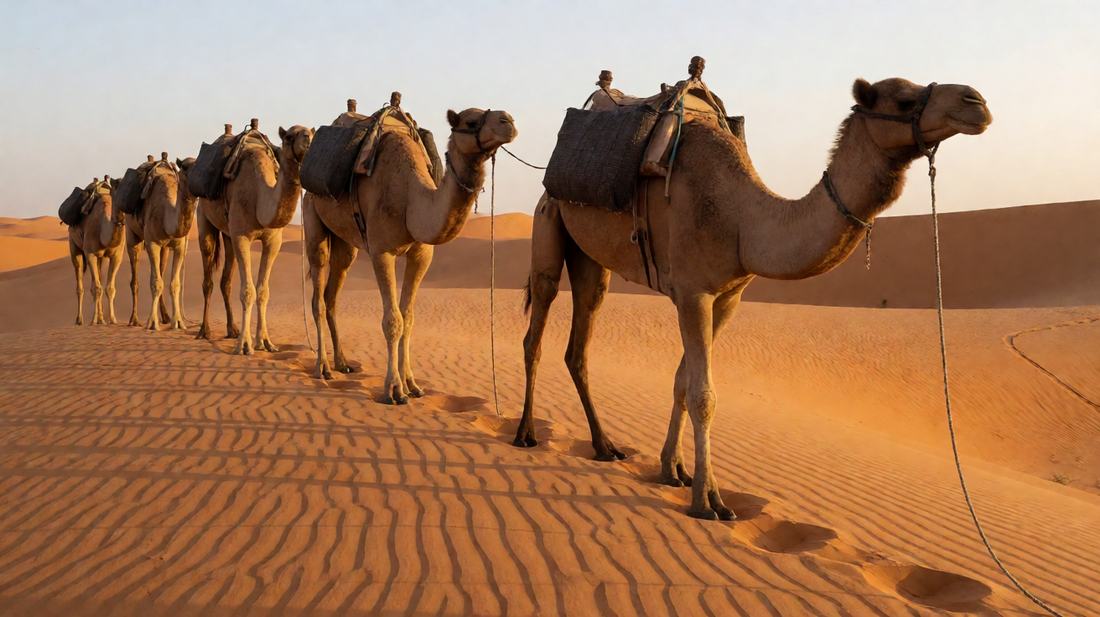
The Trans-Saharan Trade | The Gold and Salt Trade
Historical Profile · Sahara and Sahel
The Trans-Saharan Trade | The Gold and Salt Trade
For a thousand years the greatest desert on earth was a highway for salt, gold, books and a new faith.
c. AD 700-1600
Period
Width
Southward
Northward
Key city
The big picture
Introduction
For a thousand years the Sahara was not a wall but a road. Trains of camels crossed the greatest desert in the world. They carried salt from the north to the south and gold from the south to the north.
The trade linked the sea lands of the north with the grasslands and forests of West Africa. It made a line of rich cities along the desert edge. It also carried a faith and a written language, which changed West Africa for good.
Setting
Historical Context
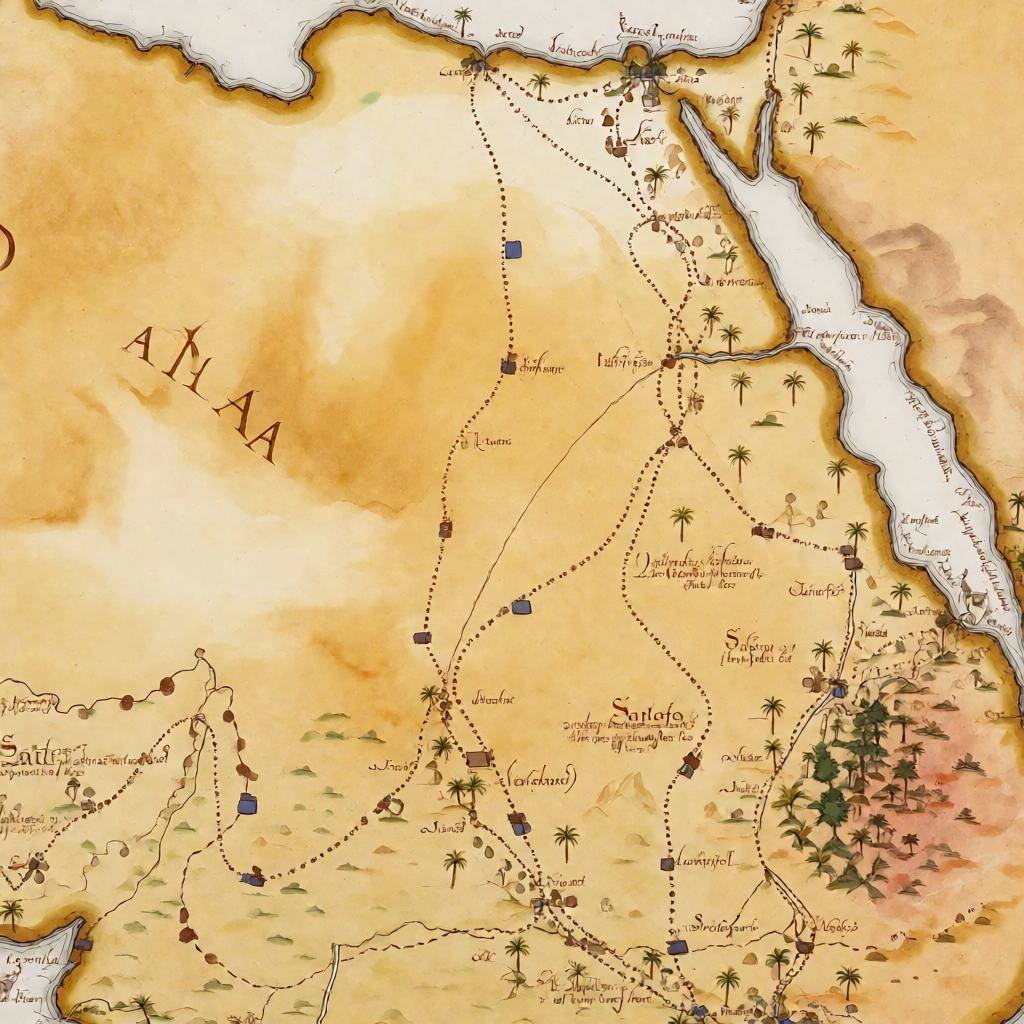
The Sahara is about 4800 km wide and covers a huge part of north Africa. It is not all sand. There are rocky plains, gravel flats and high mountains. There are also oases where water comes to the surface. To cross it you move from one oasis to the next. The gaps between them can be hundreds of kilometres.
The desert has not always been dry. About 9000 years ago the region was wet, with lakes and grass. People herded cattle there. As the air grew dry, the people moved to the edges. The desert became a place to cross rather than a place to live. The key to crossing it was the camel.
It reached north Africa from Arabia in about the 3rd century AD. The dromedary camel can go for days without a drink. It carries a heavy load and copes with great heat. Without it the whole trade would have been impossible.
Turning points
Key Events
Trade across the desert began before the camel, on foot and with horses and oxen. But it was slow and small. From about AD 700 the camel took over. The amount of trade grew fast. Muslim traders from north Africa pushed south. The towns of the Sahel, the dry grassland south of the desert, grew rich on the traffic. The kingdom of Ghana was the first great power to gain. It lay between the desert and the gold fields.
It taxed both the salt coming south and the gold going north. From about the 11th century its rulers became Muslim. The state grew richer and better linked to the wider world. Later, in the 13th and 14th centuries, the empire of Mali took the place of Ghana. The city of Timbuktu became a famous centre of learning. Then in the 15th century the Songhai empire rose on the bend of the Niger river. The city of Gao became its capital. Its greatest ruler, Askia Muhammad, made a pilgrimage to Mecca.
He brought back scholars and books. The trade began to fade in the 16th century. Portuguese ships started to buy gold on the West African coast. That cut out the desert route. Then sea trade across the Atlantic grew. The kingdoms of the Sahel lost both their buyers and their money. By about 1600 the great days of the camel train were over.
1
2
3
Who held power
People and Powers
The trade was run by traders, not by states, though states took a large share in tax. In the north the traders came from towns in what is now Morocco, Algeria, Tunisia and Libya. In the south they worked with local traders and with the rulers of the Sahel kingdoms. Those rulers kept the peace and charged for the right to trade. A camel train was a serious business.
A large one could have thousands of camels. It needed guides who knew the routes and the wells, and who could read the stars. The trip from the north edge of the desert to Timbuktu could take two months. A train that lost its way could die in the open. So the guides and the traders who paid for them were the real masters of the trade.
In time a class of Muslim scholars and traders settled in the towns of the Sahel. They kept records, wrote letters, ran schools and served as advisers to kings. Islam spread along the trade routes, first in the towns and then more slowly into the countryside. It did not replace older beliefs all at once. People often mixed the two, and in many places they still do.
Everyday world
Daily Life and Society
The towns of the Sahel were made for the trade. Timbuktu, Gao and Djenne sat near the river or the desert edge. They grew on the money and the goods that passed through. Timbuktu had a mosque of mud brick that could hold thousands. It had a university with a large library. Books were copied by hand and sold for high prices.
Scholars came from across the Muslim world to study law, stars and medicine. Most people, however, were farmers and herders. Their lives had little to do with camel trains. They grew millet and sorghum, kept cattle and goats, and lived in villages of mud houses with roofs of straw. A village chief settled disputes and shared out the land. Women grew and sold food in the markets.
In some places they took part in trade on their own account. Slavery was part of the system. Captives from the south were taken north, and some were sold across the desert. The scale is hard to measure, but it was large. Salt was mined in the desert itself, in harsh conditions, often by enslaved workers. It was one of the goods most in demand in the south.
Craft and ideas
Trade, Technology and Ideas
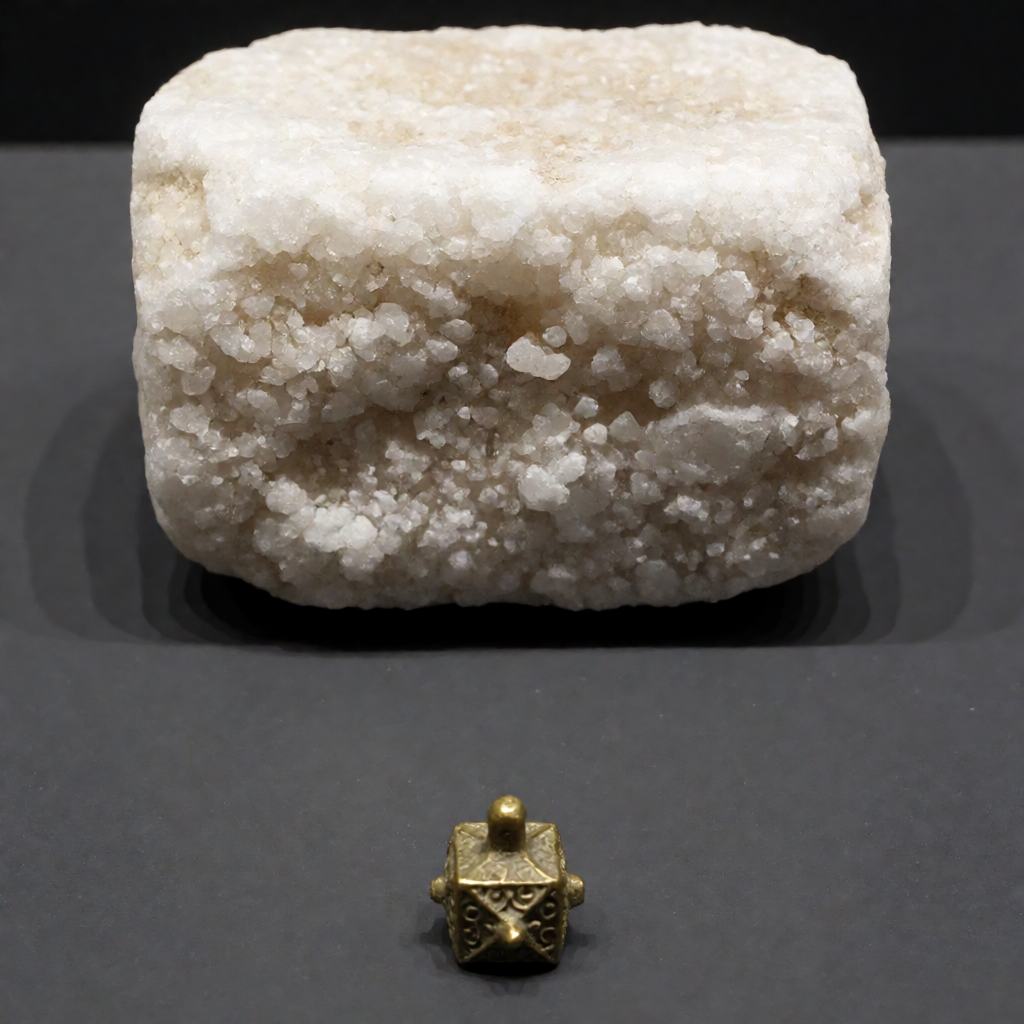
The trade ran on two goods above all others. Salt was mined at Taghaza and other desert sites. It was cut into slabs and carried south by the tonne. In the hot south salt kept food and gave it taste. People would pay almost anything for it. Gold came from the forests of West Africa. It went north to be minted into coins in north Africa and Europe. For centuries this gold was the main supply of the sea lands.
Other goods moved as well. Copper, horses, cloth, glass, beads and dates went south. Ivory, kola nuts, leather and slaves went north. The trade was always two-way. The towns in the middle grew rich by taking a cut. The most lasting export was not a thing but an idea. Islam came with the traders, and with it came Arabic writing. Rulers learned to keep records in Arabic, to write letters to other kings and to build mosques and schools.
Travellers such as Ibn Battuta, who visited Mali in 1352, wrote about what they saw. They left us descriptions of a world that would otherwise be lost. Science and medicine travelled with the books. Scholars in Timbuktu studied the stars, made calendars and copied the works of earlier writers. When the libraries of Timbuktu were listed in modern times, hundreds of thousands of books were found. Many were still in family hands. They cover stars, law, medicine, history and poetry. They are the clearest proof that the desert road carried ideas as well as salt.
What lasted
Legacy
The trade made the wealth of the great Sahel kingdoms. It helped to create some of the most important cities in African history. It also spread Islam and Arabic letters across a huge region. It gave West Africa a place in the wider world of learning and trade.
The mud-brick mosques of Djenne and Timbuktu are still standing, and are still in use. The end of the camel trade did not end the region. New routes and new states grew up, and the old cities slowly shrank. But the memory lasted.
In the 20th century the books of Timbuktu became a sign of a literate, connected Africa that the outside world had long ignored. The desert, which looked like an edge, was in fact a bridge.
Quick hits
Five Things to Remember
- The Sahara carried a huge trade for about a thousand years, from AD 700 until roughly 1600.
- Salt went south and gold went north, and the towns in between grew rich on the traffic.
- The dromedary camel made the crossing possible, carrying heavy loads for days without water.
- Islam and Arabic writing spread with the traders, and Timbuktu became a centre of learning.
- The trade faded after about 1500, when Portuguese ships began buying gold on the coast.
[…] Trans-Saharan Trade was the base of Mali’s power. Holding its middle section was the whole point of the state. […]