 By st20113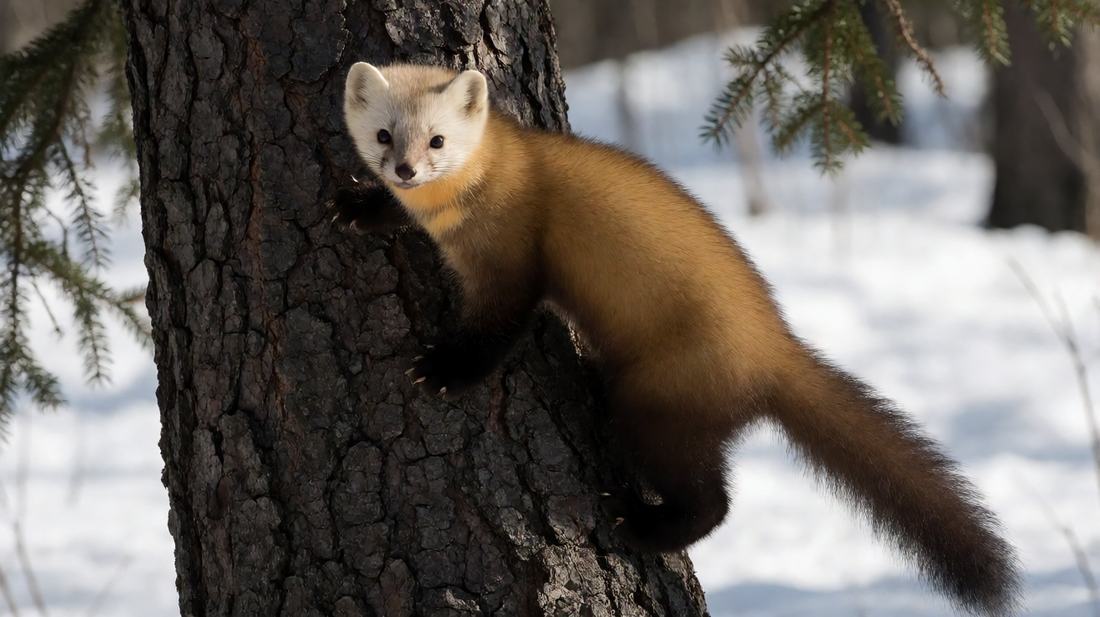
Martes americana | American Marten
Species Profile · Mustelidae
American Marten
A small forest hunter of North America that follows squirrels through the branches, stores food for hard weather and grows fur on the soles of its feet in winter.
A tree climbing marten of the northern forest
Body
Tail
Throat
Winter feet
Young
Life
The american marten
A tree climbing hunter of the north
The American Marten is a small hunter of the northern forest. It is 1 of the few animals that hunts in trees. The body reaches about 45 cm.
A small one stays near 35 cm. The tail is bushy, and it adds more length. The fur is golden brown.
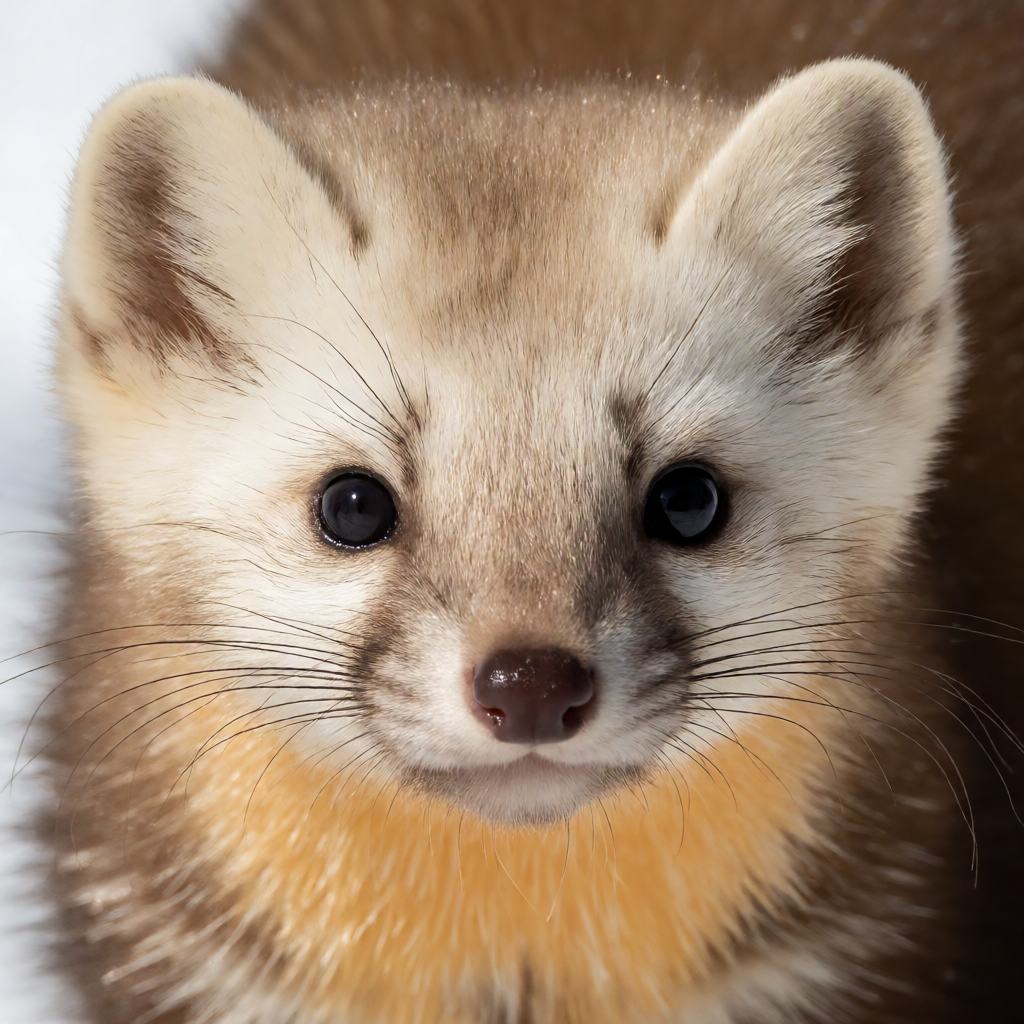
A pale orange patch sits on the throat. It runs along a fallen log and up a trunk. It hunts by day and by night.
Family tree
Carnivora, Mustelidae
The American Marten sits in the phylum Chordata. Its class is the Mammalia. Its order is the Carnivora. Its family is the Mustelidae, the weasels and their kin.
Our animal shares the family with the European Pine Marten. That animal is a close relative of the same size. It lives in the woods of Europe. Our animal lives in the forests of North America.
The 2 species both climb well and both take small mammals. Both also carry a pale patch on the throat. The family is an old one, and its members live on every continent except Australia.
45 cm and a pale throat patch
How to tell one
The body measures about 45 cm. A small one reaches 35 cm. The tail is bushy, and it measures about half the body. The fur is golden brown to dark brown.
The throat carries a pale orange patch. The face is pointed, and the ears are rounded. The legs are short and strong. The claws are only half retracted, so the animal can climb well.
The soles of the feet carry fur in winter. That fur works like a snowshoe on soft snow. The animal has scent glands near the tail. Those glands mark the edge of its ground.
1
2
3
Mature conifer forest
Where it lives
The species lives in a mature forest. It favours a wood with old conifers. It also lives in a mixed wood. It needs fallen logs and hollow trees.
It makes its den in a hole or in a log. It rests through the coldest hours of a winter day. It travels over a wide area. It hunts on the ground and in the branches.
It needs a wood with plenty of cover. A young wood with no logs suits it poorly. A road through the forest also breaks its ground.
Small mammals, birds and berries
What it eats
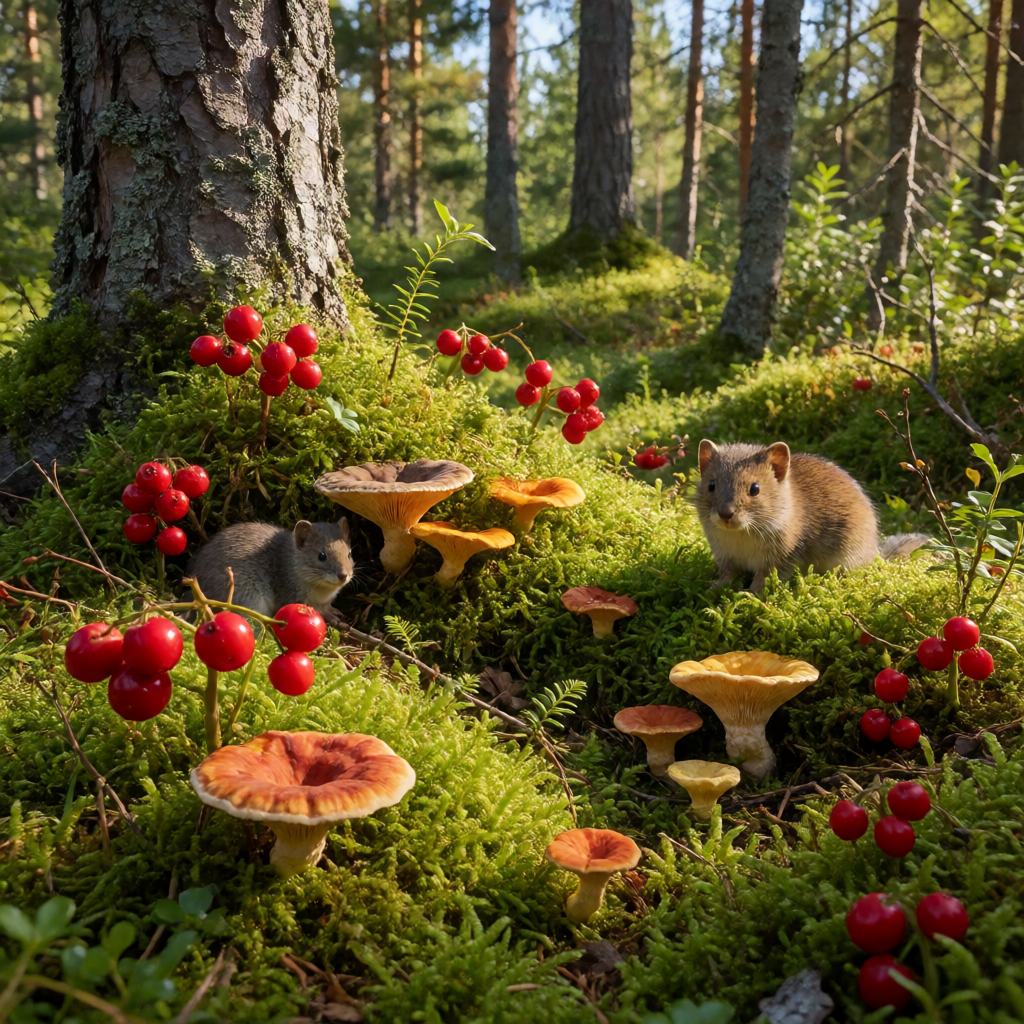
The American Marten is an omnivore. It takes voles, mice and squirrels. It also takes birds, eggs and insects. It eats berries and fungi in the autumn.
It hunts on the ground and in the trees. It follows a squirrel through the branches. It kills the prey with a bite to the neck. It stores food in a den for hard weather.
That habit helps it through a cold spell. It needs a great deal of food for its size. It hunts through the day and the night.
A delayed birth in spring
The breeding cycle
The pair mate in the summer. The young do not grow at once. The egg waits inside the female for many months. That delay means the young are born in the spring.
The female makes a nest in a hollow tree. She gives birth to 1 to 5 young. The young are blind and have little fur. The female feeds them with milk for 2 months.
They then start to hunt with her. They leave her in the autumn. The animal may live for about 10 years.
Fur trapping and lost old forest
Conservation
The American Marten is listed as Least Concern by the IUCN. It is common in the north of the continent. It has no legal protection in many places.
Trapping for fur was once a great danger. The loss of old forest is the chief danger now. A wood cut for timber loses the dens.
A road also breaks its ground into pieces. The species needs old trees and fallen logs. A large wood left in its natural state gives it the best chance.
Quick hits
Five things to remember
- It hunts squirrels high in the branches.
- The pale patch on the throat is its best mark.
- The soles of its feet grow fur in winter.
- It can store food in a den for hard weather.
- The young are born in spring after a long delay.