 By st20113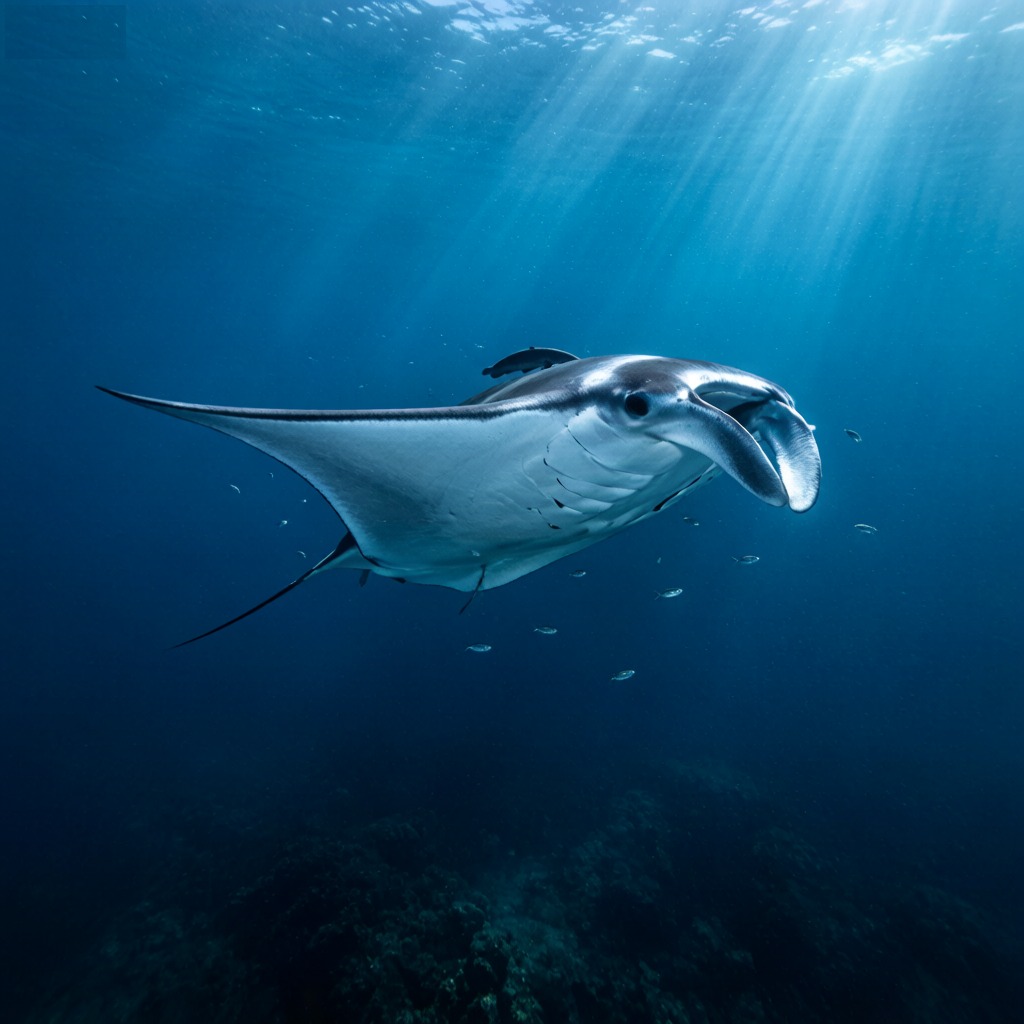
Introduction
Manta rays — comprising two recognized species, the giant oceanic manta ray (Manta birostris) and the reef manta ray (Manta alfredi) — are among the most magnificent creatures in the ocean. Belonging to the family Mobulidae, these cartilaginous fish are the largest rays in the world, with wingspans reaching up to 7 meters (23 feet). Despite their enormous size, manta rays are gentle filter feeders, consuming vast quantities of plankton.
Taxonomy and Classification
Manta rays were long considered a single species, but genetic and morphological studies led to their formal separation into two distinct species in 2018: the giant oceanic manta ray (M. birostris), which is more oceanic and migratory, and the reef manta ray (M. alfredi), which is smaller and more resident to coastal waters.
Physical Characteristics
Manta rays have a distinctive diamond-shaped disc body with large, triangular pectoral fins called “wings” that can span 3 to 7 meters. They are primarily black or dark gray above and white below, with unique patternings of spots and blotches on the ventral surface that serve as identifying marks — much like human fingerprints.
Distribution and Habitat
Oceanic manta rays are found worldwide in tropical and subtropical waters, typically in open ocean environments. Reef manta rays are found in similar waters but more commonly associated with coastal reefs and cleaning stations. Major aggregation sites include the waters around Hawaii, the Maldives, Fiji, Mexico’s Pacific coast, and the Galápagos Islands.
Feeding Behavior
Manta rays are filter feeders that consume enormous quantities of zooplankton — tiny marine animals including copepods, shrimp, and fish larvae. They swim steadily through the water column with their mouths wide open, allowing water to flow through their gill plates where plankton is trapped on filter pads.
Conservation Status
Both manta ray species are listed as Endangered by the IUCN. Major threats include entanglement in fishing gear, targeting hunting for their gill plates (used in traditional medicine in Asia), and boat strikes.