 By st20113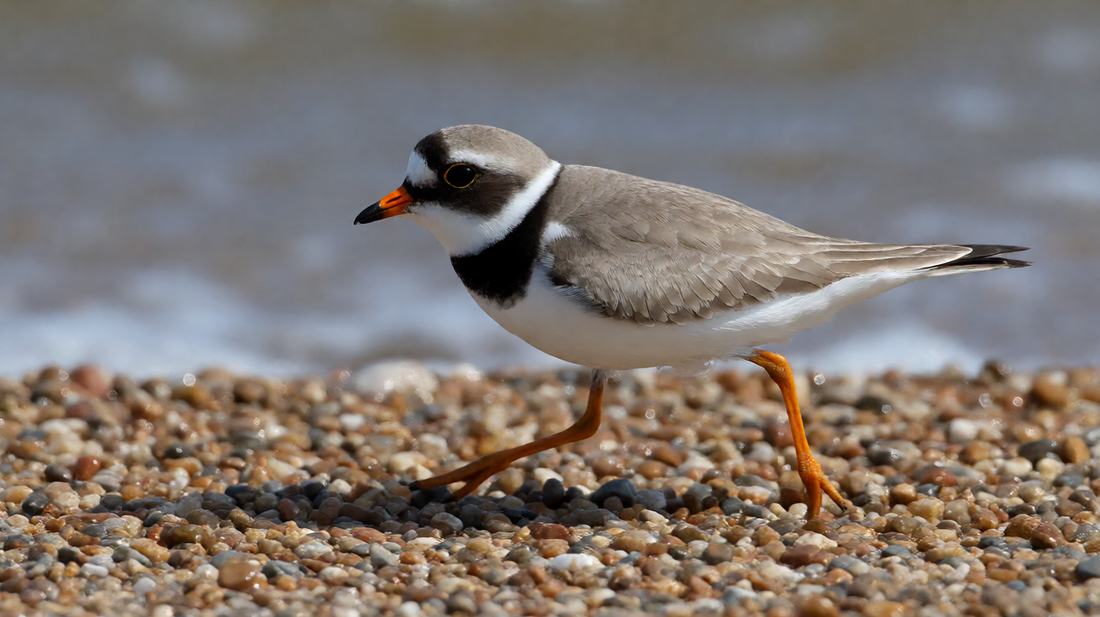
Charadrius hiaticula | Ringed Plover
Species Profile · Charadriidae
Ringed Plover
A small, neat plover of the bare shingle beach whose painted black-and-white head pattern and orange legs make it unmistakable — and whose future rests on beaches left quiet enough to nest.
IUCN: Least Concern
Range
Length
Weight
Nest
Incubation
The plover of the shingle
A bird of the bare beach
The ringed plover is a small, neat wading bird. It belongs to the family Charadriidae. It is one of the most widespread shorebirds of the northern beaches. It nests on shingle and gravel. It winters on sandy and muddy shores. Its range circles much of the planet. The bird is easy to recognise up close. Its back is grey-brown.
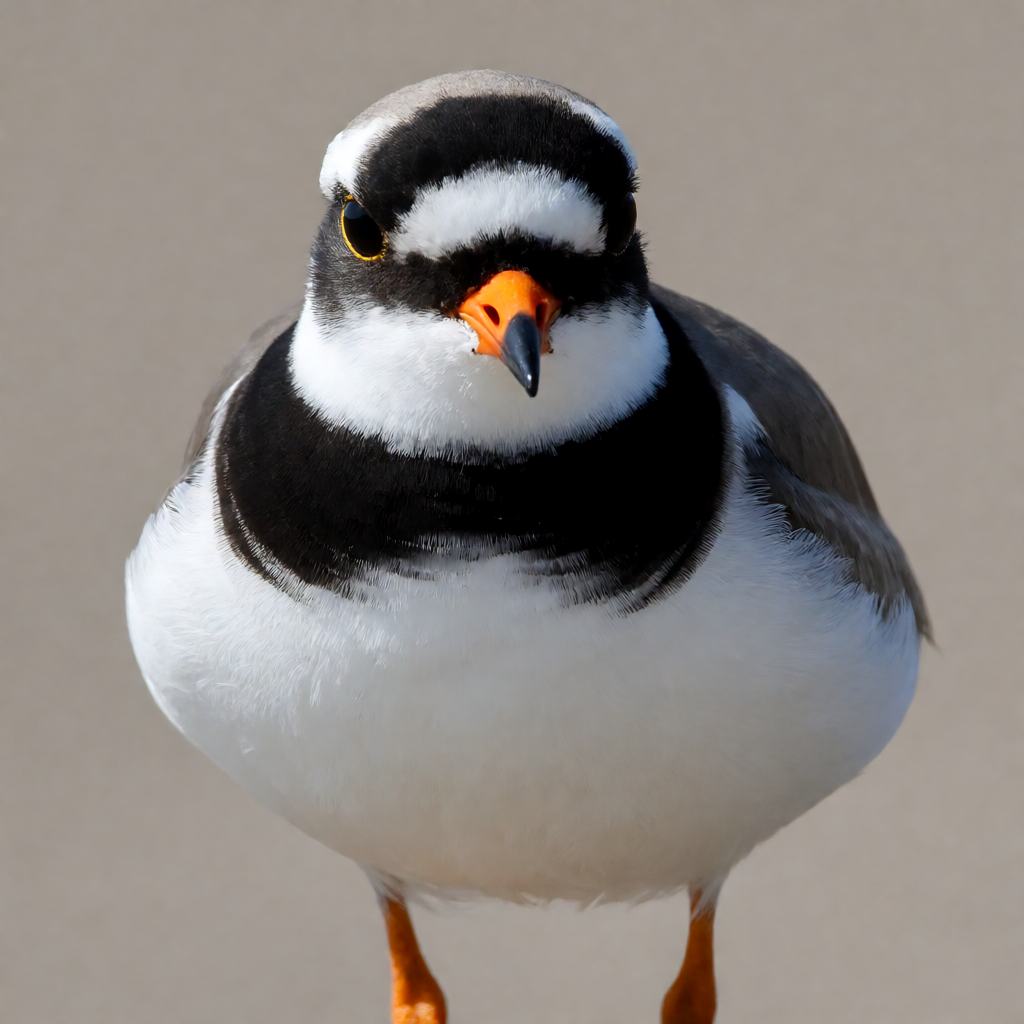
Its under parts are clean white. A bold black band crosses its breast. Its legs are bright orange. Its short bill is orange with a black tip. The head carries black and white bands. The pattern looks painted on. Only the little ringed plover comes close. That bird is smaller and paler.
It also lacks the white wing bar. The ringed plover wants bare, stony ground. It needs a flat surface for its eggs. It needs wet sand for feeding. So it lives on shingle and sand flats. People now use those beaches heavily. Storms also flood the nests. So its fortunes are tied to coastal management.
Family tree
Charadrius, the ringed plovers
The ringed plover sits in the genus Charadrius. This is a large and worldwide group of small waders. It differs from the sandpipers of Scolopacidae. Plovers have a bill shorter than the head. They also have no hind toe. Within the genus the ringed plover is easy to place. It shows a single black breast band. It also shows a white collar and orange legs.
It is the close relative of the Snowy Plover (Charadrius nivosus). That small, pale bird lives on American coasts and salt flats. It shares the same breast band. It shares the same habit of nesting on open ground. The two are separated by whole oceans. Yet the body shape and the plumage still match. The plovers have changed very little over time. They have also spread across the world quickly.
Linnaeus described the ringed plover in 1758. Today we accept a few subspecies. The nominate hiaticula lives in the temperate zone. The pale, larger tundrae lives in the arctic. The small, dark psammodroma lives in north-east Canada and Greenland. Ringing shows separate migration routes. Arctic birds fly far south. Temperate birds stay closer to home.
Painted head, orange legs
How to identify one
An adult ringed plover is 17 to 20 centimetres long. Its wingspan is 48 to 57 centimetres. It weighs 55 to 75 grams. It is a compact bird with a round head. Its short bill gives it a true plover look. That sets it apart from the longer-legged sandpipers. Both sexes look alike. The back and crown are grey-brown. The forehead and throat are clean white.
The under parts are white too. A broad black band crosses the breast. White borders that band above and below. A white collar runs round the neck. A black mask runs through the eye. A dark band crosses the crown. The legs and feet are bright orange. That is the most reliable mark at distance. The bill is orange for two thirds of its length.
The tip is sharply black. The wings are long and pointed. Flight is fast and slightly fluttering. A white wing bar shows in flight. So does a white rump. The two together separate it from the little ringed plover. The voice is a soft two-syllable whistle. The bird also gives a loud, fast alarm call.
1
2
3
Beach, shingle and gravel
Where it lives
The ringed plover wants open, bare, stony ground. It wants bare flat ground for its eggs. It wants shallow water and wet sand for feeding. So it lives on shingle beaches and sand flats. It also uses broken shell banks and gravel spits. Estuary shores and sparse dunes suit it too. The bareness of the ground matters most. The type of sediment matters less.
In summer the bird ranges across the whole north. It nests on British and Baltic coasts. It also nests on French shores. Further north it uses Greenland and Svalbard beaches. It breeds on the Siberian islands as well. Inland it nests on gravel river banks. It also uses shingle around lakes and quarries. Nesting density is highest on quiet reserves.
There the birds escape people and dogs. In winter most northern birds move south and west. They gather on temperate and warm coasts. They feed on Atlantic and Mediterranean beaches. They also reach the west coast of Africa. Flocks can number several hundred. Ringing shows great loyalty to a site. A bird returns to the same shore each year.
A runner on wet sand
What it eats
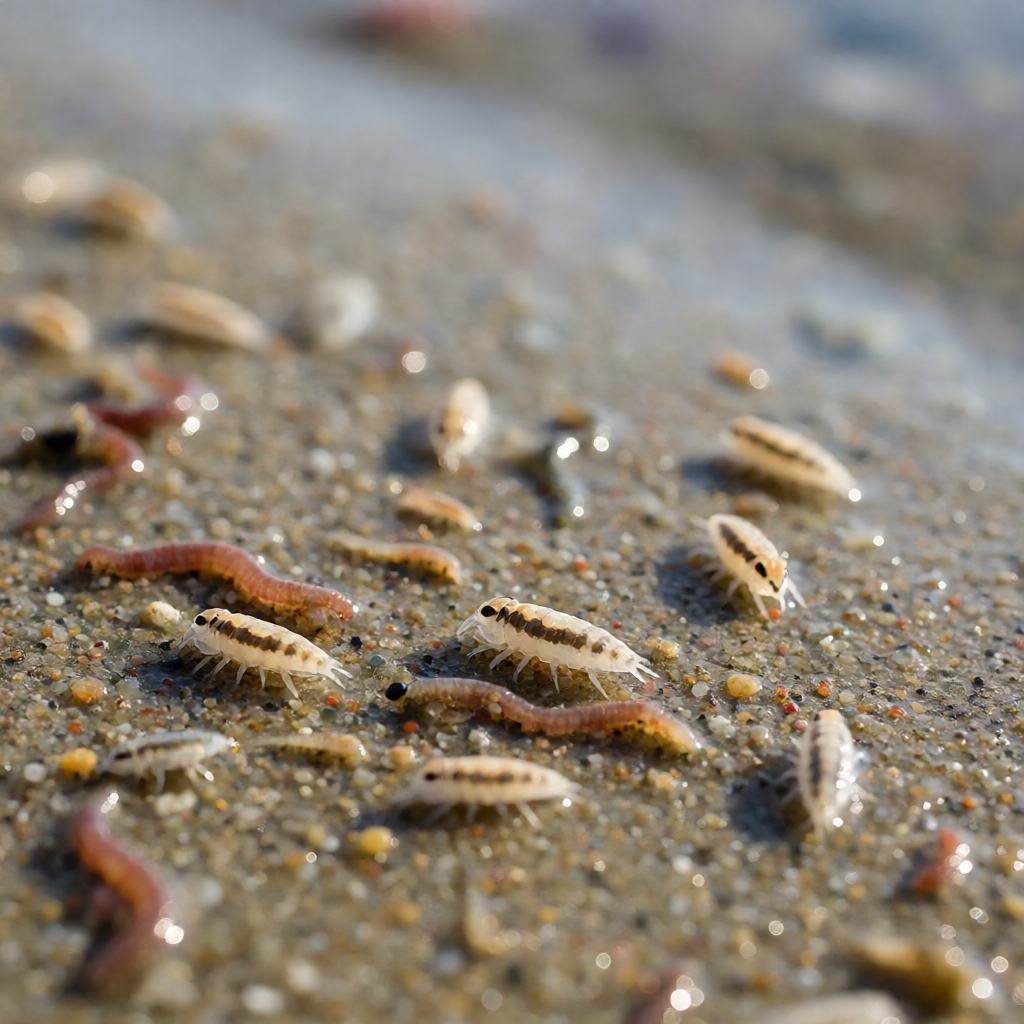
The ringed plover eats small invertebrates from the shore. Its food lives in wet sand, shingle and shallow water. Sandhoppers are important. So are small shrimps and amphipods. These swarm at the seaward edge of the beach. Ragworms and small polychaete worms matter too. So do tiny molluscs and crustaceans from stone and weed. Insects and their larvae come from higher up the beach. The bird also takes small fish and floating eggs.
Its feeding method is typically plover-like. The bird is above all a visual hunter. It runs across the beach in short bursts. Then it stops and looks. Then it pecks at what it has seen. It does not probe the mud like a sandpiper. The short bill suits this approach. So does the large eye. So does the relatively large brain.
The tide governs the day. The birds follow the water’s edge up and down. Freshly covered and freshly exposed sand is richest. They feed by day and by night. They feed in all weathers if the ground is soft. They depend on a narrow strip of shore. So lost intertidal habitat hurts them. So does disturbance by people, vehicles and dogs.
Eggs on bare stone
The breeding cycle
Ringed plovers pair in the spring. The bond usually lasts one season. The pair may re-form the next year. The male holds a territory on the shingle. He displays with flight and with scraping. He also bows and calls. Both adults defend the site. Both care for the brood. Nesting starts in April. It runs into June and even July in the north.
The nest is a shallow scrape in bare ground. The bird makes the hollow itself. Sometimes it lines it with shell fragments. Small stones may line it too. The clutch holds 3 to 4 eggs. They are laid at daily intervals. Both parents sit for 23 to 25 days. The eggs are pale buff with dark speckles. Scrawls break up the pattern further. So the clutch is nearly impossible to find.
The nest is little more than a hollow. So the whole breeding depends on an undisturbed site. The chicks are precocial. Their down is mottled buff and brown. It matches the shingle exactly. They leave the nest within hours. The parents lead them to the water. The young can fly at 22 to 24 days. Families stay together after fledging. Southern birds may raise a second brood.
A bird of disturbed coasts
Conservation
The ringed plover is Least Concern on the global Red List. Its range is enormous. The world total still runs to hundreds of thousands. Yet it has declined on many temperate and western beaches. British breeding numbers have fallen in recent decades. So have numbers on several European Atlantic coasts. The bird is now of concern across much of its settled range. The main causes are disturbance and habitat loss. People and dogs and vehicles trample the eggs.
Tides and storms flood the nests. Storms are becoming more frequent as the climate shifts. Predators take a further toll. Foxes and crows and rats and gulls have grown near coastal settlements. Together these reduce breeding success. The busiest beaches suffer most. The species is protected across its whole range. In Europe key beaches are reserves and special protection areas. Managers fence the nesting areas.
They warden the visitors. They restrict dogs and vehicles in the season. Those measures have held numbers on managed sites. Protection of wintering and passage sites helps too. Key estuaries are now protected areas. So the bird holds its own where people manage the shore. It still loses ground on unmanaged beaches.
Quick hits
Five things to remember
- The ringed plover is one of the very few birds that nests on the bare ground of a busy beach. The eggs sit in a hollow in the shingle. The hollow is lined with shell fragments and small stones. So the whole brood depends on people leaving the site alone.
- The eggs match the broken shell and shingle almost exactly. Even someone who knows the nest position may search for minutes. The sitting bird waits until the last moment. Then it runs off with a broken-wing display.
- The bill is orange with a sharply black tip. The legs are bright orange. Together with the single breast band and the white collar, these make the bird the neatest of the small European waders.
- The species breeds in the high arctic as well as on temperate beaches. Birds nest on Greenland and Siberian gravel. Those northern groups migrate further south in winter than any other population of the species.
- The broken-wing display is one of the finest distraction acts of the European birds. The bird runs across open shingle with one wing trailing. The tail is spread, the head is low and the call is loud. It draws the predator away from nest or chicks.