 By st20113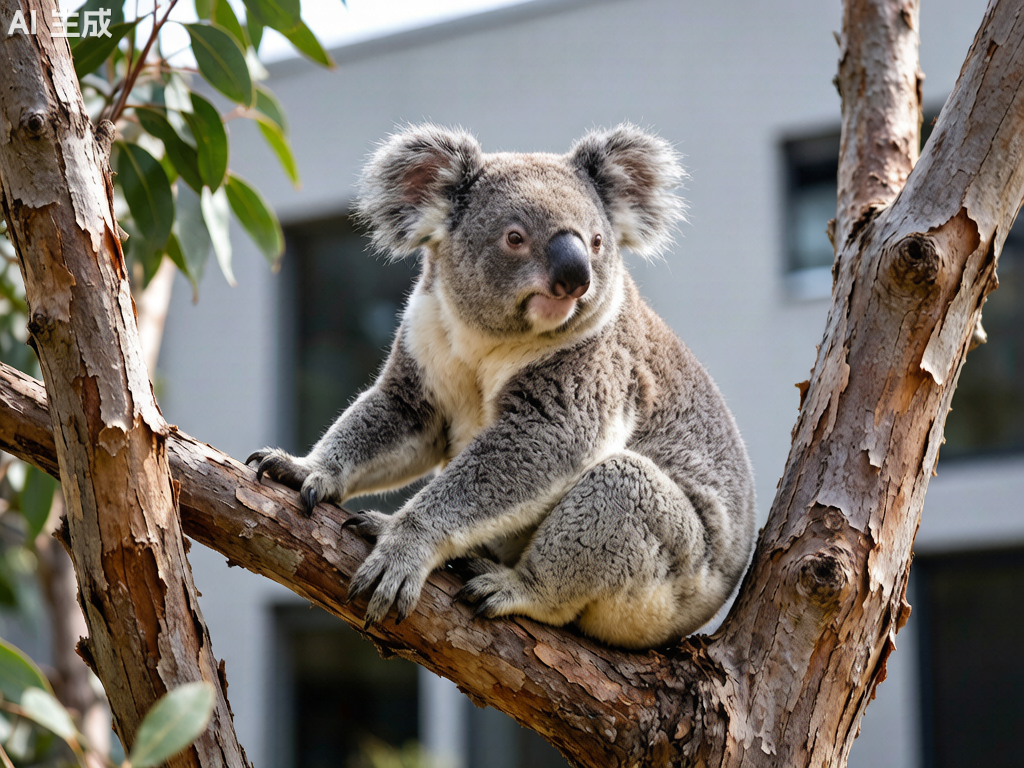
The koala (Phascolarctos cinereus) is a marsupial herbivore native to Australia, renowned for its distinctive appearance and arboreal lifestyle. Often mistakenly called a “koala bear,” the koala is not a bear but a marsupial, meaning it carries its young in a pouch.
Physical Characteristics
Adult koalas typically weigh between 4 and 15 kilograms (9 and 33 pounds) depending on sex and region. Males are generally larger than females. Their fur is thick and woolly, ranging from grey to brown, with a lighter patch on the chest. Koalas have large, round ears with fluffy white edges and a prominent black nose, one of their most recognizable features.
Koalas are among the most arboreal of land mammals, spending nearly their entire lives in eucalyptus trees. They possess sharp claws and rough pads on their palms and soles, enabling them to grip branches securely while climbing and feeding. Interestingly, koalas have relatively small brains compared to other marsupials, a trait thought to be an adaptation to their low-energy eucalyptus diet.
Habitat and Distribution
Koalas are found along the eastern and southeastern coast of Australia, from Queensland through New South Wales, Victoria, and South Australia. They inhabit a variety of forest types, including eucalyptus forests, woodland areas, and coastal regions, wherever eucalyptus trees are abundant. Their range has contracted significantly since European colonization, with populations now fragmented across isolated forest patches.
Diet and Feeding Behavior
Koalas are specialized folivores, feeding almost exclusively on eucalyptus leaves. They consume leaves from only a select number of eucalyptus species—typically around 30 of the approximately 700 species available. A single adult koala may eat between 200 and 500 grams (7 to 18 ounces) of leaves per day.
Eucalyptus leaves are low in nutrients and high in fibrous plant material, difficult to digest. Koalas have a slow metabolic rate and a specialized digestive system, including an enlarged cecum, that helps break down tough leaf material through fermentation. To conserve energy, koalas sleep 18 to 22 hours per day, primarily resting in the fork of a eucalyptus tree.
Reproduction and Life Cycle
Koalas breed once per year, typically between December and March. After a gestation period of approximately 35 days, a single joey is born, blind and hairless, and immediately crawls into its mother’s pouch. The joey remains in the pouch for about six to seven months, nursing on milk and later on a special substance called “pap” that helps the joey’s digestive system develop to process eucalyptus leaves.
After leaving the pouch, the joey rides on its mother’s back or abdomen for several more months before becoming independent at around 12 months of age. Female koalas typically reach sexual maturity at 3 to 4 years, while males mature slightly later.
Conservation Status
The koala is listed as Vulnerable on the IUCN Red List. Major threats include habitat loss due to deforestation, bushfires, drought, disease (particularly chlamydia), and vehicle strikes. Koala populations in New South Wales and Queensland have declined by up to 50% in some regions. Conservation efforts focus on habitat protection, wildlife corridors, and medical treatment for diseased populations.
[…] groups, chasing prey until exhaustion rather than relying on a sprint. Unlike the echidna and koala, which shared its range but were not primary prey, the thylacine was an active pursuit predator. […]
the order Diprotodontia, the great radiation of herbivorous marsupials that also includes the Koala. In fact, genetic and fossil evidence places wombats and koalas as close relatives, both descended