 By st20113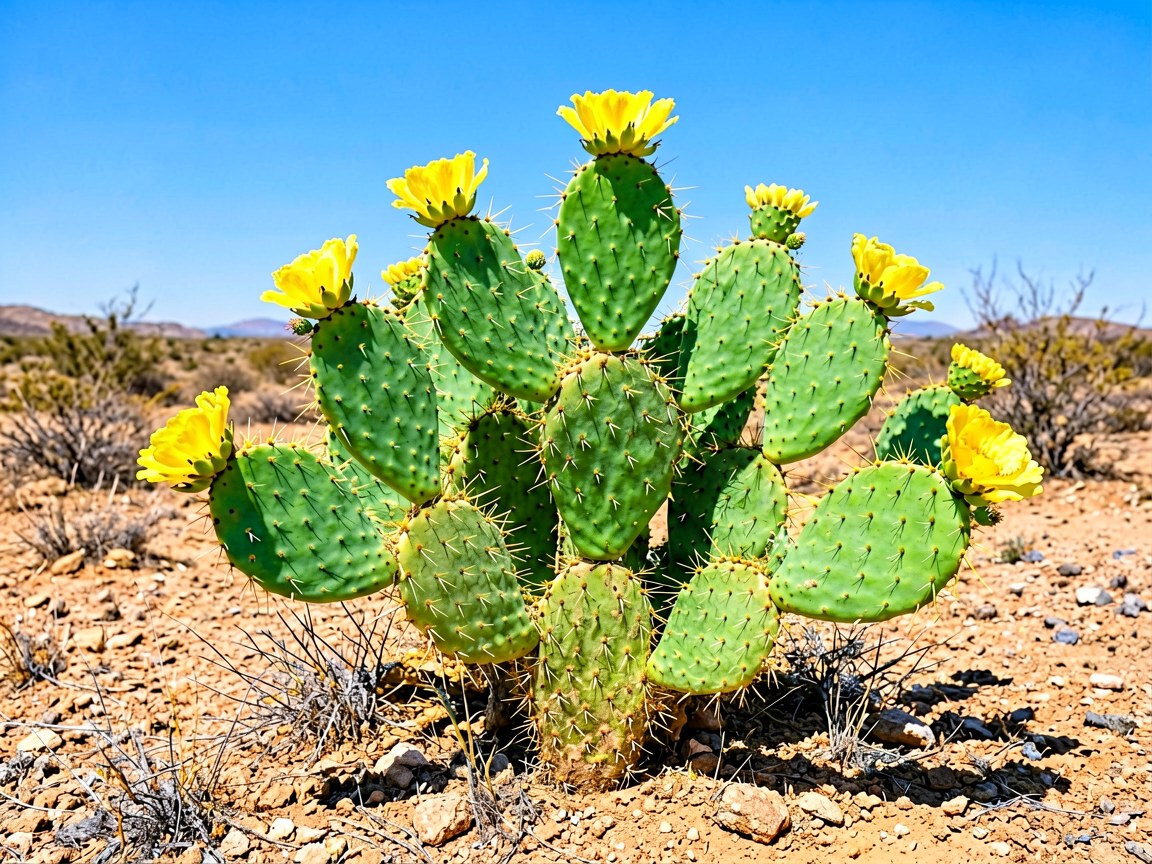
Opuntia ficus-indica | Prickly Pear
Introduction
The prickly pear, Opuntia ficus-indica, is a perennial cactus native to Mexico that has become one of the most widely cultivated and naturalized succulents on Earth. Called the Indian fig opuntia, barbary fig, or nopal cactus, it is valued in warm, arid regions for edible pads, or nopales, and sweet fruit, the tuna. Beyond food it provides fodder, medicine, natural dyes, and living fences across the Mediterranean, Africa, the Middle East, and Australia. In the family Cactaceae, it stores water and endures drought; its flattened, photosynthetic stems called cladodes do the work of leaves, which are reduced to spines. So successful abroad that it is invasive in several countries, it remains central to traditional agriculture and cuisine, illustrating both the value and the danger of introduced plants.
Taxonomy
Linnaeus described the species, with authority often cited as Miller, and its name reflects the fig-like fruit. The genus Opuntia was coined by Linnaeus from Opus, a Greek city where a similar spiny plant grew, and ficus-indica means Indian fig, an old name for the Americas, the Indies, whence it came. It is in the subfamily Opuntioideae. Opuntia is among the largest cactus genera, with several hundred species from Canada to Patagonia centered in Mexico and the US Southwest. O. ficus-indica is close to other platyopuntia paddle-stemmed species; some classifications place it in segregate Platyopuntia, though traditional Opuntia prevails. For a comparison with another iconic desert plant, see our profile of the [Saguaro Cactus](https://www.gloencyc.com/saguaro-cactus/); both are American cacti but differ greatly in form. It is distinguished by large, few-spined pads and reddish fruit, unlike spiny Opuntia stricta.
Physical Characteristics
The prickly pear is shrubby to tree-like, usually forming clumps two to four meters tall, occasionally five with a trunk-like base. Its defining feature is the cladode, a flattened oval pad twenty to forty centimeters long, green, fleshy, and jointed so new pads sprout from older edges; this lets the plant shed or regrow sections after damage or drought. True leaves are small, conical, and soon drop, leaving areoles, cushion structures from which spines and flowers arise. Spines are few and short, often absent in cultivars, but each areole also bears thousands of glochids, minute barbed bristles that detach easily and irritate skin severely, the reason harvested pads must be cleaned. Flowers are large, usually yellow, sometimes orange, red, or white, at pad rims in late spring. The tuna fruit ripens green to red, purple, or magenta with sweet, seedy pulp; cladodes store water under a waxy cuticle, the key to drought tolerance.
Habitat
O. ficus-indica originates in arid northern and central Mexico on rocky slopes, scrubland, and disturbed ground, and has naturalized widely from the Mediterranean shores of Spain, Italy, Greece, and North Africa to the Ethiopian highlands, southern Africa, the Middle East, India, and Australia, wherever winters are mild and summers warm and sunny. It demands well-drained soil and full sun, tolerating poor, rocky, or saline ground and as little as two hundred millimeters of rain yearly by shedding pads and slowing growth, yet responding vigorously to irrigation. Frost limits it; hard freezes kill cladodes, restricting range to frost-free zones. In many introduced regions it forms dense thickets on rangelands and roadsides, outcompeting natives and blocking stock. In Australia, southern Africa, and the Mediterranean it is a noxious weed controlled by herbicides, mechanical removal, and biological agents such as cochineal insects and the moth Cactoblastis cactorum.
In the Mediterranean it has become so naturalized that it is often mistaken for native flora, lining country lanes and terraced hillsides from Sicily to the Peloponnese. In the Ethiopian highlands it is a critical dry-season fodder and living fence, while in South Africa it colonizes overgrazed rangeland and threatens native succulent thicket. Its success in such different continents reflects a combination of drought tolerance, vegetative reproduction, and a lack of the natural enemies that keep it in check in Mexico, a classic recipe for invasive success.
Diet
Though a plant, the prickly pear is eaten by people, animals, and insects. The pads, nopales, are a vegetable in Mexican and Mediterranean cooking, sauteed, boiled, or grilled, mildly tart and vegetal like green beans; young tender pads are harvested after spines and glochids are removed. The fruit is eaten fresh, juiced, or made into jams, candies, and drinks, rich in vitamins, fiber, and antioxidants. Livestock, especially goats and sheep, browse pads as drought fodder, and it is grown as cactus forage for dairy cattle in Mexico and Brazil. Ecologically it feeds a specialized insect community: the cochineal scale Dactylopius coccus colonizes pads for sap and is harvested for carmine red dye. Jackrabbits, deer, and desert tortoises eat pads and fallen fruit, and birds and mammals disperse seeds, linking human economies and arid food webs.
Reproduction
The prickly pear reproduces sexually via flowers and seeds and vegetatively via detached pads, the latter dominant in cultivation and invasion. Bees and other insects pollinate the bright blooms, and each fertilized flower becomes the fleshy tuna with many hard seeds. Many cultivated varieties are sterile triploids producing few viable seeds and depend entirely on vegetative propagation. Vegetative reproduction is strikingly efficient: a single cladode that drops, blows, or is planted upright roots from its base in days to weeks, yielding a genetically identical plant and, if fallen, a whole new thicket, explaining rapid spread and its value as a live fence that roots where branches touch ground. Fruiting is usually late summer and autumn in the Northern Hemisphere; the tuna is hand-harvested with gloves to avoid glochids, then peeled. Farmers clone superior pad and fruit types, maintaining landraces for centuries without seeds.
Flowering depends on pad maturity and day length, and a single plant can bear dozens of fruits in a good year. Because most cultivated clones are seed-sterile, the genetic diversity of planted crops rests almost entirely on the few sexual forms and on human selection of cuttings, which makes the crop potentially vulnerable to a uniform pest or disease. The ease of rooting also means that a harvested pad tossed aside can found a new plant, a trait exploited by farmers planting living fences but dreaded by land managers fighting invasive stands.
Conservation
The prickly pear is not threatened; it is among the most abundant and widespread cacti, and the IUCN does not list it as endangered. Concern runs opposite, toward controlling invasion where it escapes. In its native Mexico wild populations stay common, though local habitat conversion and overcollection warrant attention. The main issue is invasiveness: in Australia, introduced in the nineteenth century, it spread over tens of millions of hectares before being controlled by the deliberate release of Cactoblastis cactorum and cochineal insects, a landmark of classical biological control; similar efforts continue in South Africa and on islands. Positively, conserving agrobiodiversity matters, as traditional nopal and tuna landraces embody generations of selection; promoting the cactus as a climate-resilient crop aligns food security, cultural heritage, and weed management.
Fun Facts
- The tiny barbed glochids detach at the lightest touch and can itch for days if not removed.
- The red dye carmine, used in cosmetics and food, comes from cochineal insects on prickly pear pads.
- A single fallen pad can root and grow into a whole new cactus without any seeds.
- Prickly pear fruit, the tuna, ripens from green and yellow to deep magenta and purple.
- The cactus survives on very little rain by storing water in its pads and slowing growth.