 By st20113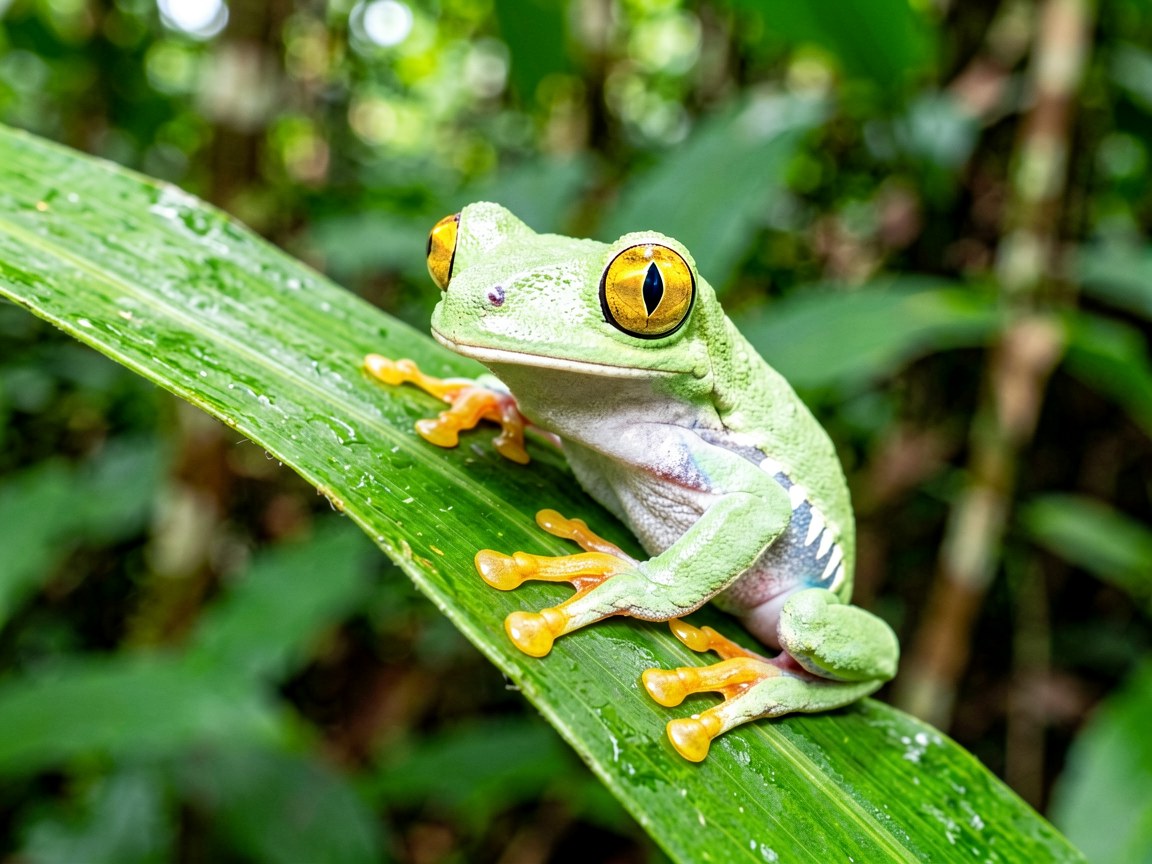
Litoria caerulea | White-lipped Tree Frog
Introduction
The white-lipped tree frog, Litoria caerulea, is a large, vividly green arboreal frog of Australia and New Guinea, also called the Australian green tree frog or White’s tree frog. One of the best-known Southern Hemisphere amphibians, it is a long-standing favorite in the pet trade. Its calm temperament, hardiness, and seeming smile have made it a conservation ambassador and a fixture in classrooms and home terrariums. A member of the family Hylidae, it thrives from tropical rainforest to suburban gardens and even inside houses. Nocturnal and insectivorous, it hides by day in cool, humid retreats and emerges at night to hunt and call. Well adapted to Australia’s variable climate, it enters reduced activity during dry spells, and its tolerance and fame make it an excellent window onto Australasian frog biology.
Taxonomy
English naturalist John White described it in 1790 as Rana caerulea, from a specimen that turned blue in storage, giving the epithet caerulea, Latin for blue; it was later moved to the genus Litoria, established by Lesson in 1829, and the common name honors White. Litoria is among the world’s largest frog genera, with over one hundred species across Australia, New Guinea, and nearby islands. L. caerulea sits among large, robust tree frogs near the giant and magnificent tree frogs; molecular studies confirm its distinct Australian and New Guinean populations. For a contrast with a terrestrial amphibian, see our article on the [Common Toad](https://www.gloencyc.com/common-toad-bufo-bufo/). It is set apart from relatives by its chubby build, pale lower lip, and tolerance of drier conditions than many forest hylids. No subspecies are formal, though range populations vary somewhat in size and shade; it has been introduced to New Zealand and the US pet market.
Physical Characteristics
Among the largest tree frogs, adults reach four to five inches, or ten to twelve centimeters, snout to vent, females notably larger and exceptional ones near thirteen. Weights commonly run forty to ninety grams, well-fed captives over one hundred. The dorsum is vivid green, varying to blue-green or turquoise, while the belly and distinctive lower lip are creamy white or pale yellow, the source of its name; a faint pale stripe may run from eye to shoulder. The skin is smooth but slightly waxy, and the frog can shift toward brown or grey when cold, stressed, or on bark, a rapid color change via pigment cells. Toe tips bear large adhesive discs for climbing, with partly webbed feet. Golden, horizontally pupilate eyes give a contented look, and a bony cranial shield strengthens the head. A waxy skin secretion spread by the limbs cuts water loss, letting it tolerate drier microhabitats.
Habitat
The species spans northern and eastern Australia from the tropical Top End and Cape York through Queensland and New South Wales to parts of South Australia, and across southern New Guinea. It favors moist settings near water, rainforests, monsoon woodlands, coastal heaths, and river margins, but is equally at home in farmland, towns, and cities. Remarkably, it enters houses seeking cool, humid refuges in bathrooms, laundries, and especially toilet cisterns and bowls, from which homeowners often rescue it. Its use of artificial water and shelter lets it thrive with people, unlike many declining amphibians. In the dry season it shelters in tree hollows, under bark, in rock crevices, or burrows, relying on water-conserving secretions, then becomes active with rain and moves to breeding sites. It tolerates wide temperatures, even suburban Melbourne.
In New Guinea it occupies lowland and foothill forest, often near villages and gardens, where it benefits from the same artificial microhabitats it exploits in Australia. The species is notably tolerant of cool southern winters, persisting in places that regularly drop near freezing at night, a range edge that few other Australian tree frogs can withstand. This hardiness, combined with its willingness to use drains, tanks, and potted plants, explains why it remains common even as more specialized frogs disappear from the same landscapes.
Diet
The white-lipped tree frog is a voracious nocturnal predator of terrestrial and aerial arthropods: crickets, moths, beetles, cockroaches, grasshoppers, flies, plus spiders and centipedes, with larger individuals occasionally taking small frogs. Hunting is from a perch or slow stalk, the large sticky tongue catching prey in a fraction of a second after motionless waiting. In suburbs it provides free pest control, eating mosquitoes, flies, and cockroaches, though its indiscriminate appetite also consumes beneficial insects. In captivity it eats crickets, roaches, and worms with calcium and vitamin supplements to prevent metabolic bone disease. Overfeeding is common because it accepts food whenever offered, causing obesity; wild frogs follow natural feast-and-scarcity cycles with seasonal insects, staying leaner and often longer-lived than overfed captives.
The tongue is attached at the front of the mouth and flipped outward with a rapidity invisible to the naked eye, its tip coated in adhesive mucus that grips prey. Captive diets are increasingly varied with silkworms, earthworms, and specially formulated frog pellets to mimic nutritional diversity, because a steady diet of only crickets can lead to vitamin A and mineral imbalances. Wild frogs, by contrast, encounter a shifting menu of seasonal insects that naturally supplies a broader nutrient profile and keeps them in better condition across the year.
Reproduction
Breeding is triggered by rain and warming, usually the wet Australian summer, though the tropical north may breed most of the year. Males call from near water, ponds, streams, puddles, or flooded ditches with a deep, resonant wark to attract females. Females lay several hundred to two thousand eggs in surface clusters or films; they hatch in one to three days into tadpoles feeding on algae and detritus, metamorphosing in roughly one to two months depending on temperature and food. Froglets are miniature green climbers; maturity comes at one to two years in captivity, later in the wild. The species breeds readily in garden ponds and troughs, aiding success in human landscapes. Unlike frogs with complex larval needs, it is reproductively flexible and tolerates disturbed aquatic sites.
Eggs are deposited in still or slow water and are vulnerable to desiccation if temporary pools dry too quickly, so females favor sites likely to persist several weeks. The tadpoles are dark, bottom-dwelling, and omnivorous, and their development accelerates in warm water, allowing them to complete metamorphosis before ponds vanish in the dry season. This phenotypic plasticity, together with the adults’ tolerance of disturbed habitat, makes the white-lipped tree frog one of the few frogs that has expanded rather than contracted its footprint alongside human settlement in Australia.
Conservation
The IUCN rates it Least Concern, reflecting broad range, large populations, and tolerance of human change; it remains common across northern and eastern Australia and New Guinea and has avoided the catastrophic chytrid declines of many amphibian species. Still, it faces threats: habitat clearing, wetland pollution, and invasive predators such as cane toads, feral cats, and introduced fish can reduce local numbers. Chytridiomycosis has appeared in some populations, and shifting rainfall may affect breeding. The pet trade is mostly captive-bred but still collects some wild animals. Conservation benefits from its popularity: citizen science, backyard ponds, and responsible breeding raise awareness and yield distribution data. Protecting wetlands and corridors and controlling invaders will help this resilient frog persist alongside people.
Fun Facts
- The white-lipped tree frog can change from bright green to brownish grey with temperature, mood, and surroundings.
- It secretes a waxy substance spread over the skin to retain moisture in dry conditions.
- This frog is famously tame and is often called the dumpy frog for its relaxed, chubby look.
- Individuals can live more than fifteen years, some captives reaching twenty.
- It often takes up residence in toilets and cisterns, earning the nickname toilet frog in Australia.