 By st20113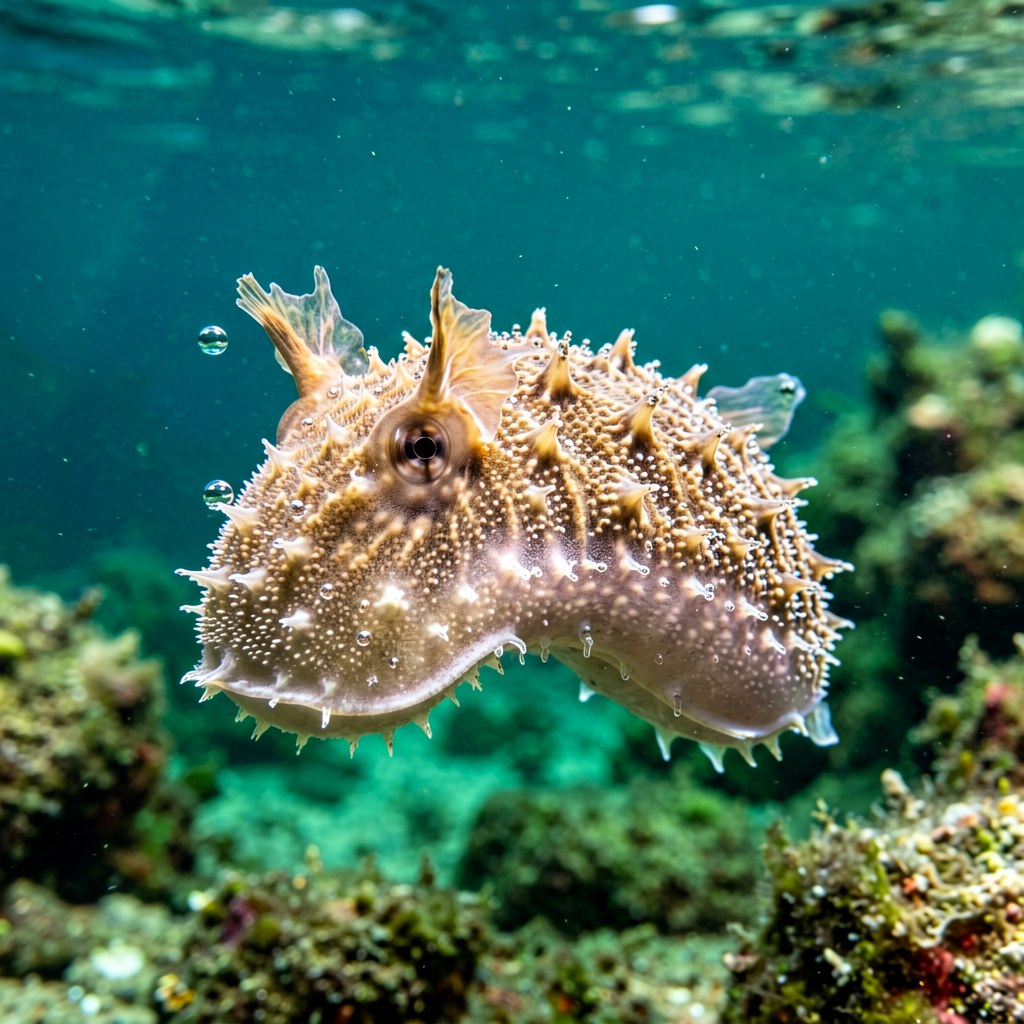
Aplysia californica | Sea Hare
Introduction
The California sea hare (Aplysia californica) is a large, shell-less marine gastropod belonging to the family Aplysiidae, found along the eastern Pacific coast of North America from central California to Baja California and the northern Gulf of California. Despite its common name, it is not a hare at all but a mollusk, so called because its two long sensory rhinophores resemble a rabbit’s ears. In the wild it is a striking animal, often reddish-brown with mottled patterning, that can reach lengths of up to 75 centimeters and weights approaching 7 kilograms, making it one of the largest opisthobranchs in the world. It inhabits shallow kelp forests, rocky reefs, and estuaries where its favored red algae grow. Like other sea hares it can release clouds of purple ink when disturbed, a defense that has long fascinated tide-pool visitors. Although abundant in parts of its range, the species is sensitive to environmental change and harmful algal blooms, and its ecology is closely tied to the health of nearshore algal communities.
Taxonomy
Aplysia californica was described by the American zoologist James Graham Cooper in 1863, placed in the genus Aplysia, long used for the sea hares, with the species epithet californica denoting its principal region. The genus Aplysia sits in family Aplysiidae, order Anaspidea, a group of opisthobranch gastropods commonly called sea hares. Anaspideans are distinguished by their reduced or internal shell, large flattened foot, and paired parapodia that can fold over the body. Molecular phylogenies place A. californica among the aplysiid sea hares of the Pan-Pacific, related to species such as Aplysia kurodai and Aplysia fasciata of other oceans. Among the better-known molluscan relatives of coastal waters, the big blue octopus (Octopus cyanea), detailed at https://www.gloencyc.com/octopus-cyanea-big-blue-octopus/, shares the sea hare’s shallow marine realm and soft-bodied, cephalized body plan, though the octopus is a cephalopod rather than a gastropod. Historically, sea hares were sometimes grouped with nudibranchs, but they are now recognized as a distinct anaspidean lineage with their own reproductive and defensive adaptations.
Physical Characteristics
The California sea hare is a bulky, soft-bodied animal with a broad muscular foot and a reduced internal shell, a thin plate buried in the mantle that offers slight support but no protection against predators. The body is usually reddish to brown, often mottled with darker blotches and lighter speckles that help it blend with the algae it grazes. Two prominent retractable rhinophores extend from the head like ears, sensing chemicals in the water to locate food and mates, and a small pair of oral tentacles aids feeding. Flanking the body are the parapodia, wing-like folds of tissue that can enclose the animal and, when filled with water, assist in slow swimming. The mantle cavity houses the gill, and the posterior end bears the genital opening and a separate pore for the ink and opaline glands. Adults can reach 40 to 75 cm in length and weigh up to about 7 kg, though most individuals are smaller. Color can shift with diet because pigments from the red algae they eat tint the tissues and the defensive secretions.
Habitat
Aplysia californica lives in shallow, sheltered nearshore waters, typically from the intertidal zone down to about 20 meters, though it is most common subtidally. It favors habitats where red algae flourish, including rocky reefs, kelp forests dominated by giant kelp (Macrocystis pyrifera), estuarine channels, and quiet bays with ample algal growth. Along the California coast it is seasonally abundant, often appearing in large numbers during the warmer months when algal food is plentiful, then becoming scarce in winter. The species tolerates a range of salinities and can persist in estuaries with variable conditions, but it is sensitive to extreme temperature and to the low-oxygen events that sometimes accompany upwelling shutdowns. Juveniles settle in algae-rich shallows where they can feed and hide among fronds. Because its distribution tracks the availability of host algae, the sea hare’s local abundance fluctuates markedly with oceanographic conditions, nutrient levels, and the timing of kelp and turf-algal growth.
Diet
The California sea hare is a specialist herbivore whose diet centers on red algae, especially members of the genus Laurencia, as well as other rhodophytes such as Plocamium and Ceramium. Using its radula, it scrapes algae from surfaces and ingests whole fronds, and the pigments and chemicals in this food shape both its coloration and its chemical defenses. A notable feature of A. californica is that many of the red algae it consumes contain brominated compounds that the sea hare sequesters rather than digests, later deploying them in its ink and skin secretions to deter predators—a classic example of chemical ecology. Although red algae are preferred, the diet can include green and brown algae when they are scarce, and dense aggregations can visibly thin algal mats. Because it depends so heavily on particular algal groups, the sea hare’s population cycles are tightly coupled to algal blooms and declines, making it a useful informal indicator of nearshore algal health along the Pacific coast.
Reproduction
Aplysia californica is a simultaneous hermaphrodite, with each individual carrying both male and female reproductive organs and able to function as either sex, though self-fertilization is rare. Mating typically occurs in chains in which one animal acts as female while receiving sperm from the one behind and simultaneously donating sperm to the one ahead, maximizing reproductive output for all participants. Eggs are laid in long, tangled, yellowish ribbons—often called “sea hare spaghetti”—attached to algal surfaces or rocks, and a single animal can produce multiple egg masses containing millions of embryos over a spawning season. The embryos hatch within roughly a week into free-swimming veliger larvae that spend a short planktonic phase before settling and metamorphosing into miniature juveniles. In practice the species is semelparous: adults grow, reproduce intensely through the warm season, and then die, so populations are largely renewed annually from the larval pool, making year-to-year abundance highly variable.
Conservation
The California sea hare is not currently listed as threatened at the federal or state level and is generally considered common within its range, but it faces several localized and emerging pressures. Because populations are renewed mainly from annual recruitment, they can fluctuate dramatically, and a poor spawning year can temporarily reduce numbers. Habitat degradation—including kelp forest decline from warming waters, urchin barrens, pollution, and coastal development—can shrink the algal resources the species needs. Harmful algal blooms, which are increasing along the West Coast, can be especially dangerous: A. californica feeds on bloom algae and can accumulate toxins, and mass mortality events have been documented during severe blooms. There is no targeted fishery for the species, and it is protected in many tide-pool and marine protected areas where collection is restricted. Its importance as a neurobiological model also means captive-breeding and research colonies are maintained, reducing pressure from wild collection for science. Continued monitoring of nearshore algae, water quality, and bloom frequency is the most useful conservation measure, alongside protection of kelp and estuarine habitat that the sea hare depends on.
Fun Facts
- The California sea hare can release a cloud of vivid purple ink when threatened, a startling defense that has made it a tide-pool favorite.
- It is one of the world’s largest sea slugs, reaching up to 75 cm long and weighing as much as 7 kg.
- Each animal is both male and female at once and often mates in living chains, passing sperm down the line.
- Its body color comes partly from the red algae it eats, literally tinting the animal with its diet.
- Because its neurons are big and easy to study, A. californica became a cornerstone model for research on learning and memory.