 By Iris
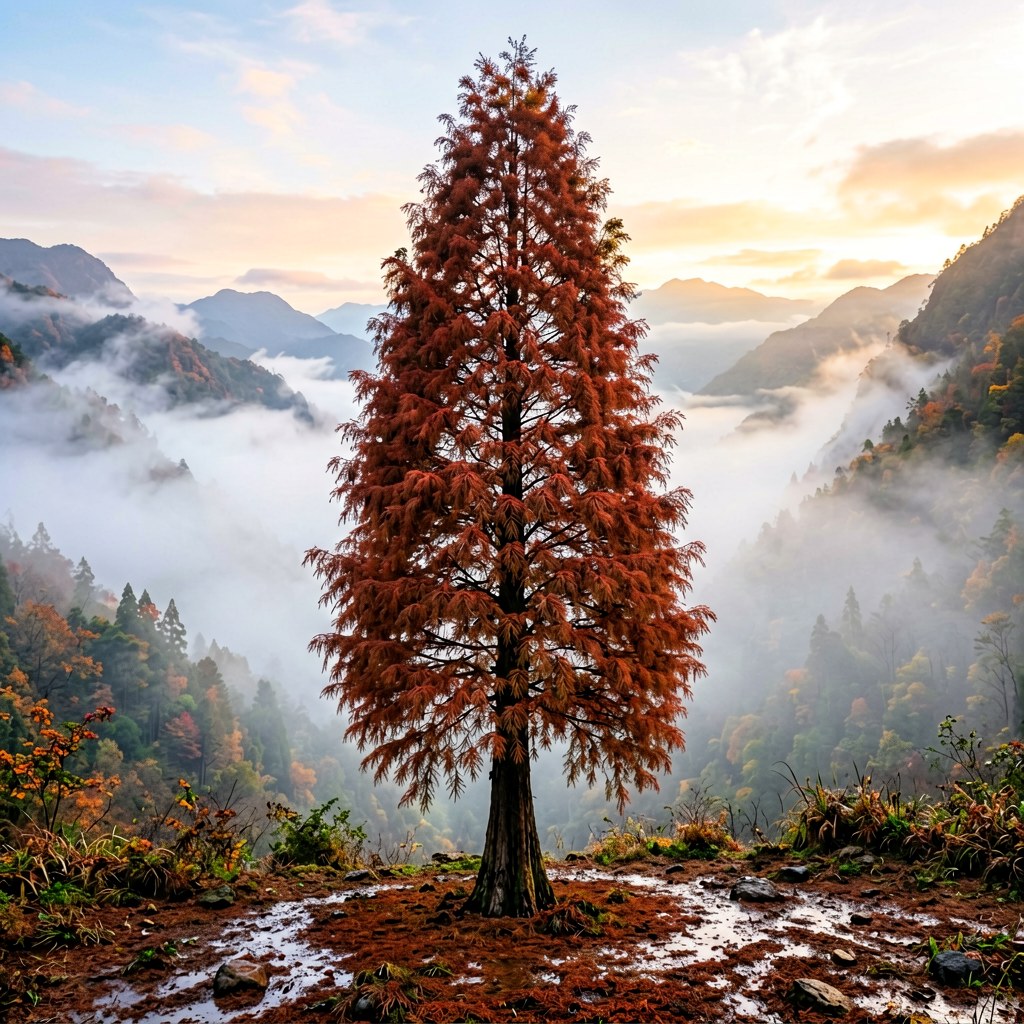
Ginkgo biloba | Ginkgo
Introduction
The ginkgo, Ginkgo biloba, is a living fossil and the sole surviving member of an ancient line of plants that once dominated the landscapes of the Mesozoic era. For over two hundred million years, ginkgo relatives populated vast stretches of the world’s continents, but today only one species remains, and it exists almost entirely because of human cultivation and protection. Native to a small region of eastern China, the ginkgo is a large, deciduous tree with distinctive fan-shaped leaves that turn brilliant golden yellow in autumn. It is one of the most resilient trees known, capable of surviving extreme pollution, radiation, and even the nuclear bombing of Hiroshima, and it is widely planted as an ornamental street tree in cities across the world. Beyond its aesthetic and historical significance, the ginkgo has a long tradition in Chinese medicine, and extracts of its leaves are among the most widely sold dietary supplements in the world, marketed for cognitive and circulatory benefits.
Taxonomy
Ginkgo biloba is the only living species in the division Ginkgophyta, a group of seed plants that was once diverse and widespread but is now represented by a single surviving lineage. It is closely related to [Common Tree Frog | Hyla arborea](https://www.gloencyc.com/common-tree-frog-hyla-arbora/), which shares many ecological traits. Within the ginkgo division it forms the class Ginkgoopsida and the order Ginkgoales, with no other living relatives in either taxon. The species was first described scientifically in 1712 by the German botanist Engelbert Kaempfer, who encountered it in temple gardens in Japan and China, and it was later given the name Ginkgo biloba by the Dutch botanist Carl Peter Thunberg. The genus name Ginkgo is a European corruption of the Chinese name yin guo, meaning “silver apricot,” referring to the appearance of the seeds, while biloba describes the characteristic two-lobed shape of the leaf. Modern molecular studies confirm that ginkgo is most closely related to the cycads among living gymnosperms, though the two groups diverged over two hundred million years ago. The fossil record of ginkgo-like plants extends back more than 270 million years, making it one of the oldest living tree lineages on Earth.
Physical Characteristics
The ginkgo is a large, slow-growing deciduous tree that can reach thirty to forty metres in height and live for well over a thousand years. The trunk is straight and grey-brown, often developing deep furrows in old age, and the crown is irregular and spreading, with branches that alternate in arrangement. The leaves are the most distinctive feature: simple, fan-shaped, and dichotomously veined, measuring five to ten centimetres across, with a characteristic notch or shallow lobing at the apex. In autumn, the leaves turn a vivid golden yellow before falling, creating a striking carpet beneath the tree. The species is dioecious, meaning individual trees are either male or female; male trees produce pollen cones in catkin-like structures, while female trees produce seeds on long stalks. The seeds, commonly called ginkgo nuts, are encased in a fleshy, foul-smelling outer layer that turns yellow-orange at maturity, and they contain a hard, white inner seed that is edible when properly prepared.
Habitat
In its native range, Ginkgo biloba grows in warm-temperate to subtropical forests of eastern China, typically at elevations between five hundred and one thousand metres. It favours deep, well-drained soils and full sun, and it is tolerant of a wide range of soil conditions, including poor, compacted, or slightly alkaline substrates. The species is remarkably hardy, resisting pollution, drought, pests, and disease, which has made it one of the most popular street trees in urban environments across Asia, Europe, and North America. In the wild, ginkgo is now believed to be extinct, with all existing trees thought to derive from ancient temple and garden plantings that were protected and propagated by Buddhist monks and Chinese cultivators for centuries. The few remaining wild populations, if they exist, are found in remote valleys of Zhejiang and Fujian provinces, where the tree grows alongside other ancient species such as the dawn redwood and the Chinese metasequoia.
Diet
As a photosynthetic gymnosperm, Ginkgo biloba is an autotroph that produces its own food through the conversion of sunlight, carbon dioxide, and water into carbohydrates and oxygen. The tree’s broad, fan-shaped leaves are highly efficient at capturing light, and the species can tolerate low light conditions better than many other large trees, which allows it to grow in the understory of mixed forests. Ginkgo is a slow-growing but long-lived species, and its metabolic rate is comparatively low, which contributes to its extraordinary longevity. The tree forms symbiotic relationships with mycorrhizal fungi in the soil, which help it absorb nutrients such as phosphorus and nitrogen, particularly in nutrient-poor conditions. Unlike many angiosperms, ginkgo does not form root nodules with nitrogen-fixing bacteria, and it relies entirely on soil nitrogen and photosynthetic production for its nutritional needs.
Reproduction
Ginkgo biloba is dioecious, with separate male and female trees. Male trees produce small, catkin-like pollen cones that release clouds of yellow pollen in spring, carried by wind to fertilise the ovules of female trees. The female trees bear ovules on long stalks, each ovule developing into a seed enclosed in a fleshy, odorous outer layer called the sarcotesta. The seeds mature in autumn and fall to the ground, where the soft outer layer decomposes and releases a strong, rancid odour caused by butyric acid, which is unpleasant to many people but may attract animals that disperse the hard inner seed. The seeds can remain viable for several months and germinate in spring if conditions are favourable. Ginkgo also reproduces vegetatively through root suckers, which allow a single tree to form extensive clonal colonies over time. Because the species is dioecious, only female trees produce the foul-smelling seeds, which is why male cultivars are preferred for urban planting.
Conservation
The ginkgo is assessed as Least Concern by the IUCN, but this reflects its status in cultivation rather than in the wild. In its native range, the species is believed to be extinct or critically rare, with all known populations deriving from ancient human-mediated plantings in temple gardens and protected valleys. The tree’s survival is almost entirely due to human intervention, as Buddhist monks and Chinese cultivators preserved and propagated it for over a thousand years. In cultivation worldwide, ginkgo is one of the most popular and widely planted ornamental trees, valued for its tolerance of urban conditions, its striking autumn colour, and its resistance to pests and disease. However, the genetic diversity of cultivated ginkgo is low, and the species is almost entirely dependent on vegetative propagation through grafting and cuttings, which means that most ginkgo trees in cities around the world are clones of a small number of original stock. Conservation efforts focus on protecting the remaining wild populations in China and preserving genetic diversity through seed banking and targeted cultivation programmes.
Fun Facts
- The ginkgo is the only surviving species of its division, making it a living fossil that has remained virtually unchanged for over 270 million years.
- It survived the atomic bombing of Hiroshima in 1945; trees growing near the blast site recovered and continue to thrive.
- The seeds are edible and are used in Asian cuisine, particularly in Chinese and Japanese cooking, though they must be cooked to avoid toxicity.
- Ginkgo leaf extract is one of the most widely sold dietary supplements in the world, marketed for memory and circulation.
- Some ginkgo trees in Japan and China are over one thousand years old, making them among the oldest living individual trees on Earth.