 By st20113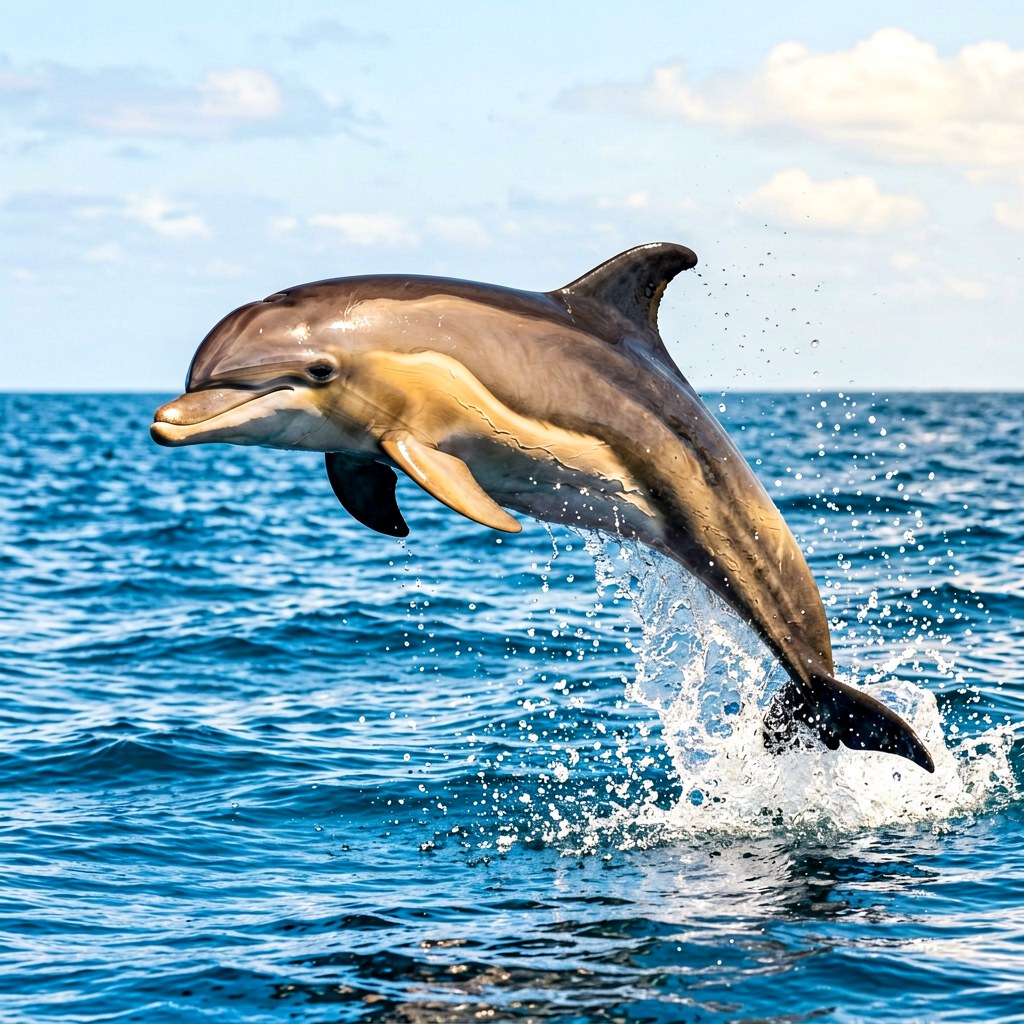
Delphinus delphis | Common Dolphin
Introduction
The common dolphin, Delphinus delphis, is the species most people picture when they imagine a dolphin: a sleek, playful, acrobatic cetacean leaping from the waves of warm temperate and tropical seas. Growing to about two to two and a half metres and weighing up to two hundred kilograms, it is among the most widely distributed marine mammals, found in oceans across the globe except at the extreme poles. Common dolphins are famously social, gathering in pods that can number in the hundreds or even thousands, and they are renowned for riding bow waves, breaching, and somersaulting alongside ships. Long important to human cultures bordering the Mediterranean and beyond, they are also valuable living indicators of ocean health, since their survival depends on abundant fish stocks and clean, productive seas. Their exuberant behaviour and intelligence have made them one of the most beloved of all wild animals.
Taxonomy
Delphinus delphis is placed in the family Delphinidae, the oceanic dolphins, within the genus Delphinus, which holds the “true” common dolphins. It is a toothed whale, and as a cetacean it shares a deep evolutionary lineage with the [Humpback Whale](https://www.gloencyc.com/humpback-whale/) and all other whales and dolphins, the group having evolved from land-dwelling mammals that returned to the sea tens of millions of years ago. Within Delphinidae, D. delphis is most closely related to other fast, fish-eating dolphins of open water. The genus name Delphinus is simply Latin for dolphin, and the species name delphis echoes the same root. Historically the single species D. delphis was applied broadly, but modern genetics recognises several regional forms, and the long-snouted “common dolphin” of the Atlantic, Pacific, and Mediterranean is now understood as a complex of closely related populations.
Physical Characteristics
The common dolphin is built for speed and agility. Its body is slender and streamlined, tapering to a narrow tail stock and a notched, crescent-shaped fluke. The most striking feature is its colour pattern: a dark grey or black back, a tan or gold hourglass-shaped patch on each flank, and a crisp white or pinkish belly, the two tones meeting in a clean, sweeping line. The beak is long and well defined, set off by a dark stripe from the mouth to the flipper, and each jaw holds forty to fifty small, conical teeth suited to grasping slippery fish. A prominent dorsal fin, tall and falcate, rises from the midpoint of the back. Beneath the skin lies a thick layer of blubber for insulation and buoyancy, and the blowhole on top of the head is the modified nostril through which the animal breathes. Like all cetaceans, it is superbly adapted to a fully aquatic life.
Habitat
Common dolphins inhabit the open, productive waters of continental shelves and upwelling zones, favouring temperate and tropical seas where cold, nutrient-rich water rises to the surface and fuels enormous blooms of plankton that support dense schools of prey fish. They range across the Atlantic, Pacific, and Indian Oceans and into the Mediterranean and Black Seas, typically avoiding the ice-bound polar basins. They prefer water temperatures roughly between ten and twenty-eight degrees Celsius and are often associated with sharp temperature fronts where prey concentrates. Although capable of deep dives, they usually hunt in the upper water column over depths of a few hundred metres. Their distribution is anything but random: they track the wandering boundaries of productive ocean regions, and a pod may travel tens of kilometres in a day in pursuit of food.
Diet
The common dolphin is a specialist pursuit predator of schooling prey. Its diet is dominated by small, silvery fish such as sardines, anchovies, and sprats, with squid and other cephalopods forming an important seasonal supplement. Hunting is frequently cooperative: pods coordinate to herd fish into tight bait balls, then take turns charging through the compressed mass, sometimes working together with seabirds that plunge from above as the fish are driven toward the surface. Individuals use rapid, precisely timed echolocation clicks to locate and track prey in murky or dark water. A single dolphin may consume several kilograms of food each day, and because it feeds high in the food web, its health reflects the abundance of the entire lower ecosystem. When prey is scarce, pods range widely, and local shortages can force them far from their usual grounds.
Reproduction
Common dolphins are social and reproductive year-round in many populations, with peaks that vary by region and food supply. After a gestation of roughly ten to eleven months, a single calf is born tail-first to avoid drowning, and it is nursed on rich maternal milk for an extended period while staying close to its mother within the pod. Calves are born with a more muted version of the adult colour pattern and learn social and hunting skills through years of play and observation. Females typically give birth every two to three years, and both sexes reach sexual maturity in their early teens. The strong social bonds of the pod provide protection for vulnerable calves, and alloparental behaviour—where other adults help watch over young—has been observed. As with many long-lived mammals, slow reproduction makes populations vulnerable when adult survival is reduced.
Conservation
Globally the common dolphin is listed as Least Concern, but this masks steep regional declines and serious local threats. The greatest danger is bycatch in gillnets and trawls, where dolphins are accidentally entangled and drown; targeted hunts persist in a few countries, and collisions with vessels injure or kill some animals. Beyond direct mortality, the species suffers from the degradation of its food base through overfishing, from chemical and noise pollution that disrupts communication and echolocation, and from habitat disturbance in busy coastal waters. Marine protected areas, bycatch-reduction gear, and international agreements on noise and pollution all help. Because common dolphins range across national boundaries, their conservation depends on cooperation at sea as much as on action within any single country’s waters.
Legally, the common dolphin receives strong protection across much of its range: it is listed under the European Union’s Habitats Directive and various regional seas conventions, making deliberate harm or disturbance an offence. Rescue networks in several countries respond to stranded or entangled animals, and some fisheries have adopted pingers, acoustic devices that warn dolphins away from nets, though their effectiveness varies. Nevertheless, the cumulative effects of noise from shipping and seismic surveys, together with the ongoing loss of prey to industrial fishing, mean that recovery in heavily fished regions will require sustained, coordinated management rather than any single intervention.
Fun Facts
- A common dolphin can swim at sustained speeds of around thirty kilometres per hour and is among the fastest of all dolphins.
- It navigates and hunts using echolocation, producing clicks that bounce off prey and return a detailed “sound picture” of the world.
- Pods can be enormous, sometimes merging into super-pods of more than a thousand individuals during abundant feeding.
- The species sleeps with one half of its brain at a time, allowing it to surface and breathe while still resting.
- Despite the name “common,” some regional populations have declined so sharply that they are now considered among the rarest dolphins in parts of their range.