 By st20113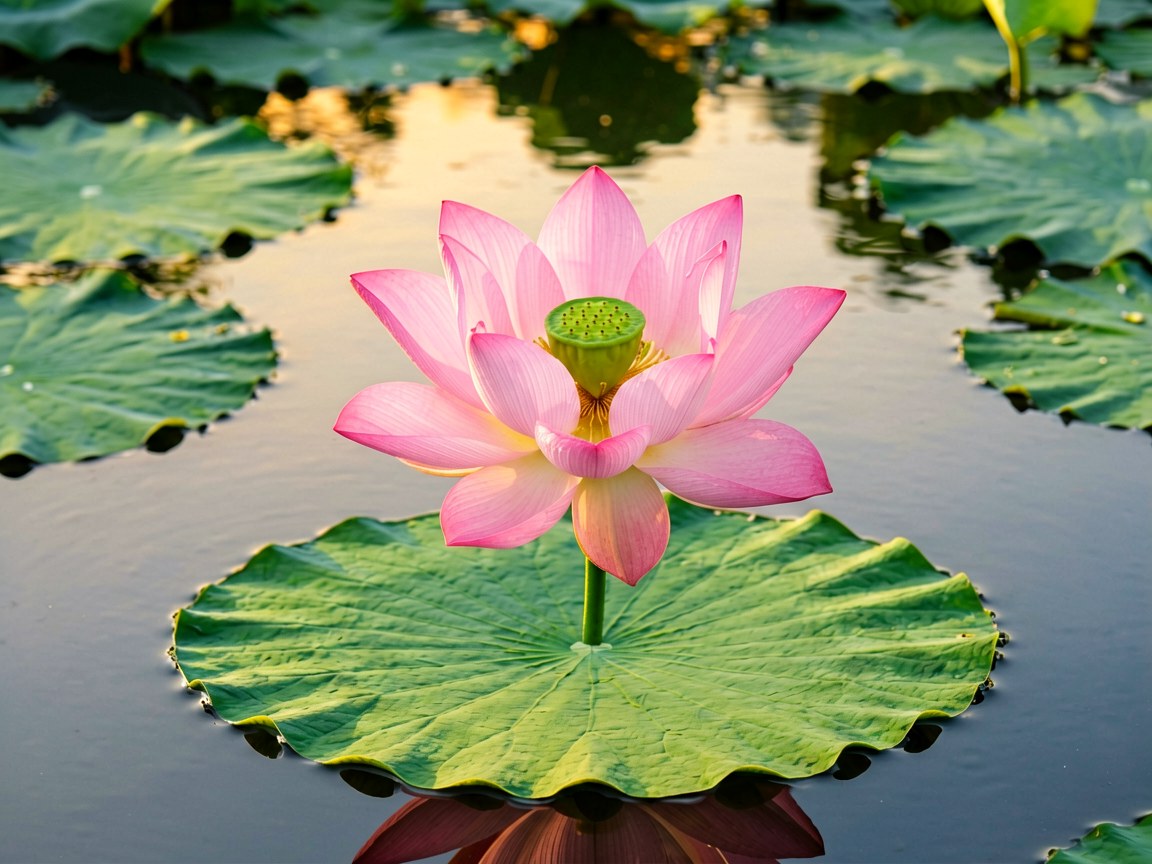
Nelumbo nucifera | Sacred Lotus
Introduction
Nelumbo nucifera, the sacred lotus, is an aquatic perennial revered across Asia for millennia as a symbol of purity, rebirth, and enlightenment. Rising from muddy water to bear pristine pink or white flowers, it has been cultivated from India to China and beyond for food, medicine, and ornament, and it appears in Hindu, Buddhist, and Egyptian art alike. Unlike the superficially similar water lilies, the lotus holds its leaves and flowers well above the surface on stiff, upright stalks, and its seed heads form the distinctive inverted-cone “lotus pod” familiar from decoration worldwide. The plant is remarkable not only culturally but biologically: its leaves are supremely water-repellent, its flowers generate heat to aid pollination, and its seeds are among the longest-lived of any plant, with documented germination after centuries of dormancy. Today the sacred lotus is grown commercially for its edible rhizomes, seeds, and leaves, and it remains a centrepiece of ornamental ponds from temples to botanical gardens, quietly continuing the photosynthetic work that underpins its rapid growth.
Taxonomy
Nelumbo nucifera sits in the family Nelumbonaceae, a small group now placed in the order Proteales alongside the plane trees and the proteas, rather than among the true water lilies despite their similar lifestyle. The genus Nelumbo contains just two species: the Asian sacred lotus and the American lotus, N. lutea. The separation of lotuses from Nymphaeaceae was confirmed by molecular studies that showed their resemblance to water lilies is convergent — an example of similar aquatic habits evolving independently. The specific name nucifera means “nut-bearing,” referring to the seed pod. Fossil evidence places lotus-like plants deep in the past, and the sacred lotus has changed little in form over millions of years. Like other green plants it depends on the light-capturing chemistry detailed in our profile of [photosynthesis and the plant energy process](https://www.gloencyc.com/photosynthesis-plant-energy-process/), which supplies the sugars that build its huge leaves and starchy rhizome. Its distinct lineage means that, although it shares a floating-leaf relative’s reliance on light capture, its internal plumbing and reproductive biology are their own, reflecting a long independent history in the still waters of warm continents.
Physical Characteristics
The sacred lotus produces two kinds of leaves: round, flat floating leaves and larger, cupped aerial leaves borne on rigid stalks that lift them above the water. Both surfaces are covered in microscopic wax crystals that make them ultra-hydrophobic, so water beads up and rolls off, carrying dirt with it — the basis of the “self-cleaning” lotus effect studied by materials scientists. Flowers are showy, 10 to 25 centimetres across, with many overlapping petals around a central conical receptacle in which the seeds develop. The rhizome is a thick, submerged horizontal stem that stores starch and sends down true roots into the mud; it is the familiar edible lotus root of Asian cuisine, recognisable by its holey cross-section. The plant’s flowers are thermogenic, warming to around 30–35°C to volatilise scent and attract beetles, a trait shared with several other ancient flowering plants. Seed pods harden into the dry, perforated cones that persist after the petals fall, each chamber holding a single hard seed.
Habitat
The sacred lotus grows in the shallow, quiet waters of ponds, lakes, flooded fields, and slow rivers across tropical and temperate Asia, extending into northern Australia and parts of the Middle East. It prefers full sun and warm water but tolerates surprisingly cool winters, dying back to the rhizome and regrowing in spring across a wide climatic range. It roots in silty or clay-rich bottoms at depths up to roughly two metres, anchoring firmly so the buoyant leaves and upright flowers are not torn away by wind. Because it thrives in nutrient-rich, sunlit shallows, it commonly forms extensive stands that shade out submerged competitors and provide habitat for fish, frogs, and waterbirds. Cultivation for food has carried it far beyond its native wetlands into rice-field margins, temple tanks, and ornamental lakes, where it naturalises readily in suitable climates and can become locally abundant.
Diet
Nelumbo nucifera is a photosynthetic autotroph that fuels its growth by converting sunlight, water, and carbon dioxide into sugars, drawing mineral nutrients from the rich organic mud through its roots. Its large leaf area and upright posture give it a competitive edge for light in crowded ponds, and the waxy leaf surface keeps it clean and photosynthetically efficient even when splashed with muddy water. The rhizome stores excess carbohydrate as starch, which is why it swells into the starchy vegetable harvested across Asia; this storage also lets the plant survive winter dormancy and resprout quickly. Although autotrophic, the lotus interacts with its surroundings nutritionally: decaying leaf litter returns organic matter to the water, and its dense stands moderate temperature and light at the surface, shaping the microbial and algal communities beneath. As with other flowering aquatics, the energy captured by its leaves ultimately supports the insects and beetles that visit its heated, fragrant flowers.
Reproduction
The sacred lotus is famous for seeds of extraordinary longevity. The flower opens in the morning and closes by afternoon over several days, with the central receptacle gradually swelling into the characteristic pod; each fertilised ovule becomes a hard, impermeable seed capable of surviving decades or, in exceptional archaeological cases, centuries before germinating. Pollination is mainly by beetles attracted to the warm, scented blooms, after which the flower closes and the receptacle tilts downward to protect the developing seeds. Vegetative reproduction is equally important: the starchy rhizome creeps through the mud and sends up new shoots, allowing a single plant to form a broad clone across a pond. This dual strategy — durable seeds plus vigorous rhizome spread — explains both the lotus’s cultural persistence as a cultivated plant and its ability to colonise new wetlands wherever climate permits.
Conservation
Nelumbo nucifera is widely cultivated and not at risk globally; if anything, its cultural and economic value has secured its future. Wild populations, however, can be affected by wetland drainage, pollution, and the conversion of shallow lakes to agriculture or aquaculture, and in some regions invasive analogues or hybridisation with introduced American lotus warrant monitoring. Conservation of the species is largely achieved through its continued religious and culinary use, which maintains living collections in temple ponds, farms, and botanical gardens across Asia. Because the plant improves water clarity and provides wildlife habitat, it is also used in constructed wetlands for phytoremediation, where its roots help filter nutrients and sediments. Protecting the shallow, sunlit wetlands it needs is the most direct way to conserve genuinely wild lotus populations, alongside preserving the traditional ponds that have sustained it for thousands of years.
Fun Facts
- Lotus seeds are among the most long-lived on Earth, with some germinating after more than a thousand years of dormancy.
- The leaves are so water-repellent that droplets roll off carrying dirt, inspiring the “lotus effect” in self-cleaning materials.
- The flowers warm themselves to about human body temperature to amplify scent and attract beetle pollinators.
- The familiar holey “lotus root” of Asian cooking is actually the plant’s underground starch-storing rhizome.
- Although it looks like a water lily, the lotus is only distantly related and belongs to its own ancient family, Nelumbonaceae.