 By st20113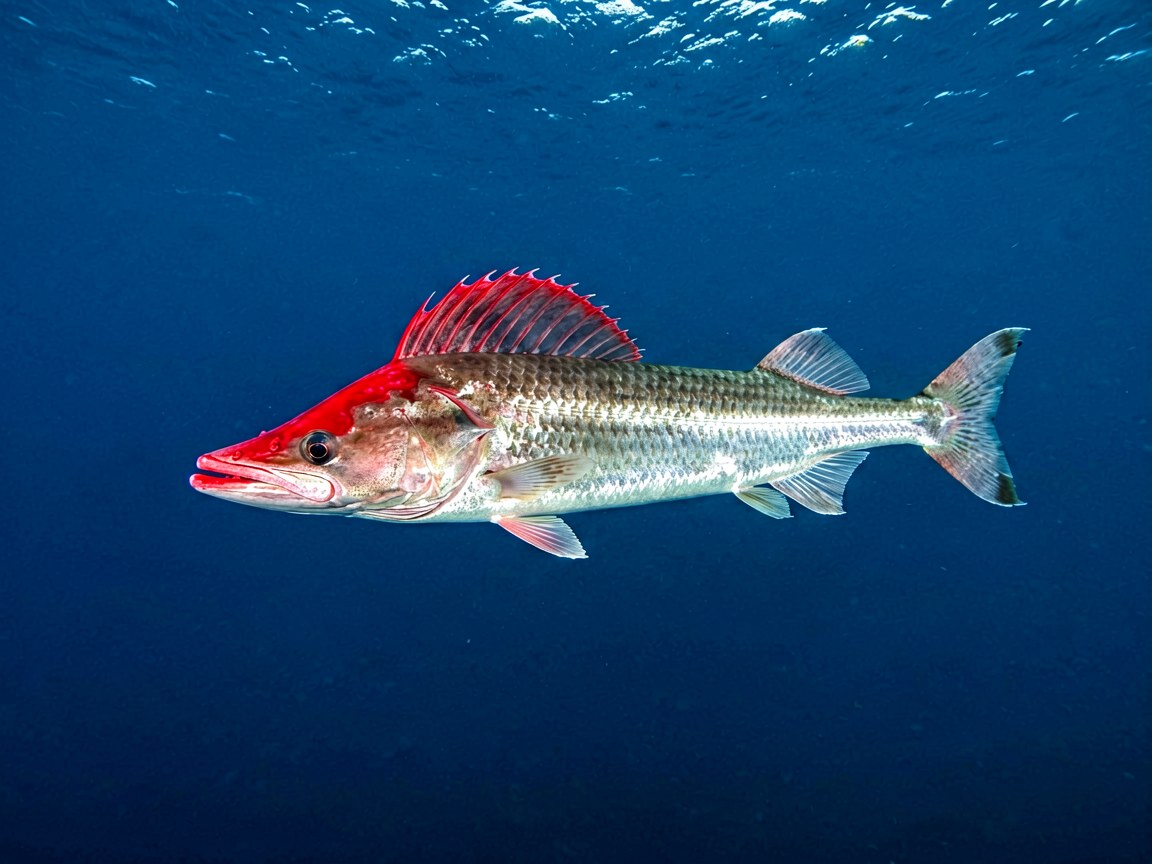
Regalecus glesne | Oarfish
Introduction
Regalecus glesne, the oarfish or ribbonfish, is the longest bony fish in the world, with confirmed individuals exceeding 8 metres and unverified reports of even greater lengths. It is a deep, open-ocean fish rarely seen alive, living at depths of several hundred metres and rising only occasionally toward the surface. Its band-like, silver body, bright red crest of fins above the head, and undulating swimming motion have made it the likely source of many sea-serpent legends. When oarfish wash ashore or appear in shallow water, they are often interpreted as omens, though in truth they are gentle, slow-moving filter and plankton feeders. Scientific knowledge of the species remains limited precisely because it spends its life in the dim midwaters far from human view.
Taxonomy
Regalecus glesne is the type species of the genus Regalecus, the only genus in the family Regalecidae within the order Lampriformes, the ribbonfish and oarfish group. It is a distant relative of the familiar Salmo salar (Atlantic Salmon) and other ray-finned fishes, sharing the basic bony-fish body plan despite its extreme shape. The genus name Regalecus means “royal,” and “glesne” honours the Norwegian naturalist Peter Ascanius, who first described the fish in the 1770s. Lampriformes also include the opah and the tube-eyes, all adapted to life in open water away from the bottom. The oarfish’s nearest look-alikes are the smaller, shorter-crested Regalecus russelii of the Indo-Pacific.
Physical Characteristics
The oarfish has an extraordinary, ribbon-like body: a narrow, greatly compressed, silvery column that can reach record lengths but is only a few centimetres thick. A vivid red, finned crest rises from the head, and the long dorsal fin runs the entire length of the back, its front rays elongated into a plume. The pelvic fins are reduced to a single long spine tipped with a flattened oar-like blade—the feature that gives the fish its name. It has no functional tail fin; propulsion comes from elegant vertical undulations of the body and the dorsal fin. The mouth is small and toothless, and the eyes are large. Skin is scaleless and covered in a silvery, easily damaged guanine layer that flashes in light, making freshly stranded specimens look metallic and otherworldly.
Colour in life is a bright silver-blue along the flanks with a steel-grey back, the sheen produced by light-reflecting crystals in the skin that are easily rubbed off when the fish is handled. The long dorsal fin is crimson at its base and fades to a paler red along the rays, and the crest above the eyes is the most intensely coloured part of the animal. The body is so thin relative to its length that a large individual weighs only a few tens of kilograms despite spanning several metres. Internal anatomy matches its lifestyle: the swim bladder is reduced, the skeleton is lightly built, and the gut is short, consistent with a diet of easily digested plankton rather than large prey. Its lateral line is well developed, helping it sense water movement in near-total darkness.
Habitat
Oarfish inhabit the epipelagic and mesopelagic zones of temperate and tropical oceans worldwide, typically between about 200 and 1,000 metres deep, though they can occur nearer the surface at night while feeding. They prefer open water away from coasts and the seabed, suspending themselves head-up or horizontally in the water column. Because they live in the twilight zone, they are seldom encountered except by deep-net fisheries, submarines, or when sick, dying, or storm-tossed individuals drift into shallow water and strand on beaches. Their broad distribution suggests they follow currents and patches of plankton rather than residing in one place, and tagged or observed animals show a capacity to adjust depth with changes in light and temperature throughout the day.
Although most records come from temperate waters, oarfish have been recorded in tropical regions as well, often associated with underwater features such as seamounts and continental slopes where currents concentrate plankton. They are believed to perform daily vertical migrations, rising toward the surface at night to feed in the richer shallow layers and descending again by day, a pattern common among midwater fishes. Strandings increase after storms or unusual temperature events, when disoriented individuals are carried into shallow water, which is why mass wash-ups sometimes coincide with seismic or weather anomalies. Because they avoid both the bright surface and the seafloor, oarfish occupy a narrow band of the open ocean that is among the least observed by humans, and most biological data still come from accidental captures rather than direct study.
Diet
Regalecus glesne feeds primarily on tiny drifting animals: zooplankton such as krill and small crustaceans, plus the eggs and larvae of fishes and squids. Its small, toothless mouth is unsuited to grabbing large prey, so it swims with its head oriented upward and strains or suction-feeds on the concentrated swarms of plankton around it. Observers have noted it pivoting to sweep its gaping mouth through clouds of krill near the surface at night. This planktivorous diet places the oarfish low in the food web, linking the vast productivity of midwater plankton to larger predators. It is itself eaten by sharks, larger bony fishes, and marine mammals, though its rarity means such predation is seldom documented.
Reproduction
Almost nothing is known about oarfish reproduction in the wild, because the fish has never been observed spawning. Like other lampriforms, it is assumed to be an open-water broadcast spawner: females release vast numbers of transparent, buoyant eggs into the water column, where they drift and develop among the plankton. The larvae are long, slender, and leaf-like, with the characteristic crest already present, and they metamorphose into the ribbon shape as they grow. The great length of adults is reached over a long lifespan that may span several years, though precise age and growth rates are unknown. The scarcity of juveniles in collections suggests the early life stage is brief or occurs in depths and seasons rarely sampled by research vessels.
Conservation
The oarfish is listed as Least Concern by the IUCN, largely because its enormous range and deep-water life history make it resilient to most human pressures. It is not targeted by fisheries, though occasional individuals are taken as bycatch or washed up and collected as curiosities. The main potential threats are plastic pollution and microplastics in the plankton it eats, and broader climate-driven shifts in the distribution of its prey. Because the species is so rarely seen alive, population trends cannot be reliably measured, and it remains a data-deficient animal in practice despite the reassuring global-status label. Its best protection is the relative inaccessibility of its midwater home, far below most human activity.
Fun Facts
- The oarfish is the longest bony fish alive, stretching past 8 metres in verified records.
- Its red head-crest and ribbon body likely inspired centuries of sea-serpent sightings.
- It has no working tail fin and swims by rippling its long dorsal fin.
- Oarfish feed on plankton with a small, toothless mouth despite their gigantic size.
- Living deep in the twilight ocean, it is almost never seen alive by people.