 By st20113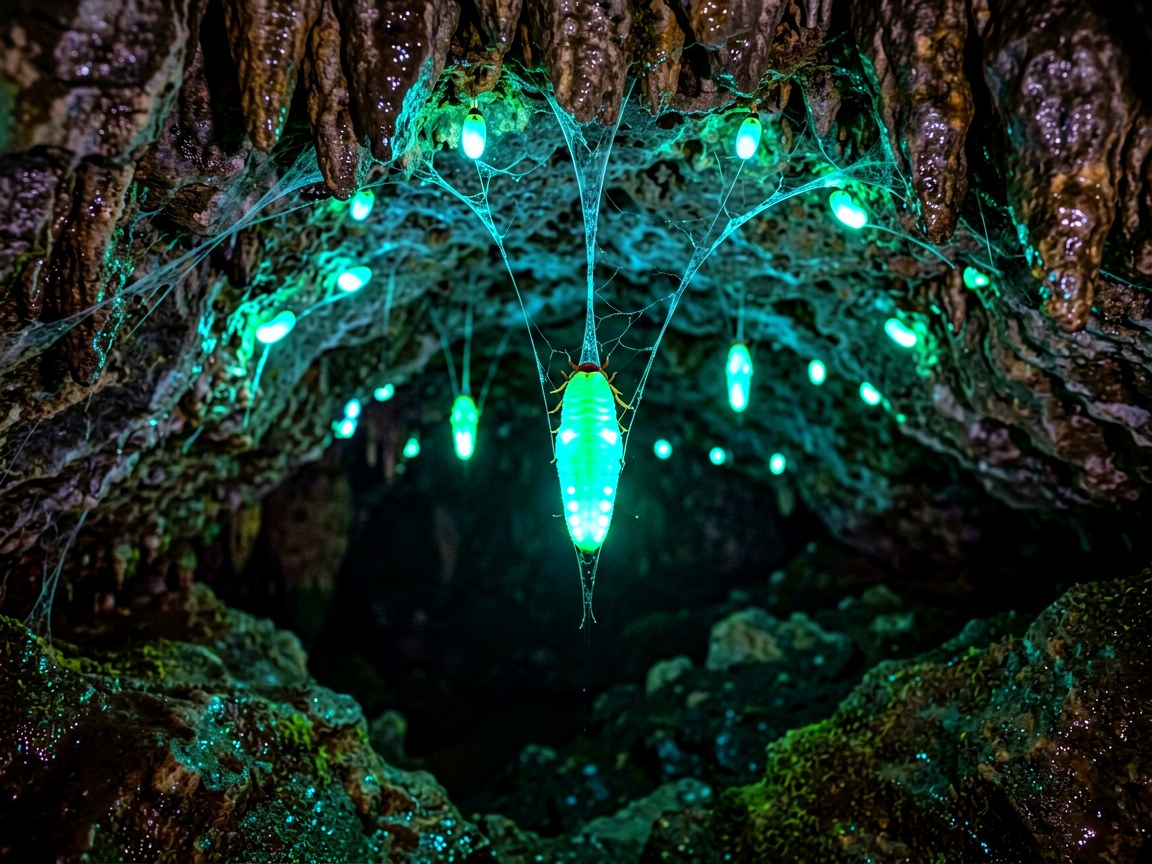
Arachnocampa luminosa | Glowworm
Introduction
Arachnocampa luminosa, the New Zealand glowworm, is a small fly whose larvae produce a steady blue-green light and weave silken nests hung with glistening capture threads. Found only in New Zealand, it is famous for the spectacular displays it creates in limestone caves, old mine shafts, and shaded ravines, where thousands of glowing larvae turn the darkness into a starry ceiling. Despite the name “glowworm,” it is not a worm at all but the larva of a fungus gnat (family Keroplatidae). Tourists travel worldwide to see the glowworm grottoes of Waitomo and Te Anau, and the species has become a national natural icon. Its light is not merely decorative—it is a lethal lure, drawing flying insects to a sticky, silken death in the dark.
Taxonomy
Arachnocampa luminosa is the best-known species of the genus Arachnocampa, a small group of glow-worms endemic to New Zealand and Australia. It belongs to the fly family Keroplatidae, within the order Diptera, and is a relative of the European Lampyris noctiluca (Glow-worm), although that beetle and the fungal gnat evolved their light independently. The genus name combines Greek words for “spider” and “caterpillar,” alluding to the larval web-spinning habit. Arachnocampa species were once placed in the genus Bolitophila but were separated when their unique bioluminescent larvae and adult form were studied. A. luminosa is the most widespread New Zealand species and the one that produces the famous cave displays.
Physical Characteristics
The glow comes from the larva, a worm-like maggot up to about 3 cm long with a flattened, pale body and a dark head. Its rear tip contains light organs rich in luciferin and the enzyme luciferase, which react with oxygen to emit a cool blue-green glow. Around its nest the larva spins a tubular silk shelter anchored to the cave wall and hangs vertical threads, each beaded with droplets of sticky mucus. Adult glow-worms are unremarkable: a frail, weak-flying gnat about 1 cm long, with reduced mouthparts and a very short life focused entirely on mating. The adult’s only vestige of the larval glow is a faint light used by mates to find one another in the dark. The contrast between the luminous, web-building larva and the dull, ephemeral adult is one of the species’ most striking features.
Habitat
Arachnocampa luminosa requires dark, humid, sheltered places where its silk threads stay damp and its light is visible. Classic habitats are limestone caves, but it also occupies fern gullies, overhangs, old railway tunnels, and mine adits where human disturbance is low. It needs a constant supply of small flying insects drifting into the grotto and a surface that stays wet enough for silk and mucus to function. The species tolerates a range of temperatures but is sensitive to light pollution and drought, which dry the threads and reduce prey. Within New Zealand it ranges from Northland to the deep south, though the most celebrated colonies are in the Waitomo and Fiordland cave systems, where conditions have remained stable for millennia.
Within caves the larvae cluster on ceilings and overhangs just above the dripline, where humidity stays near saturation and falling water does not wash away the threads. The density of a colony depends on the supply of flying insects, which in turn tracks the health of the forest or stream above the cave, so a glowworm grotto is really a window onto the whole catchment’s insect life. Human-made tunnels and old mines mimic these conditions remarkably well and have been colonised by glowworms where they stay dark and damp. Because the species cannot tolerate light or drying, even a single bright torch trained on a nest for long can cause the larva to retract and stop feeding, and repeated disturbance can collapse a display that took years to build.
Diet
The glowworm is a sit-and-wait predator. The larva’s glowing tail attracts adult insects—midges, mayflies, and moths—that mistake the light for open sky or are simply drawn to it; once they fly near, they become entangled in the hanging mucous threads. The larva then reels in the thread, consumes the prey with mouth hooks, and discards the empty silk to spin anew. This diet of airborne insects means the glowworm depends on a healthy aquatic or forest insect population upstream of its roost. Because the adult stage does not feed at all, the entire nutritional budget of the individual is built up during the long larval phase, which can last up to a year in cold caves before it pupates.
Reproduction
Glowworms have a complete metamorphosis: egg, larva, pupa, and adult. Females lay tiny eggs on the cave wall or in moss, and the hatching larvae immediately begin to build their silk nests and glowing threads. After months or more of feeding, the larva pupates inside a silk cocoon, often still faintly luminous. The adult that emerges lives only a few days, during which it mates; males are drawn to the pale glow of females, and in some populations adults glow weakly to locate partners. The adults have no working mouth and cannot eat, so reproduction must be completed quickly before they starve. A single female can lay dozens of eggs, ensuring that even if most larvae fail, enough survive to maintain the colony’s famous shimmer.
The glowworm’s threads are not merely passive snares; the larva adjusts their length and number to the local insect supply, spinning more when prey is abundant and retracting them in lean times to avoid wasting silk and mucus. Studies of cave colonies show that the capture rate rises with colony density up to a point, because many glows together attract more insects than a lone larva could, a rare case of co-operative feeding without true co-operation. The mucus on the threads contains a mild adhesive and possibly a toxin that subdues struggling prey, and the larva senses vibrations along the thread to decide when to reel in. Non-target prey, such as the occasional small spider, may also be caught, but the diet is overwhelmingly flying insects drawn from the cave mouth. In years when the forest above produces few insects, colonies grow thinner and some larvae fail to reach adulthood.
Conservation
Arachnocampa luminosa is not considered threatened, but its specialised habitat makes local colonies fragile. The main risks are artificial lighting, which disrupts the glow and deters insect prey; changes to cave airflow and moisture from tourism infrastructure; and pesticide drift that reduces the flying insects the larvae need. Responsible cave operators limit light, control visitor numbers, and protect the surrounding catchments that supply prey. Because the species is a major ecotourism asset, economic incentive aligns with conservation, and several sites are actively managed as reserves. Climate warming and drought remain longer-term worries, since drier conditions could shrink the damp grottoes the glowworm needs to spin its snares.
Fun Facts
- The “glowworm” is actually the larva of a fungus gnat, not a worm or a beetle.
- Its blue-green light is a lure that draws flying insects into sticky silk threads.
- Adults do not eat at all and live only a few days, just long enough to mate.
- The famous Waitomo caves glow because thousands of larvae share one ceiling.
- The light is produced by luciferin and luciferase, the same chemistry behind fireflies.