 By st20113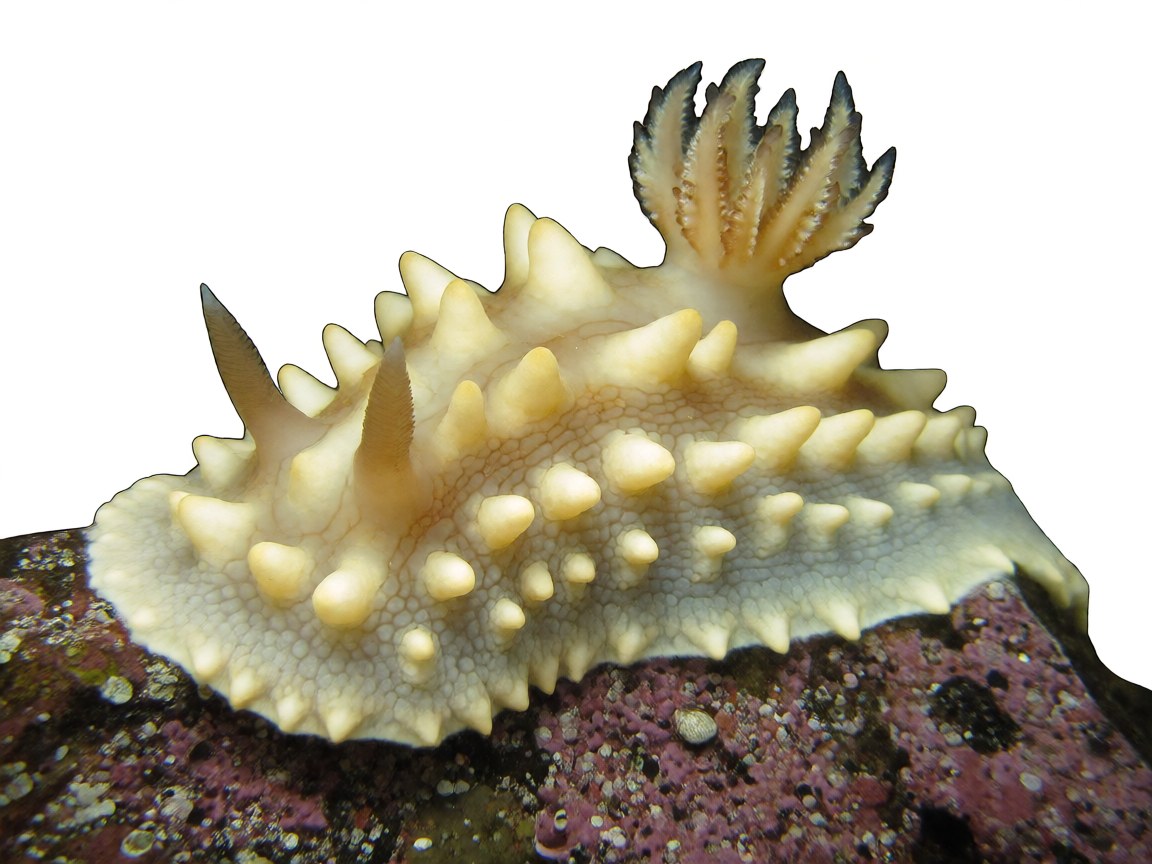
Archidoris pseudoargus | Sea Lemon
Introduction
The sea lemon (Archidoris pseudoargus) is one of the largest and most easily recognised sea slugs of European coasts: a broad, flattened, warty oval, usually pale yellow or cream, with a rosette of feathery gills on its back. Its name comes from a fancied resemblance to a lemon, and its leathery, pimpled skin and slow, deliberate crawl make it a favourite find in rock pools and on the lower shore.
Taxonomy
Archidoris pseudoargus is a dorid nudibranch in the family Discodorididae. It belongs to the molluscs, sharing the basic plan of a muscular foot and a radula with far more active relatives such as Octopus vulgaris, the common octopus, but it has dispensed with a shell entirely and instead relies on a tough, bitter skin and chemicals taken from its food for defence.
Physical Characteristics
The body is broad, oval, and highly domed with a flat underside, growing to eight or even twelve centimetres long. The upper surface is covered in prominent, rounded, warty bumps called tubercles, which give it a knobbly, leathery look. Colour is most often pale lemon-yellow, cream, or greenish, but can be white, orange, or brownish, sometimes with darker mottling. Two stout, club-shaped rhinophores sit at the front, and a ring of eight feathery, plumose gills forms a rosette near the rear.
Habitat
It lives on the lower shore and in shallow to moderately deep water, on rocky coasts, under stones, in crevices, and on harbour walls and wrecks, often where sponges—its food—are growing. It is common around the coasts of Britain, Ireland, and north-west Europe and into the Mediterranean. It favours sheltered to moderately exposed rocky ground and is most often found by turning over boulders at low tide.
Diet
Sea lemons feed almost entirely on sponges, particularly breadcrumb sponge and related species that encrust rock. They rasp away at the sponge with a broad radula, scraping off tissue, and the sponge’s chemical defences are absorbed and reused by the slug, making it distasteful to predators. Each species of sea lemon tends to specialise on particular sponges, which is why they are closely tied to the places where those sponges grow.
Reproduction
They are hermaphrodites and mate in pairs, exchanging sperm. Spawning takes place in spring and summer: the animals lay conspicuous, ribbon-like, frilly coils of eggs, often bright white or cream, glued to rock or seaweed. The eggs hatch into free-swimming larvae that drift in the plankton for a time before settling onto the seabed and metamorphosing into the crawling adult form. The adults themselves probably live for about a year.
Conservation
The species is common and widespread and is not considered threatened. Because it depends on sponge-covered rock, it suffers where the shore is heavily disturbed, polluted, or silted, and turning over boulders without replacing them destroys both the sponges and the slugs feeding on them. Otherwise it remains a familiar and abundant part of the rocky-shore community.
Fun Facts
- Its name comes from the pale yellow, lemon-like shape and colour of the animal.
- The ring of feathery structures on its back is its gills.
- It feeds on sponges and reuses the sponge’s own chemical defences to make itself distasteful.
- Its egg ribbons are laid in conspicuous frilly white coils on rock and weed.
- The knobbly bumps covering its back are called tubercles and give it a leathery texture.