 By st20113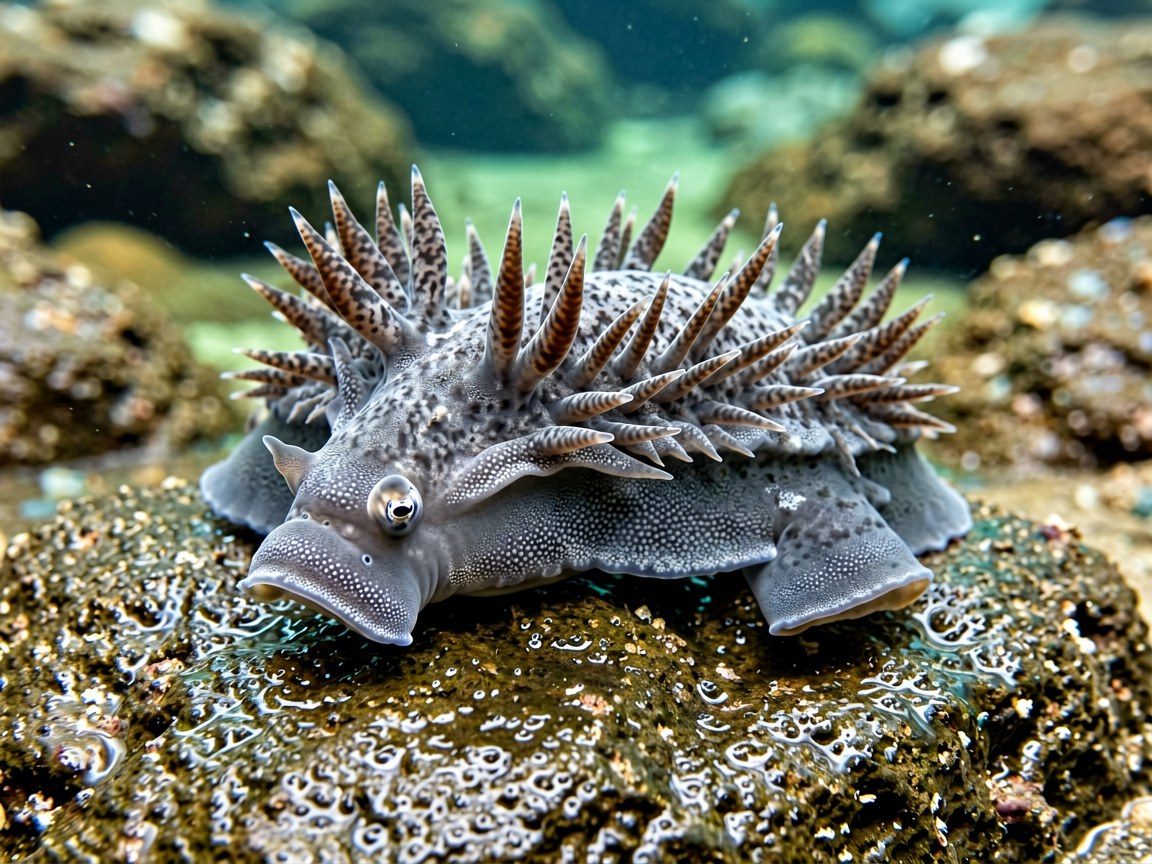
Aeolidia papillosa | Grey Sea Slug
Introduction
The grey sea slug (Aeolidia papillosa) is a soft-bodied sea slug that prowls the shore hunting sea anemones, and then steals their weapons for itself. A pale, mottled, flattened animal up to twelve centimetres long, it is covered in hundreds of finger-like projections that give it a shaggy, furry look. Common on rocky shores across the northern hemisphere, it is one of the largest and most easily recognised nudibranchs of temperate coasts.
Taxonomy
Aeolidia papillosa is a nudibranch, a shell-less sea slug, in the family Aeolidiidae. It belongs to the molluscs and shares the fundamental molluscan plan of a muscular foot and a radula with well-known relatives such as Octopus vulgaris, the common octopus, but it is a grazing predator rather than a hunter of large prey, and it has lost the adult shell that most molluscs carry. Its name refers to the papillae that cover its back.
Physical Characteristics
The body is soft, flattened, and elongate, typically four to twelve centimetres long, in mottled grey, brown, and white that blends well with wet rock and sand. There is no shell. The back is densely covered in rows of slender, tapering projections called cerata, which are outgrowths of the gut and give the animal a furry appearance; their colour varies with what the animal has recently eaten. The head bears two smooth, tapering rhinophores and a pair of short oral tentacles.
Habitat
Grey sea slugs live on rocky shores, under stones, in rock pools, and in shallow subtidal water, from the middle shore down to a few metres’ depth, and deeper offshore. They are found on both sides of the North Atlantic and along the North Pacific coasts. They favour sheltered to moderately exposed rocky ground where anemones are abundant, and they often hide in crevices or beneath boulders during the day.
Diet
They feed almost entirely on sea anemones, especially the beadlet anemone. The slug scrapes at the anemone’s column with its radula and swallows the tissue, and remarkably many of the anemone’s stinging cells pass through the gut unharmed and are transported to the tips of the cerata, where they are stored and used for the slug’s own defence. This theft of defences, called kleptocnidy, is one of the most striking feeding adaptations on the shore.
Reproduction
Like most sea slugs they are hermaphrodites, each animal carrying both sets of organs, and they mate head-to-tail to exchange sperm. Spawning takes place in spring and summer: the animals lay long, coiled, ribbon-like strings of eggs, usually wound around algae or rock, containing many thousands of eggs. These hatch into free-swimming larvae that drift in the plankton before settling and metamorphosing into the crawling adult form.
Conservation
The species is widespread and common and faces no conservation concern. Because it depends on healthy populations of sea anemones and clean rocky habitat, it can thin out where shores are polluted, heavily trampling, or scoured by sediment, but it remains abundant across most of its range. It is frequently used in teaching and research because it is large, hardy, and easy to keep.
Fun Facts
- It steals the stinging cells of the anemones it eats and uses them for its own defence.
- The stolen cells are stored in the tips of the finger-like cerata on its back.
- Its colour often shifts with its diet, since the contents of the gut show through.
- It is one of the largest nudibranchs found on temperate rocky shores.
- Adults have no shell at all—the larval shell is lost soon after settling.