 By st20113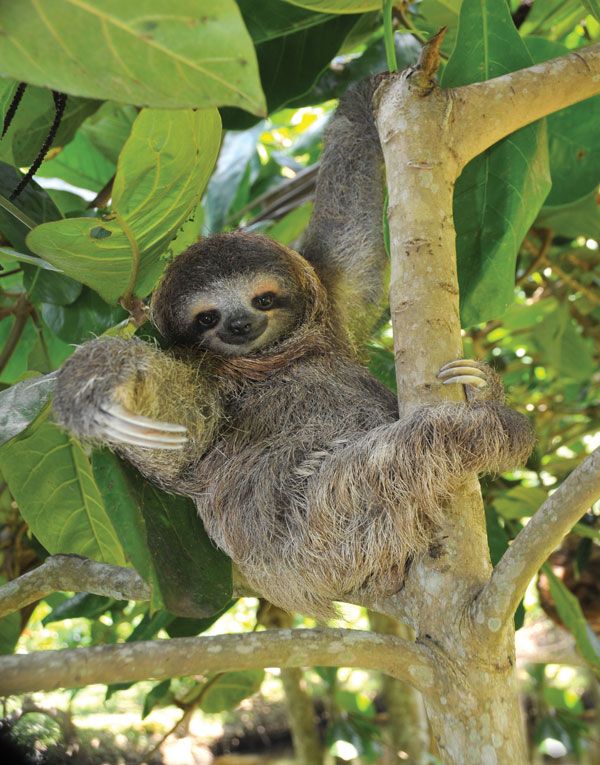
Sloths are arboreal mammals native to the rainforests of Central and South America. Famous for their extremely slow movements, sloths spend most of their lives hanging upside down from tree branches. With their low-energy lifestyle and unique symbiotic relationships with algae, sloths are a fascinating component of the tropical ecosystem.
Physical Characteristics
Sloths have long arms, curved claws (three or two depending on species), and a short, flat face. They weigh 4 to 8 kilograms. Their fur grows in the opposite direction to other mammals-from belly toward the back-so rainwater runs off while they hang upside down. Their slow metabolism is among the slowest of any mammal, and they have the lowest body temperature range of any active mammal.
Diet and Digestion
Sloths are folivores, eating mainly leaves, buds, and tender shoots. Leaves provide little energy and are difficult to digest, which explains the sloth’s extremely slow lifestyle. Their multi-chambered stomach can take up to a month to fully digest a single meal. They descend from their trees about once a week to defecate and urinate-a mysterious behavior that makes them vulnerable to predators.
Symbiotic Relationships
A sloth’s fur hosts a miniature ecosystem: algae grow within each hair, giving the animal a greenish tint that provides camouflage. Moths, beetles, and other insects also live in the fur. The algae may supplement the sloth’s diet when it grooms itself, while the moths enrich the algae’s nitrogen supply.
Behavior and Movement
Sloths move at about 2 meters per minute on land but can swim three times faster through water. They sleep 15 to 20 hours daily and are most active at night. Their claws lock into branches, allowing them to hang with minimal muscular effort.
Conservation Status
While all six species are currently not globally threatened, deforestation, habitat fragmentation, and road deaths are accelerating population declines. Wildlife crossings and protected rainforest corridors are essential to their long-term survival.