 By st20113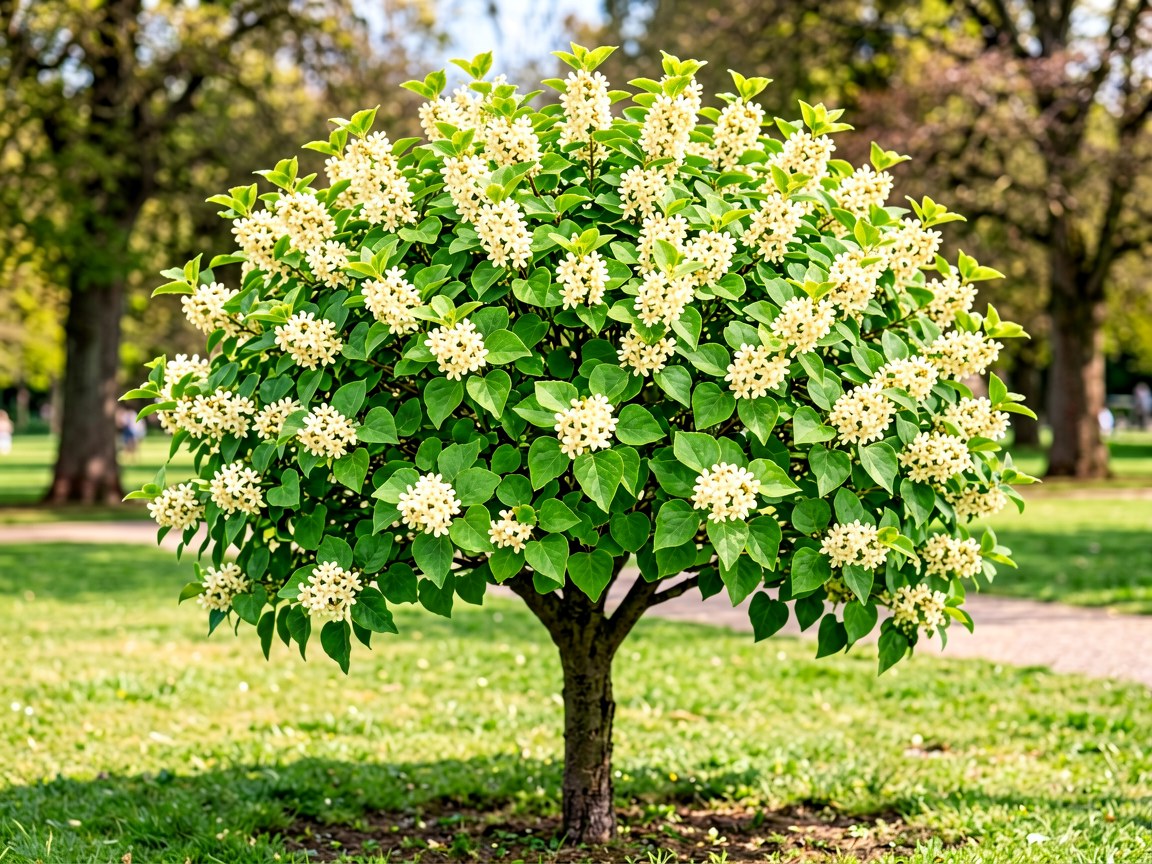
Tilia cordata | Small-leaved Lime
Introduction
The small-leaved lime (Tilia cordata) is a graceful deciduous tree native to much of Europe, prized for its neatly rounded crown, heart-shaped leaves, and clouds of sweetly scented cream flowers in early summer. It commonly grows in mixed woodlands, hedgerows, and parkland, and is one of the most important trees for bees, producing nectar that yields a distinctive, much-valued honey. Long-lived and tolerant of urban conditions, it has been planted along streets and avenues for centuries.
Taxonomy
Tilia cordata belongs to the family Malvaceae (formerly placed in Tiliaceae), within the order Malvales, the same broad group that includes hibiscus and cotton. It is one of several Old World lindens; the closely related large-leaved lime (Tilia platyphyllos) often grows alongside it and the two readily hybridize. Like every green plant, it depends on Photosynthesis to capture sunlight and build the sugars that power its growth.
Physical Characteristics
A mature small-leaved lime typically reaches 20–40 meters, with a straight trunk and a dense, symmetrical crown. Its bark is smooth and grey when young, becoming fissured with age. The leaves are small for a lime—roughly 4–8 cm—broadly heart-shaped with a pointed tip, finely toothed edges, and a slightly lopsided base, dark green above and blue-green beneath with rusty tufts of hair where the veins meet. In late summer it bears small, round, ribbed fruits hanging from a leafy wing.
Habitat
This species favors fertile, well-drained neutral to alkaline soils and is found from lowland valleys to hillsides, often on clay or limestone. It grows naturally in oak-hornbeam and beech woodlands and as a component of ancient hedgerows, and it is widely planted as an ornamental, street, and avenue tree because it withstands pollution and pruning. It tolerates shade as a sapling, which lets it establish beneath taller trees before reaching the canopy.
Diet
As a photosynthetic tree, the small-leaved lime makes its own food from carbon dioxide, water, and sunlight, and draws mineral nutrients from the soil through an extensive root system. It is not a feeder on other organisms. The tree’s flowers, however, are a rich reward for animals: they supply abundant nectar and pollen that sustain bees, hoverflies, and other insects through early summer.
Reproduction
Small-leaved limes flower in June and July, producing clusters of five-petaled, intensely fragrant creamy-white blossoms that dangle beneath a pale leafy bract. Insect pollination—especially by honeybees and bumblebees—is essential for seed set. The fruits are dry, woody nutlets that fall in autumn; the tree also spreads vegetatively, sending up suckers from the base and root shoots that can form clonal groves.
Conservation
The small-leaved lime is not globally threatened and remains widespread, but ancient, veteran specimens and old wood-pasture populations are valued and protected in many countries. Because it supports hundreds of associated insects, lichens, and fungi, retaining mature trees and deadwood is important for biodiversity. In cities it is valued as a pollution-tolerant street tree, though it can suffer from drought stress and aphid colonies that coat leaves in sticky honeydew.
Fun Facts
- Its flowers yield “lime blossom honey,” a pale, fragrant honey considered a delicacy across Europe.
- The tough, pale wood was traditionally used for carved sculpture, piano actions, and sounding boards because it does not warp.
- A single old lime can support more than 50 species of associated insects and fungi.
- In mid-summer the tree is often humming with bees—its nectar is so abundant it can be detected as a sweet scent meters away.
- Limes were once planted as “pollard” trees in pastures, their heads cut back to provide fodder and firewood without killing the tree.