 By st20113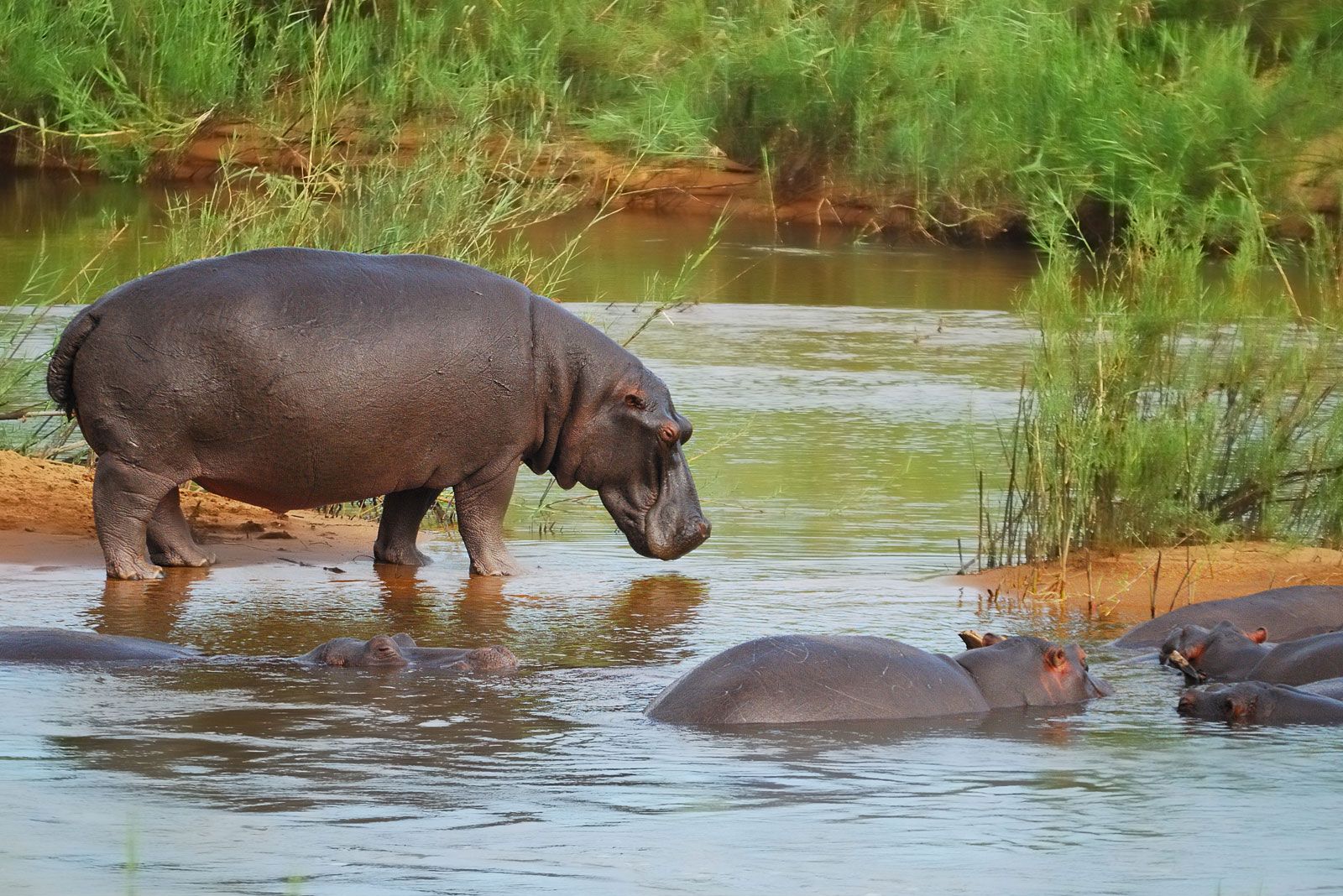
The hippopotamus (Hippopotamus amphibius) is one of the largest living land mammals, found in rivers, lakes, and swamps of sub-Saharan Africa. Despite its stocky body and short legs, the hippopotamus is a surprisingly fast runner on land and a powerful swimmer. As a keystone species, it plays a unique role in its ecosystem by transferring nutrients between water and land.
Physical Characteristics
Adult hippos weigh between 1,500 and 3,200 kilograms, reaching up to 5 meters in length. Their barrel-shaped bodies rest on stocky legs with four toes each. Their eyes, ears, and nostrils are positioned high on the skull, allowing them to see, hear, and breathe while mostly submerged. Despite their size, hippos can run at speeds up to 30 km/h over short distances.
Aquatic Lifestyle
Hippos are semi-aquatic mammals that spend up to 16 hours a day in water to keep their massive bodies cool and protect their sensitive skin from sunburn. They secrete a red, oily substance known as “blood sweat” that acts as sunscreen and antibiotic. At dusk, they leave the water to graze on grass, traveling up to 10 kilometers to reach feeding grounds.
Social Structure
Hippos live in groups of 10 to 30 individuals led by a dominant male. Males establish territories along riverbanks and aggressively defend them. The yawning display-showing enormous canine teeth that can grow up to 50 centimeters-is a territorial warning, not a sign of tiredness. Despite their calm appearance, hippos are among the most dangerous large animals in Africa.
Diet and Feeding
Despite their large size, hippos are primarily grazers that feed on short grass. They consume about 40 kilograms of grass per night. Their unique stomach with three chambers helps digest tough plant material. They rarely eat aquatic plants and rely almost entirely on terrestrial grasses.
Conservation Status
The hippopotamus is listed as Vulnerable, with populations declining due to habitat loss, drought, and poaching for meat and teeth (which are sold as a substitute for elephant ivory). Protected wetlands and river reserves are essential for their continued survival.