 By st20113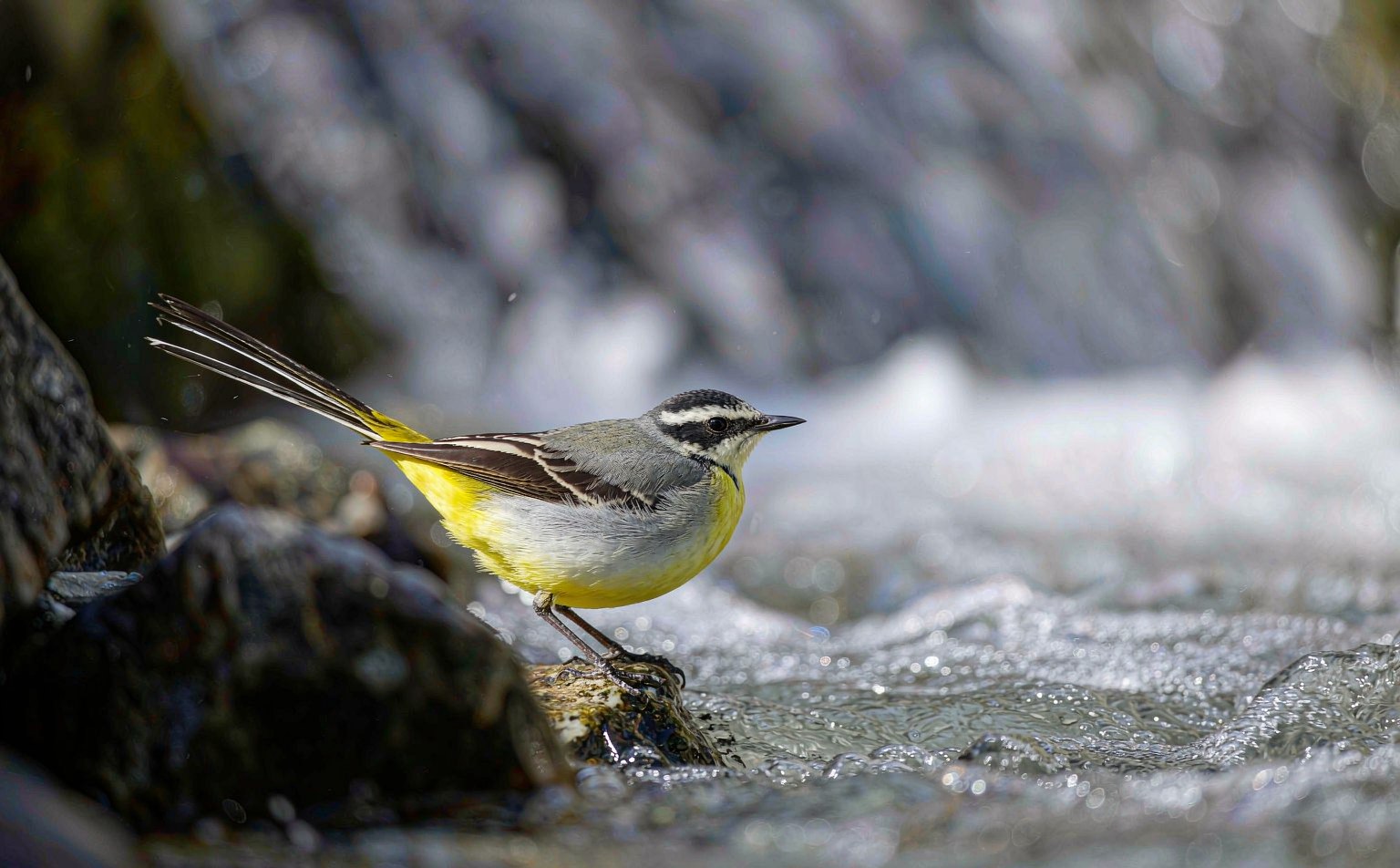
Motacilla cinerea | Grey Wagtail
Introduction
The Grey Wagtail (Motacilla cinerea) is a slender, long-tailed passerine belonging to the family Motacillidae, a group of wagtails and pipits found across the Northern Hemisphere. Measuring approximately 17–19 cm in length with a wingspan of 27–31 cm, this bird is one of the most distinctive and recognizable wagtails in Europe, easily recognized by its bright yellow underparts, grey upperparts, and extremely long tail that is frequently cocked upright. The Grey Wagtail is strongly associated with fast-flowing rivers and streams, where it forages along rocky banks and among boulders in the water.
The species is largely sedentary across much of its range, though northern populations may undertake short-distance movements during winter. The Grey Wagtail is a territorial bird that defends stretches of riverbank throughout the year, with pairs establishing territories that can extend for several hundred meters along the watercourse. Both sexes are involved in territorial defense and nest construction, creating a strong pair bond that persists throughout the breeding season.
The Grey Wagtail is a fascinating species to observe, particularly during the breeding season when males perform elaborate display flights along river corridors. The bird’s distinctive tail-wagging behavior, bright plumage, and association with fast-flowing water have made it a favorite among birdwatchers and photographers across Europe. Its presence is often considered an indicator of clean, well-oxygenated river habitats.
Taxonomy
The Grey Wagtail was first described by Peter Simon Pallas in 1773, under the binomial name Motacilla cinerea. The genus Motacilla encompasses a diverse group of wagtails found across the Old World, with the name deriving from Latin motacilla (meaning “wagtail”), referring to the bird’s characteristic tail-wagging behavior. The specific epithet cinerea means “grey,” referring to the grey upperparts of the bird.
The Grey Wagtail is recognized as a monotypic species, with no subspecies currently accepted by major taxonomic authorities. Molecular phylogenetic studies have confirmed that the species belongs to the genus Motacilla, which is distinct from related genera such as Dendronanthus (stone-pipers) and Tsidendiza (moucheroles). The Grey Wagtail is most closely related to the White Wagtail (Motacilla alba), though the two species can be distinguished by their plumage and habitat preferences.
For contextual comparison, the Grey Wagtail shares riverine habitats with the Pied Wagtail (Motacilla alba yarrellii), though the two species can be distinguished by their plumage, with the Grey Wagtail displaying bright yellow underparts compared to the Pied Wagtail’s black-and-white coloration. Both species are associated with open habitats near water, but the Grey Wagtail is more strongly tied to fast-flowing rivers while the Pied Wagtail prefers drier, more open ground.
Physical Characteristics
The Grey Wagtail is a slender, long-tailed wagtail with bright yellow underparts and grey upperparts. The plumage is predominantly grey above, fading to pale grey on the crown and nape, with a white supercilium that extends from the base of the bill above the eye. The wings are grey with white wing bars, and the tail is exceptionally long and black with white outer feathers that are visible in flight. The underparts are bright yellow from the throat to the undertail coverts, with a grey breast band that is more pronounced in females.
The bill is relatively long, straight, and pointed, with a black upper mandible and a paler lower mandible. The legs and feet are dark brown to black, relatively long and adapted for perching on rocks and branches along riverbanks. The overall appearance is that of a typical wagtail, with a slender body, long wings, and an extremely long tail that is frequently cocked upright when perched. In flight, the Grey Wagtail displays broad, rounded wings and a long, zigzagging tail that undulates continuously.
Juvenile birds are similar to adults but duller and more streaked on the underparts, with less distinct coloration and a more variable pattern of grey and buff. The plumage of juveniles also tends to be softer and less structured than that of adults, reflecting the more downy texture of their first coat. The overall appearance is deliberately cryptic on the upperparts, providing effective camouflage among the grey rocks and stones of riverbanks.
Measurements of adult Grey Wagtails typically include a total length of 170–190 mm, a wing chord of 85–95 mm, a tail length of 80–100 mm, and a bill length of 14–17 mm. Body mass ranges from 22 to 35 grams, making it one of the larger wagtails in Europe. The bird’s extremely long tail is its most distinctive feature, giving it a unique silhouette that is easily recognizable even at a distance.
Habitat
The Grey Wagtail is associated with fast-flowing rivers and streams, particularly those with rocky banks, boulders, and riffles. The preferred habitat consists of upland and lowland rivers with a diverse substrate of stones, gravel, and boulders, as well as riparian vegetation that provides perches and nesting sites. The water must be well-oxygenated and relatively clean, supporting an abundant supply of aquatic invertebrates for foraging.
Grey Wagtails breed across a broad range that extends from western Europe across temperate Asia to the Russian Far East. In Europe, the species is found from Ireland and Great Britain eastward through Scandinavia, the Baltic states, and into Russia, with scattered populations reaching into the Iberian Peninsula and Italy. The northern boundary of the breeding range extends into southern Fennoscandia and the Baltic region, while the southern limit follows river valleys across southern Europe.
During winter, Grey Wagtails may move downstream to larger rivers and coastal areas, where they feed on aquatic invertebrates in more sheltered habitats. These movements are often irregular and can result in large numbers of birds appearing in unexpected locations, particularly during harsh weather conditions. The species is generally sedentary across much of its range, though northern populations may undertake short-distance migrations.
The conservation status of the Grey Wagtail is generally favorable, reflecting its wide distribution across riverine habitats. The species is listed as Least Concern on the IUCN Red List, and populations have remained relatively stable across much of its range. However, the species remains dependent on clean, fast-flowing water, which has been impacted by pollution and river management practices in many parts of Europe.
Diet
The Grey Wagtail is an insectivorous species that feeds primarily on aquatic invertebrates during the breeding season. The diet consists of stonefly nymphs (Plecoptera), mayfly nymphs (Ephemeroptera), caddisfly larvae (Trichoptera), freshwater shrimp, and other aquatic invertebrates. The bird forages by walking along rocky banks and among boulders in the water, occasionally making short flights to catch flying insects above the river surface. The Grey Wagtail is a riparian forager, spending most of its time near or in fast-flowing water.
Foraging behavior in the Grey Wagtail is characterized by a “walk-and-peck” strategy combined with occasional aerial sallies. The bird moves steadily along the riverbank, pausing frequently to inspect rocks and turn over stones in search of invertebrates. It also makes short flights from perches to catch insects on the wing, particularly during warm weather when flying insects are abundant. The bird’s relatively long legs and strong feet are well-adapted for walking on slippery rocks, allowing it to maintain balance in fast-flowing water.
Nesting birds have particularly high energy demands, and the parents must capture large quantities of aquatic invertebrates to feed themselves and their growing chicks. A nesting pair of Grey Wagtails may consume thousands of insects during the breeding season, playing an important role in regulating invertebrate populations within river ecosystems. The bird’s preference for larger, more nutritious prey items such as stonefly and caddisfly larvae ensures efficient energy transfer through the food web.
During migration and winter, the Grey Wagtail supplements its aquatic insectivorous diet with terrestrial insects and seeds from riparian vegetation. This dietary flexibility allows the species to exploit diverse habitats along river corridors and adjust to seasonal fluctuations in food availability. The bird’s ability to switch between protein-rich aquatic prey and energy-dense terrestrial insects is a key adaptation that supports its successful colonization of riverine habitats across Europe.
Reproduction
The Grey Wagtail is a pair-bonding species that establishes breeding territories along river corridors during spring. Males arrive on breeding grounds in March and April, depending on latitude, and begin singing almost immediately to attract mates and establish territory boundaries. The male’s song is a series of sweet, warbling notes delivered from a conspicuous perch along the riverbank, and is repeated incessantly throughout the day during the breeding season. The song is one of the most distinctive in the European avifauna and has been described as one of the most musical of all wagtails.
Nest construction is undertaken solely by the female, who builds a substantial cup-shaped structure from grass stems, moss, and rootlets, secured in a crevice among rocks, under a tree root, or in a hollow in the riverbank. The nest is typically placed 0.5–3 meters above the ground or water surface, hidden within a crack or crevice where it is well concealed from predators. The interior of the nest is lined with fine grass, hair, feathers, and rootlets, providing insulation and comfort for the incubating female and subsequent brood.
The typical clutch size is 4–6 eggs, though clutches of 3–7 eggs are not uncommon. The eggs are whitish to pale buff with fine reddish-brown or grey speckles concentrated at the broader end, measuring approximately 20–24 mm in length. Incubation lasts 14–17 days and is undertaken solely by the female, who is fed by the male during this period. The chicks are altricial and naked at hatching, with their eyes closed and dependent on parental care for warmth and food.
Both parents feed the chicks, with aquatic invertebrates forming an important component of the diet during the nestling period. The nestling period lasts approximately 18–21 days, longer than many other passerine species due to the relatively slow growth rate of Grey Wagtail chicks. After fledging, the young remain dependent on their parents for an additional 2–3 weeks while they learn to forage and navigate the complex riverine environment. Grey Wagtails are usually univoltine, producing a single brood per season, though second broods are occasionally recorded in favorable years with abundant food resources.
Conservation
The global population of the Grey Wagtail is estimated at 8–16 million breeding pairs, making it one of the more common wagtails across Europe. The species is listed as Least Concern on the IUCN Red List, reflecting its wide distribution and generally stable population trends across much of its range. However, the Grey Wagtail has experienced significant population declines in parts of western Europe, particularly in the United Kingdom and the Netherlands, where breeding populations have fallen due to river pollution and habitat degradation.
The primary threat to Grey Wagtail populations is water pollution and river management. Throughout Europe, extensive areas of river habitat have been impacted by agricultural runoff, industrial pollution, and urban development, while river engineering practices have simplified the channel morphology that the species requires. Climate change poses an additional threat, with altered precipitation patterns potentially affecting river flow regimes and the abundance of aquatic invertebrates that breeding birds depend upon.
Conservation efforts for the Grey Wagtail focus on the protection and management of river habitats. In the United Kingdom, organizations such as the Royal Society for the Protection of Birds (RSPB) and the Environment Agency work to improve river water quality and restore natural river morphology through habitat management projects. Across Europe, Grey Wagtail populations are protected under the European Union Birds Directive and the Water Framework Directive, and many suitable habitats are designated as protected areas under the Natura 2000 network.
The continued abundance of Grey Wagtail populations depends on maintaining the extensive networks of clean, fast-flowing rivers that support its lifecycle across Europe. The species’ dependence on aquatic invertebrates makes it an important indicator of river ecological health, and its continued presence in a watercourse is often taken as a sign of good water quality and diverse invertebrate communities.
Fun Facts
- The Grey Wagtail is one of the few European birds that feeds almost exclusively on aquatic invertebrates, making it an important indicator of river ecological health. The bird’s diet consists primarily of stonefly, mayfly, and caddisfly larvae, which are sensitive to pollution and require well-oxygenated water.
- Male Grey Wagtails are territorial and aggressive during the breeding season, frequently engaging in aerial duels with rival males along river corridors. These displays involve rapid, zigzagging flight combined with singing, and the winner typically secures the best stretch of river and attracts the most mates.
- The nest of the Grey Wagtail is one of the most secure cup-shaped nests in the European avifauna. It is typically built within a crevice among rocks, under a tree root, or in a hollow in the riverbank, and is constructed from coarse grass stems and lined with fine grass, hair, and feathers. The nest is remarkably well concealed and protected from predators and flooding.
- Grey Wagtails are exceptionally well adapted to life along fast-flowing rivers, with long legs and strong feet that allow them to walk on slippery rocks with ease. The bird’s extremely long tail is frequently cocked upright when perched, creating a distinctive silhouette that is easily recognizable even at a distance.
- The Grey Wagtail’s song is one of the most beautiful in the European avifauna, consisting of a sweet, warbling melody that is delivered from a conspicuous perch along the riverbank. The song has been described as one of the most characteristic sounds of European rivers and has inspired poets and naturalists for centuries.