 By st20113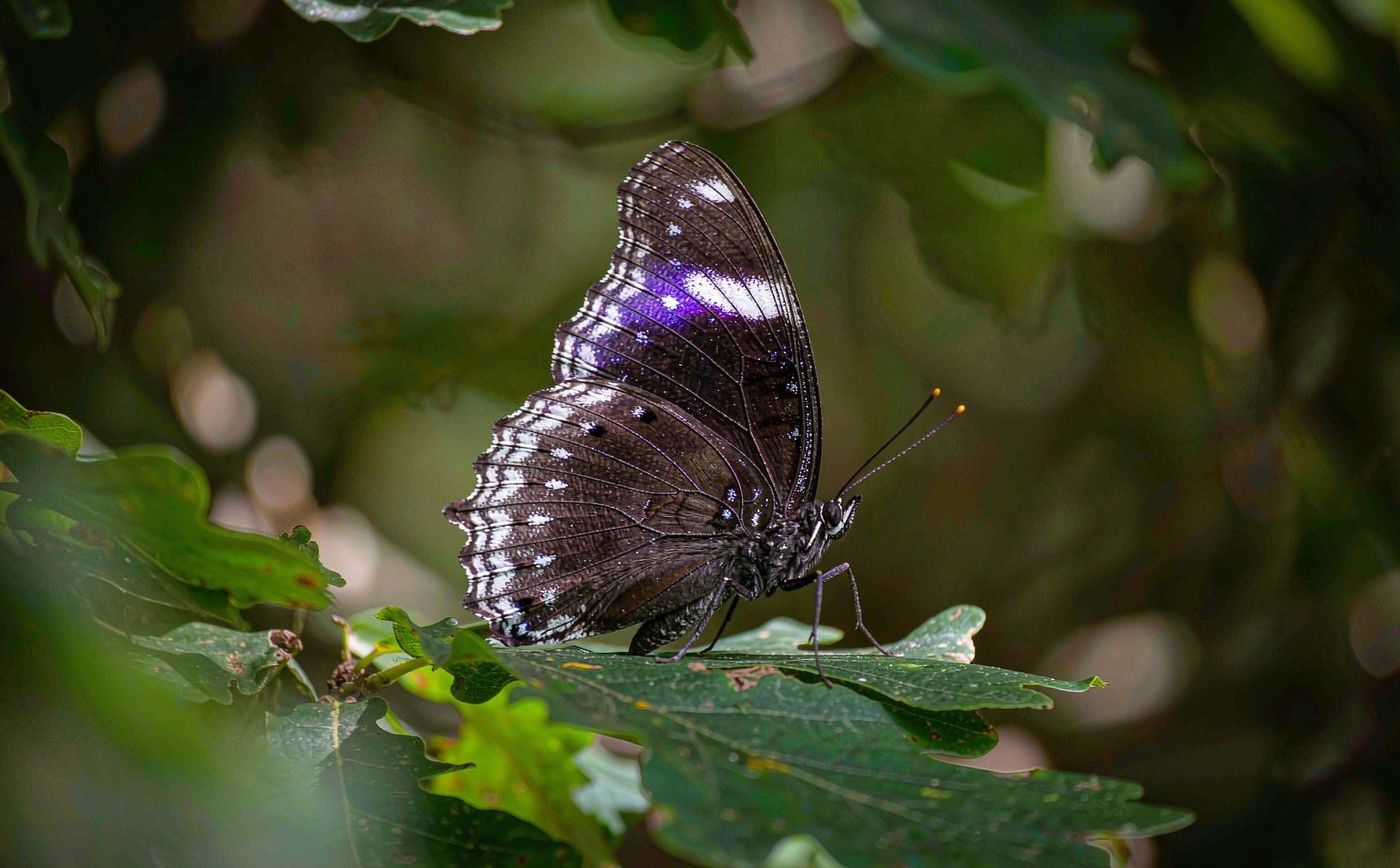
Apatura iris | Purple Emperor
Introduction
The Purple Emperor (Apatura iris) is one of the most celebrated butterflies of European woodland, prized not for bright colour but for the shimmering, iridescent purple band that blazes across the male’s wings in the right light. A large and powerful flier, it spends most of its life in the leafy canopy of mature broadleaf forest and is far more often glimpsed than caught. Despite its retiring habits, it is a flagship species for the conservation of sunny, well-structured woodland with a mix of open rides and ancient trees.
Taxonomy
Apatura iris was described by Carl Linnaeus in 1758 and is the namesake of the genus Apatura, a small group of brush-footed butterflies noted for their cryptic underside and lustrous upper surface. It sits within the family Nymphalidae, alongside familiar garden visitors such as the Peacock Butterfly. The Purple Emperor’s nearest relatives include the lesser purple emperor of southern Europe. Females lack the purple sheen and were long mistaken for a separate species before their true identity was confirmed.
Physical Characteristics
Males have a wingspan of 70 to 80 millimetres, with deep brown wings crossed by a broad, sexually dimorphic purple band that is visible only at certain angles. White post-discal spots and an orange ring around the eyespot on each hindwing break up the dark surface. Females are larger and browner, with the same spotting but no purple gloss. Both sexes have a short, robust body and broad, rounded forewings suited to fast, gliding flight. The underside is a protective mottled grey-brown with pale lines, making a resting emperor almost invisible against bark.
Habitat
The Purple Emperor favours extensive tracts of mature broadleaf woodland, especially oak-dominated forest with sunny glades, wide rides and a well-developed canopy. It is strongly tied to the treetops, where it feeds on honeydew excreted by aphids and on tree sap, descending only occasionally to mud, animal droppings or carrion. It avoids small, isolated woods and open farmland, needing a large, continuous block of suitable habitat to support a breeding population. In parts of its range it also useshornbeam and beech stands.
Diet
Adults rarely visit flowers. Males establish territories on leafy boughs and take most of their nourishment from aphid honeydew and oozing tree sap, supplementing this with minerals from damp soil, dung and the salts in carrion. Females feed similarly but spend more time searching the canopy for egg-laying sites. The caterpillars are leaf-feeders, specialising in the foliage of goat willow, crack willow and, most importantly, sessile and pedunculate oak.
Reproduction
Females lay single pale green eggs on the upper surface of host leaves, typically high in the canopy. The hatched larva is a remarkable twig-mimic, green with yellow tubercles and two horns at the head, which rests along a midrib by day and feeds at night. It passes through several instars before forming an angled, leaf-like chrysalis suspended from a twig. Depending on latitude, there is one generation a year, with adults flying from late June to early August.
Conservation
The Purple Emperor is not globally threatened but is sensitive to the loss of large, sunny woodland and the clearance of its willow and oak host trees. It has disappeared from many small, fragmented woods and from plantations managed for straight, young timber. Conservation focuses on retaining open rides that let sunlight reach the canopy, keeping veteran oaks, and allowing some dead and decaying wood that supports the aphids whose honeydew the butterflies drink. Public interest in seeing the species helps protect the woods it needs.
Fun Facts
- The famous purple is structural, not pigmented, and vanishes if the wing is viewed from the wrong angle.
- Males will dive at a passing bird, person or even a hat, mistaking the movement for a rival to be driven off.
- It earns most of its food from aphid honeydew high in the trees and seldom touches a flower.
- The caterpillar looks exactly like a small curled leaf or twig when it rests.
- A rested emperor can glide for long distances between wingbeats, barely flapping as it patrols its territory.