 By st20113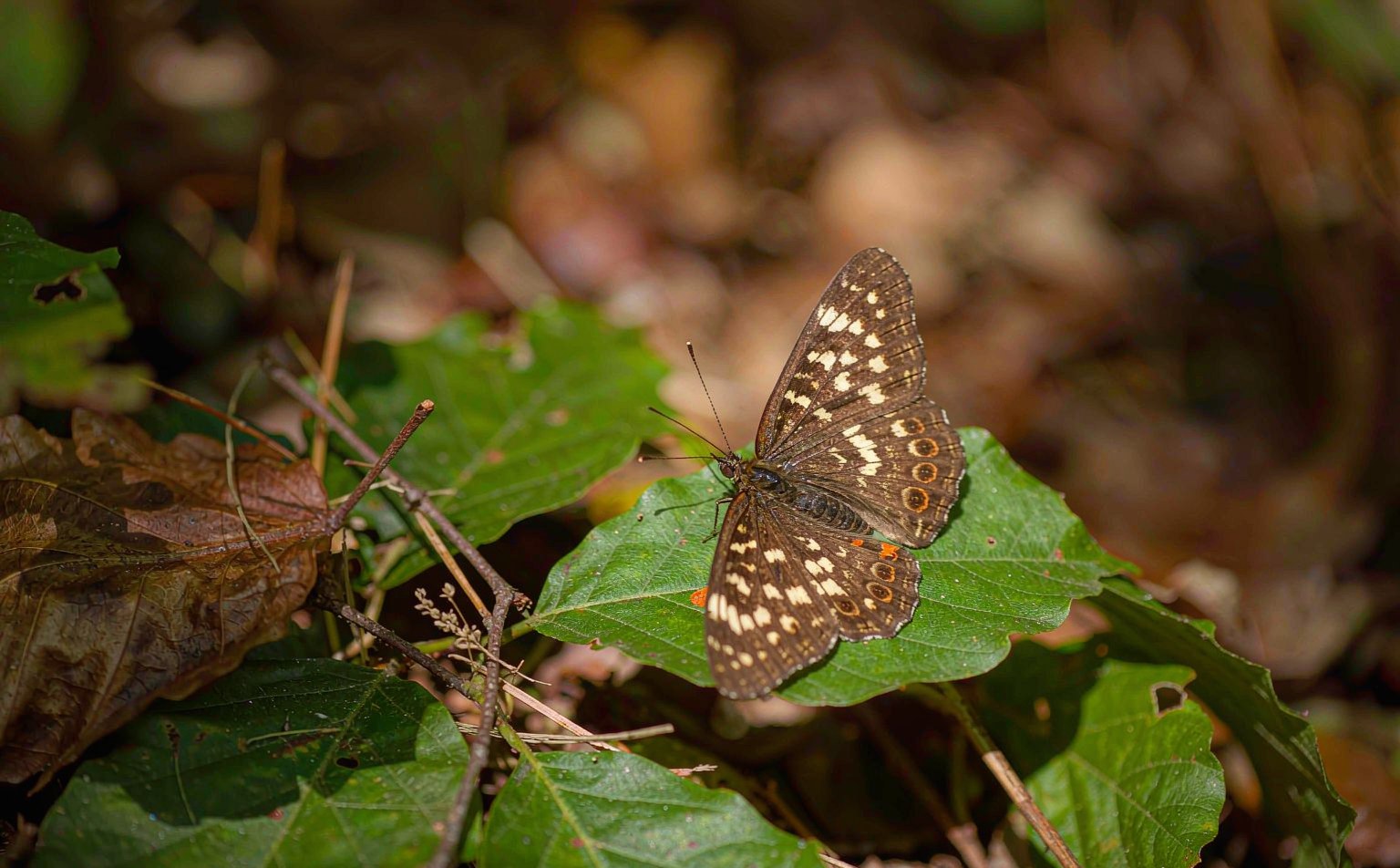
Pararge aegeria | Speckled Wood
Introduction
The Speckled Wood (Pararge aegeria) is a chocolate-brown butterfly chequered with cream spots, a characteristic butterfly of shady woodland rides and edges across Europe. Unlike many butterflies that bask in full sun, it prefers dappled light and often settles on sunlit patches on the woodland floor, flicking open its wings to warm up. Males are territorial, darting out to chase rivals and returning to the same perch, a behaviour that makes the species easy to watch.
Taxonomy
The Speckled Wood is a member of the family Nymphalidae and the subfamily Satyrinae, the browns, which includes the [Meadow Brown](https://www.gloencyc.com/peacock-butterfly-aglais-io/) and other grass-feeding butterflies. It sits in the genus Pararge and is strongly associated with woodland structure rather than open grassland. Several subspecies are recognised across its European and North African range, varying in the size of the pale spots.
Physical Characteristics
Adults have a wingspan of 42 to 52 millimetres. The wings are warm brown above, marked with a row of creamy-yellow spots on both fore- and hindwings and a smaller eyespot near the wing margin. The underside is a paler brown with a network of yellow-ringed eyespots, giving the resting butterfly a speckled look that blends with dappled foliage.
The body is slender and furry, the antennae short with rounded clubs. The caterpillar is a green larva with a yellow stripe along the side and a forked tail, coloured to match blades of grass. The chrysalis is green or brown and hangs from a grass stem or low plant, shaped to avoid detection.
Habitat
The Speckled Wood is essentially a butterfly of deciduous and mixed woodland, especially rides, glades, coppices and shaded hedgerows where sunlight falls in patches. It also uses parks, mature gardens, orchards and overgrown lanes. It needs tall grasses for the caterpillars and a canopy that produces the dappled light adults favour, so it declines where woodland is felled or over-shaded by dense conifers.
Diet
Adults feed mainly on honeydew secreted by aphids in the tree canopy, descending to take nectar from flowers such as bramble, bluebell, hawthorn and garlic mustard when available. The caterpillars eat grasses, particularly cock’s-foot (Dactylis glomerata), false brome and various meadow grasses, feeding mainly at night and hiding at the base of tufts by day.
Reproduction
Females lay single pale green eggs on or near the larval food grass, often dropping them among leaf litter at the base of a tuft. The caterpillars feed and grow through several instars, then pupate low down on a stem. In southern areas there may be two or three generations a year, while in cooler northern regions a single brood is usual, with the larva or chrysalis overwintering depending on timing.
Conservation
The Speckled Wood has expanded its range northward in recent decades, benefiting from a warmer climate and the growth of scrub and young woodland on former farmland. It remains common and secure, though sensitive to the loss of open woodland structure. Sensitive ride management that keeps sunny glades within shade helps the species, as does allowing rough grass to persist in hedgerows and parks.
Fun Facts
- Males hold small territories on a sunny patch and perform looping chase flights to evict rivals.
- The butterfly often rests head-down on a leaf with wings half open to catch sun flecks.
- It is one of the few European butterflies that feeds regularly on aphid honeydew instead of flowers.
- Fresh and hibernated forms differ slightly in colour, a seasonal change called polyphenism.
- In warm years it can produce an extra generation, extending its flight season deep into autumn.