 By st20113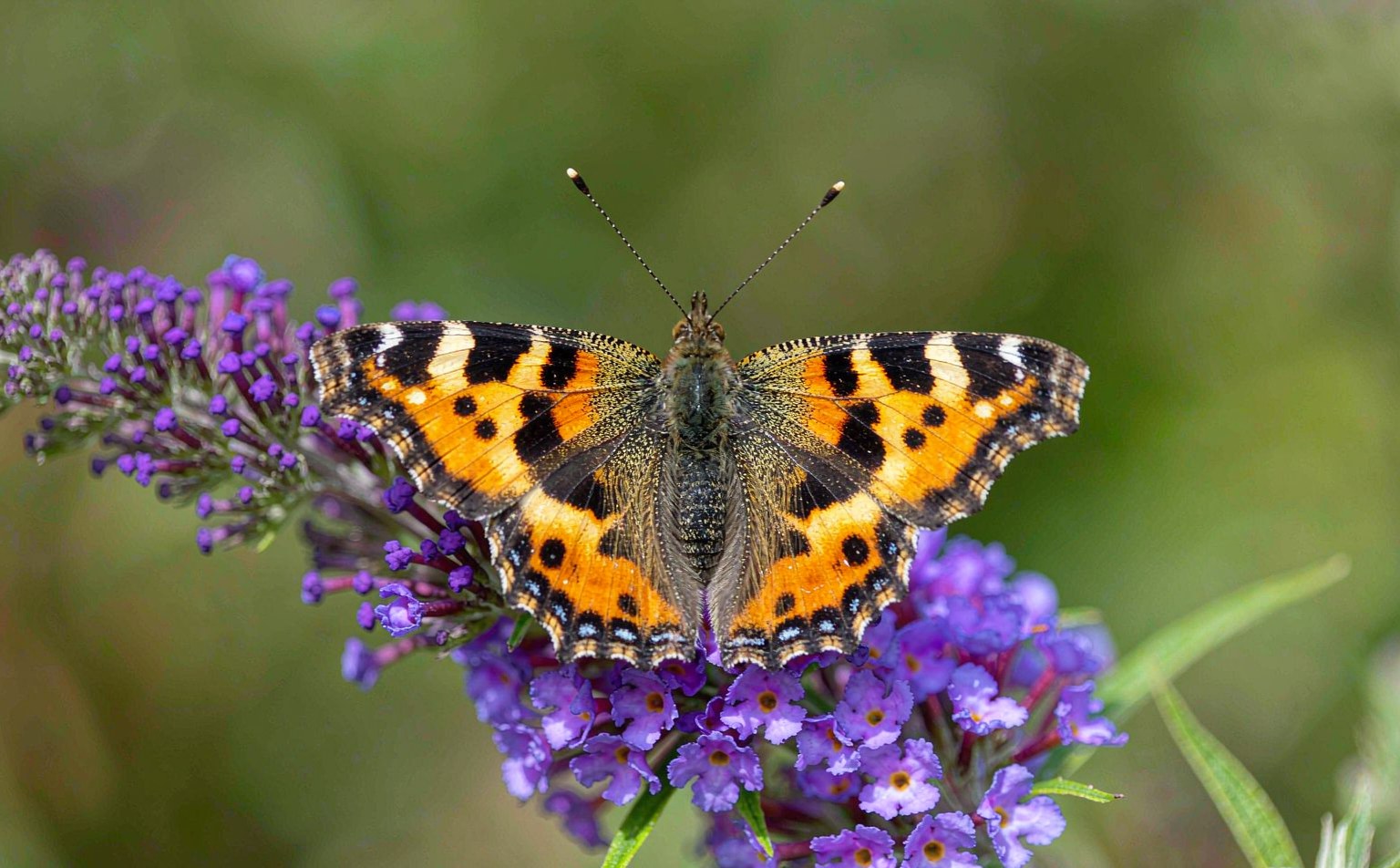
Aglais urticae | Small Tortoiseshell
Introduction
The Small Tortoiseshell (Aglais urticae) is one of the most familiar garden butterflies across Europe and temperate Asia, instantly recognised by its deep orange wings edged with black and a broad band of pale yellow. A strong, fast flier, it is equally at home in town gardens, hedgerows, woodland rides and mountain meadows, often the first butterfly to appear on warm days of late winter. Despite its familiarity, the species has shown sharp declines in parts of its range in recent years, making it a useful indicator of wider changes in butterfly populations.
Taxonomy
The Small Tortoiseshell belongs to the family Nymphalidae, the brush-footed butterflies, within which it sits in the tribe Nymphalini alongside well-known relatives such as the [Peacock Butterfly](https://www.gloencyc.com/peacock-butterfly-aglais-io/) and the migratory [Monarch Butterfly](https://www.gloencyc.com/danaus-plexippus-monarch-butterfly/). It was long placed in the genus Nymphalis but is now generally accepted in Aglais. The caterpillars feed almost exclusively on stinging nettle, linking the butterfly closely to that plant wherever it grows.
Physical Characteristics
Adults have a wingspan of roughly 45 to 62 millimetres. The upper sides are vivid orange with a row of black spots across each forewing and a dark, velvety basal area. The wing margins are black, relieved by a clean band of creamy yellow and a row of small blue crescents along the outer edge. The underside is a sombre mosaic of browns and greys, with a pale line crossing the hindwing that breaks up the outline when the butterfly rests with wings closed — an effective defence against predators.
The head bears conspicuous club-tipped antennae and large compound eyes. The body is compact and furry, an adaptation that helps adult butterflies survive the cold by trapping a layer of insulating air. Freshly emerged individuals show the brightest colours, while older butterflies fade to a paler, weather-beaten orange.
Habitat
The Small Tortoiseshell exploits a very broad range of habitats wherever nettles and nectar sources co-occur. It is common in gardens, parks, allotments, field margins, hedgerows, open woodland, scrub, riverbanks and upland grassland up to more than 2,000 metres. Because the larval food plant thrives on disturbed, nitrogen-rich ground, the butterfly often concentrates where humans have changed the land, from roadside verges to abandoned yards. In winter it seeks cool, frost-free shelter in sheds, lofts, cellars and hollow trees to hibernate.
Diet
Adults take nectar from a wide variety of flowers, showing a preference for composite blooms such as buddleia, Michaelmas daisy, marigold and dandelion, as well as ivy late in the year. They also visit over-ripe fruit and, occasionally, sap runs and damp mud for minerals. The caterpillars are strictly herbivorous and feed on the leaves of stinging nettle (Urtica dioica), usually spinning a loose communal web on the plant before dispersing to feed alone as they grow.
Reproduction
Females lay batches of 50 to 200 pale green eggs on the underside of nettle leaves, often on plants growing in full sun. The eggs hatch in about a week into spiny black caterpillars that feed together at first. After several instars the larvae pupate, hanging head-down as cryptic brown or green chrysalides. There are normally two broods a year across most of the range; the spring generation emerges from overwintered eggs, while the final autumn generation of adults enters hibernation without breeding and reappears the following February or March.
Conservation
Although still widespread, the Small Tortoiseshell has suffered significant declines, particularly in the United Kingdom and parts of western Europe, with losses linked to changes in habitat management, reduced nectar availability and possibly the spread of a parasitic fly (Sturmia bella) that attacks the caterpillars. The species is not globally threatened and remains common across much of Eurasia, but its fluctuations make it a valuable subject for citizen-science recording schemes. Garden actions such as leaving nettle patches and planting late-flowering nectar sources help support local populations.
Fun Facts
- The English name “tortoiseshell” refers to the mottled, shell-like pattern of the closed underside wings rather than any link to tortoises.
- Adults can live for nearly a year when the hibernating generation is included, an unusually long life for a small butterfly.
- Small Tortoiseshells sun themselves with wings open to warm up, then snap them shut the instant a cloud passes.
- The caterpillars’ stinging-nettle diet makes them distasteful, reinforcing the warning colours of the adult.
- On warm winter days individuals sometimes wake from hibernation prematurely, only to return to shelter when temperatures drop again.
[…] are the brush footed butterflies. Our butterfly shares the family with the Small Tortoiseshell. That butterfly has orange wings. Its young feed on […]